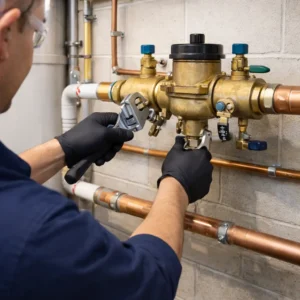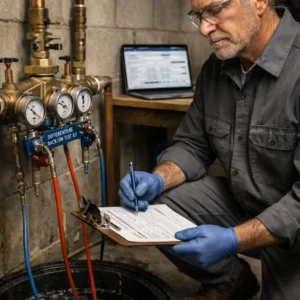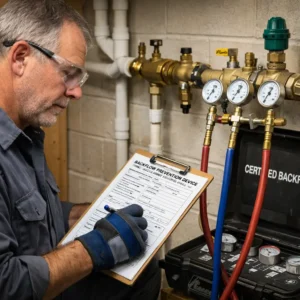
How often you need backflow testing is not the same for every property, and that is exactly where a lot of homeowners and building managers get tripped up. Most people assume it is simply once a year and leave it at that, but the mandatory backflow testing schedule for your property depends on your property type, what systems connect to your water supply, your state’s specific rules, and in some cases the hazard level your connections represent. Getting the frequency wrong creates real problems whether you test less often than required or simply lose track of when you last tested. If you are unsure where your property stands or your testing is already past due, reaching out to a licensed backflow testing service is the quickest way to get a clear answer and a straightforward path to staying current.
Key Takeaways
- Most residential properties with irrigation systems or other cross-connections require annual backflow testing at a minimum
- Commercial properties are universally required to test annually, with high-hazard facilities often required to test more frequently
- A newly installed backflow preventer must be tested and certified before it goes into active service in most jurisdictions
- High-risk systems connected to chemical lines, fire suppression, or medical equipment may require semi-annual or quarterly testing
- Backflow testing frequency requirements vary by state and local rules, so your schedule should always be confirmed with your water authority
- Overdue testing does not pause the compliance clock, it compounds the issue the longer it goes unaddressed
Why the Answer Depends on More Than Just the Calendar
Backflow testing frequency requirements are not set by a single universal rule. The EPA establishes the national framework for cross-connection control, states translate that into specific drinking water regulations, and local water authorities enforce the requirements on the ground with the authority to add stricter standards on top of what the state already mandates. Those backflow preventer testing intervals are what your local water authority uses to set your specific compliance calendar. The result is a system where annual testing is the starting point for most properties but the real obligation for any specific building can be more demanding based on what is connected to the water supply and what those connections could introduce if a backflow event occurred.
How Testing Frequency Changes Based on Risk Level
Residential Properties
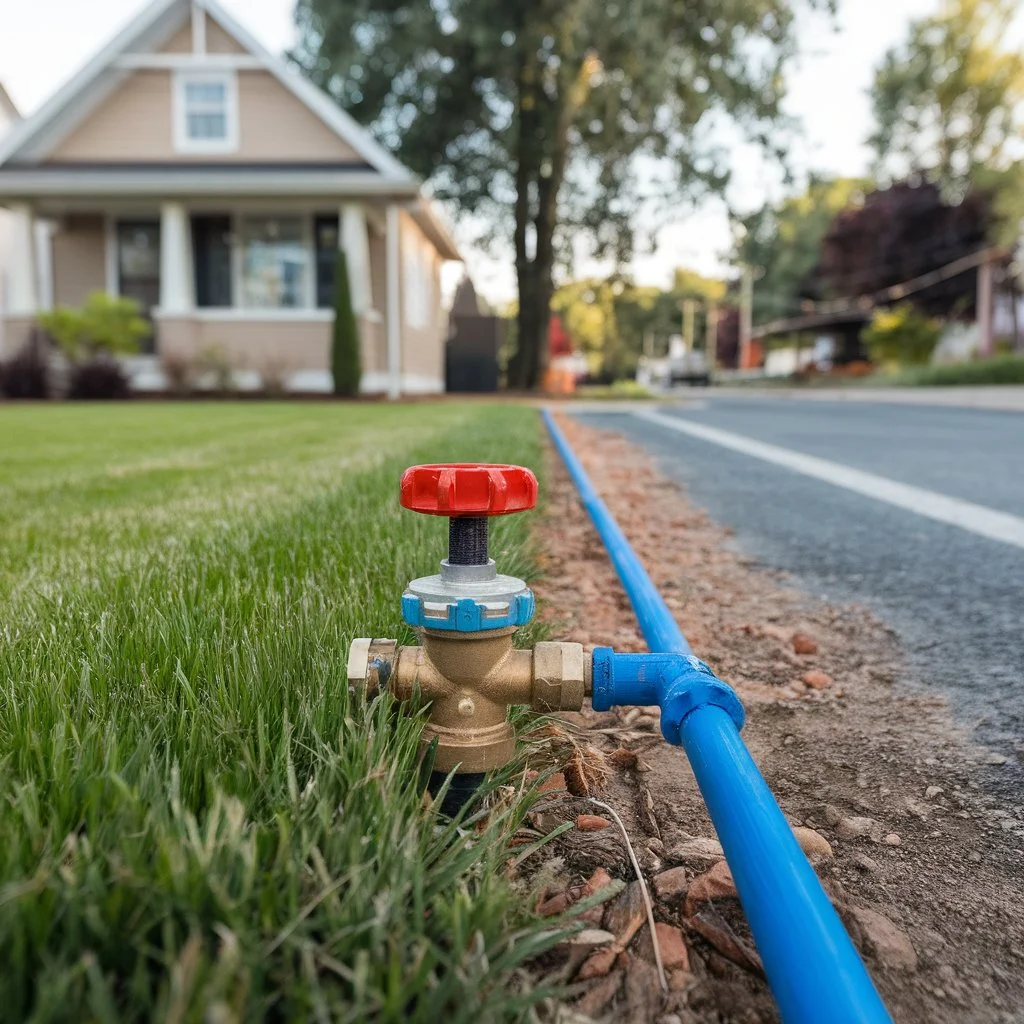
For most homeowners the requirement comes down to one annual test on the preventer connected to their irrigation system, pool fill line, or any other cross-connection point on the property. What many homeowners miss is that the annual requirement applies per device rather than per property. A home with both an irrigation preventer and a pool fill connection may have two separate annual certifications to manage, each with its own deadline tied to its own installation or last test date.
Standard Commercial Properties
Commercial properties follow an annual minimum across virtually every jurisdiction in the US, but the scope is broader. Every preventer on the premises must be tested within each compliance window, which means larger buildings often have several devices coming due at the same time. If you want a full breakdown of what that process covers from start to finish, our guide on commercial backflow testing and inspections walks through exactly what each visit involves and what documentation needs to follow.
The administrative side of staying current is more demanding than the residential equivalent even when the testing frequency itself matches, because submission deadlines and documentation requirements are held to a stricter standard for commercial properties.
High-Risk and Specialized Systems
Semi-annual backflow testing requirements apply to moderate-to-high-hazard commercial connections, including certain food processing facilities and properties with complex plumbing configurations. Quarterly testing applies where a backflow event could have immediate and severe public health consequences, facilities that handle substances serious enough that a single contamination event could affect a wide area of the public water supply. If your facility falls anywhere near that category, your water authority will assign a more frequent interval than the annual standard regardless of how well your device has historically performed.
Backflow Testing Frequency at a Glance
Property or System Type | Standard Testing Frequency | Notes |
Residential with irrigation system | Annual | Required in most states |
Residential with pool or spa connection | Annual or biannual | Varies by jurisdiction |
Standard commercial properties | Annual | Universal minimum |
Properties with fire suppression systems | Annual with separate certification | Distinct testing standards apply |
High-hazard commercial facilities | Semi-annual or quarterly | Medical, chemical, processing facilities |
New installations | Before first use | Initial certification required before service |
Devices following a repair | Retest before return to service | Separate from annual schedule |
Initial Testing After a New Installation
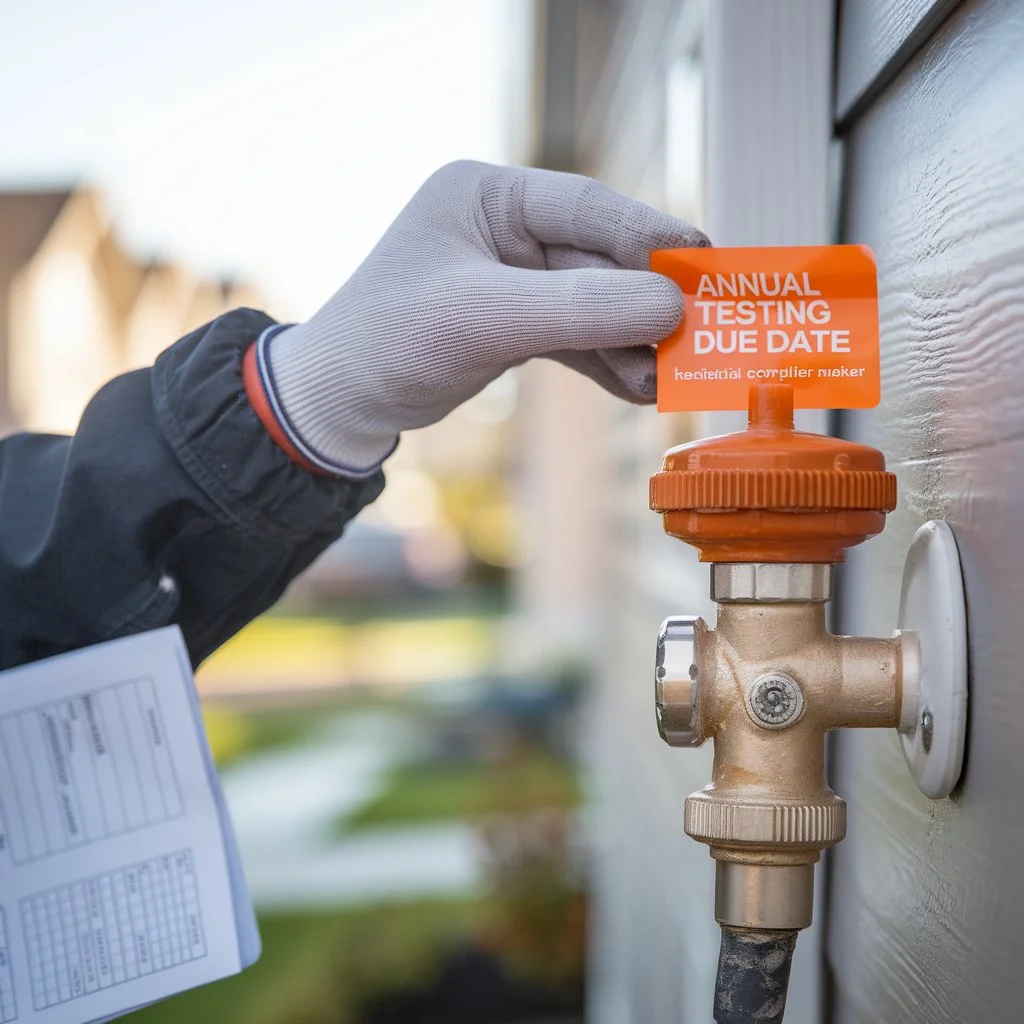
One requirement that regularly catches property owners off guard is the initial testing obligation after a new backflow preventer is installed. In most jurisdictions the device must be tested and certified before it enters active service, not simply carried forward to the next annual cycle. This first test confirms the device was installed correctly, is performing within required parameters, and meets the preventer type specifications for the connection it protects. A property that skips this step and waits for the first annual inspection has a gap in its certification history that can surface during a water authority review or an insurance evaluation.
When Testing Is Already Overdue
When backflow testing falls past its deadline the situation does not simply wait while you catch up. Water authorities track testing schedules by property and begin issuing notices when a required result has not been submitted within the required window. Most water authorities tie the backflow certification renewal period to the anniversary of the last passed test, which means a missed deadline shifts every future deadline forward and creates a compounding gap in your certification history. Your backflow testing compliance timeline gets harder to recover cleanly the longer it goes unaddressed. Getting current quickly is always the better outcome than waiting to see what arrives in the mail, and the full picture of what overdue testing leads to is covered in our guide on skipping mandatory backflow testing.
Get Your Schedule Right and Stay Ahead of Every Deadline
Knowing exactly how often backflow testing is required for your specific property is the foundation of staying compliant without a last-minute scramble every time a notice arrives. Whether you are managing a single residential connection or a commercial building with multiple devices at different risk levels, the right schedule is one that reflects your actual obligations rather than a general assumption about what annual testing covers.
At DNA Plumbing and Heating, our certified technicians work with residential and commercial property owners to confirm the correct testing frequency, complete every required inspection on schedule, and make sure results are properly submitted and documented with the local water authority. Contact DNA Plumbing and Heating today to get your backflow testing scheduled and your property on a compliance track that keeps you ahead of every deadline.