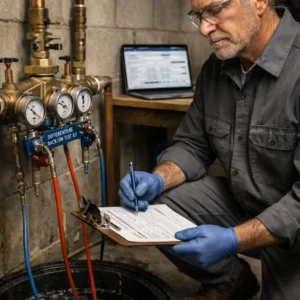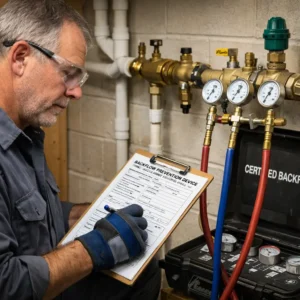
Backflow testing is not optional in most US municipalities, yet it is one of those requirements that homeowners and property managers tend to put off until something forces their hand. The problem is that by the time something forces the issue, the consequences have usually already started adding up. Skipping mandatory backflow testing can mean contaminated drinking water, suspended water service, legal liability, and fines that far exceed the cost of the test itself. If your backflow preventer is overdue for inspection or you are not sure where your property stands, connecting with a professional backflow testing service is the fastest way to get ahead of the problem before it turns into something much harder to fix.
Key Takeaways
- Skipping mandatory backflow testing puts your drinking water at risk from hazardous backflow events that can happen without any visible warning
- Most US municipalities enforce backflow testing and can suspend water service for properties that fall out of compliance
- Fines vary by jurisdiction but accumulate quickly with each billing cycle or inspection period missed
- Property owners can face legal liability if an untested device contributes to a contamination event affecting others
- Insurance policies may not cover contamination claims linked to a backflow preventer that was never tested or maintained
- Annual testing is the standard in most areas, though higher-risk properties may be required to test more frequently
Why Backflow Testing Requirements Exist in the First Place
A backflow preventer is the device that keeps contaminated water from flowing backward into the public water supply when pressure shifts in the system. Without one that actually works, everything from lawn fertilizers and irrigation chemicals to bacteria and sewage can reverse direction and enter the lines that supply drinking water to your home and everyone around you. Local water authorities and municipal utilities are responsible for enforcing these requirements because a single failed device on one property can create a public health problem that reaches well beyond that property line. That is the reason these rules exist and why violations are taken seriously.
What Actually Happens When You Skip Mandatory Backflow Testing
The Health Risks Are Bigger Than Most People Realize
A backflow preventer that has never been tested or has gone several years without inspection can look completely normal from the outside while failing silently inside. Rubber seals break down, check valves wear out, and internal parts corrode without any outward sign that anything is wrong. When a device in that condition fails during a pressure event, it provides zero protection against whatever is on the other side of the line. In 2021, a Texas municipality issued a public health advisory after a pressure drop caused the irrigation system backflow to enter residential water lines in a neighborhood where several preventers had not been tested in years. Depending on what your water system connects to, a failure like that can introduce pesticides, bacteria, fertilizers, or sewage into your drinking water with no warning at all.

The Financial and Legal Consequences Add Up Fast
Fines for missing backflow testing vary by location, but they are real, and they grow. Many water authorities issue penalties per billing cycle for every period a required test is overdue, and in many US jurisdictions, that starts at anywhere from fifty to several hundred dollars per violation period. Ignoring a compliance notice for a few months can turn what looked like a minor paperwork issue into a bill that runs into the thousands. Beyond the fines themselves, property owners who have skipped a required backflow prevention inspection and whose devices contribute to a contamination event can face legal liability for damage to neighboring properties or shared water systems. For business owners the exposure is even greater, since business liability from a contaminated water event can include regulatory action, lawsuits, and lasting reputational damage that no fine payment can undo.
Water Service Suspension Is More Common Than Homeowners Expect
One of the most immediate consequences of skipping backflow testing is having your water shut off. Most municipal water authorities have the legal authority to suspend service for properties that continue to ignore compliance notices, and many do use that authority. What most homeowners do not realize is that getting service restored is not as simple as agreeing to test. Reconnection typically requires a completed certified test, a formal compliance confirmation submitted to the water authority, and in many cases a reconnection fee on top of any outstanding fines. For commercial properties the disruption is even more serious, since suspended water service can force operations to shut down entirely until every step of the reinstatement process is completed.
Consequences at a Glance
Consequence | Trigger | Severity |
Health risk from contaminated water | Untested or failed backflow preventer | High, can affect neighboring properties |
Municipal fines and penalties | Missed testing deadline or overdue inspection | Moderate to high, accumulates over time |
Water service suspension | Continued non-compliance after notices | High, immediate operational impact |
Legal liability | Contamination event linked to your property | Very high, includes potential lawsuits |
Insurance claim denial | Contamination tied to failed or uninspected device | High, leaves property owner fully exposed |
The Insurance Problem Most Homeowners Never See Coming
Insurance issues from failed backflow testing are one of the least talked about but most financially damaging risks of letting your testing lapse. Many homeowner and commercial property insurance policies include language that reduces or eliminates coverage for water contamination events when the damage is linked to a device that was not maintained or tested as required by local regulations. If your backflow preventer fails and causes contamination damage, your insurer may deny the claim entirely on the grounds that the failure resulted from neglected maintenance rather than something unforeseeable. When evaluating a backflow related claim, insurers typically look for a current certified test report, proof that results were submitted to the water authority, and documentation showing the device was serviced within the required window. Without those records in hand, the financial exposure falls entirely on the property owner.
Are You Currently in Compliance? A Quick Self-Check
Running through these points takes about five minutes and tells you exactly where you stand:
- Confirm whether your property type requires annual backflow testing under your local municipal requirements
- Check whether you have received any compliance notices or overdue testing reminders from your water authority
- Verify the date of your last certified backflow preventer inspection and whether it falls within the required testing window
- Confirm that your testing was completed by a certified tester and that the results were properly submitted to your local water authority
It is also worth pulling out your property insurance policy and checking what coverage exists for water contamination events, and whether that coverage requires documented testing compliance to remain valid.
Get Compliant Before a Small Oversight Becomes a Serious Problem
Most homeowners who fall behind on backflow testing do not do it intentionally. Life gets busy, notices get buried, and annual deadlines slip by quietly. But the consequences of letting it go too long are genuinely significant, and none of them are worth the cost savings of skipping a single certified test each year.
At DNA Plumbing and Heating, our certified team handles backflow testing and inspection for residential and commercial properties across the US, making sure your system meets local requirements and your records stay current. Contact DNA Plumbing and Heating today to schedule your backflow testing service and keep your property protected and fully compliant.