Introduction
A sump pump helps manage excess water around the foundation by directing groundwater away from the home before moisture begins collecting inside the basement or crawl space. When operating correctly, the pump helps protect the property from water removal issues and foundation moisture buildup. Proper sump pit sizing combined with proper sump pump installation also plays an important role in maintaining reliable water removal and reducing unnecessary strain on the pump.
However, sump pump motor overheating can reduce the pump’s ability to keep up with incoming water during periods of increased discharge flow demand. Many homeowners first notice problems when the pump begins running longer than normal or struggles during storms. Blocked discharge lines, float switch failures, excessive cycling, and aging mechanical components can all place additional pressure on the motor. Understanding what causes these issues and how to reduce heat buildup inside the pump can help homeowners avoid sudden breakdowns and costly foundation moisture damage.
Why Sump Pump Motors Develop Heat Problems
Sump pumps are designed to operate in controlled cycles. As water collects inside the sump pit, the float mechanism signals the pump to start moving water through the drainage pipe and away from the foundation. After the water level drops to a normal range, the system powers down temporarily until additional water enters the basin again.
Problems start when the system loses this normal operating pattern. A pump that runs continuously without cooling periods experiences rising internal temperatures and increasing electrical strain. During severe storms or periods of heavy water table pressure, the motor may remain active for much longer than intended.
Over time, this constant stress weakens internal components and reduces pump efficiency. If conditions continue, the system may eventually reach thermal overload and stop working entirely.
Early Warning Signs of Motor Strain
Many sump pump failures develop gradually as internal motor components wear down under repeated operating stress. Identifying these warning signs early can help reduce the risk of larger drainage and moisture control problems later.
A sump pump that continues running long after water levels drop may indicate float switch problems, restricted discharge flow, or groundwater entering the basin faster than the system can remove it. Constant cycling increases internal motor temperatures and places additional strain on electrical windings, bearings, and shaft seals, gradually accelerating mechanical wear.
Common Causes of Sump Pump Burnout
Several different plumbing and subsurface water movement problems can contribute to motor failure. Some issues develop from normal aging, while others are linked to installation or drainage conditions around the property.
Blocked Discharge Lines
The discharge pipe carries water away from the home after it leaves the sump basin. If this line becomes obstructed by debris, ice, or sediment buildup, pressure inside the system increases significantly.
Frozen discharge lines are especially common during winter weather in colder parts of the United States. When water cannot exit properly, the motor continues operating under heavy strain while trying to force water through the blockage.
Over time, restricted flow can damage electrical components and shorten the system’s lifespan.
Float Switch Malfunctions
The float switch controls when the sump pump turns on and off. If the switch becomes stuck because of tangled wiring, debris, or mechanical wear, the pump may continue operating even when the basin is nearly empty.
This constant operation rapidly increases motor temperatures and creates unnecessary stress on the entire system.
In many homes, float switch issues are responsible for pumps running nonstop overnight when water pressure around the foundation increases
Damaged Impeller Components
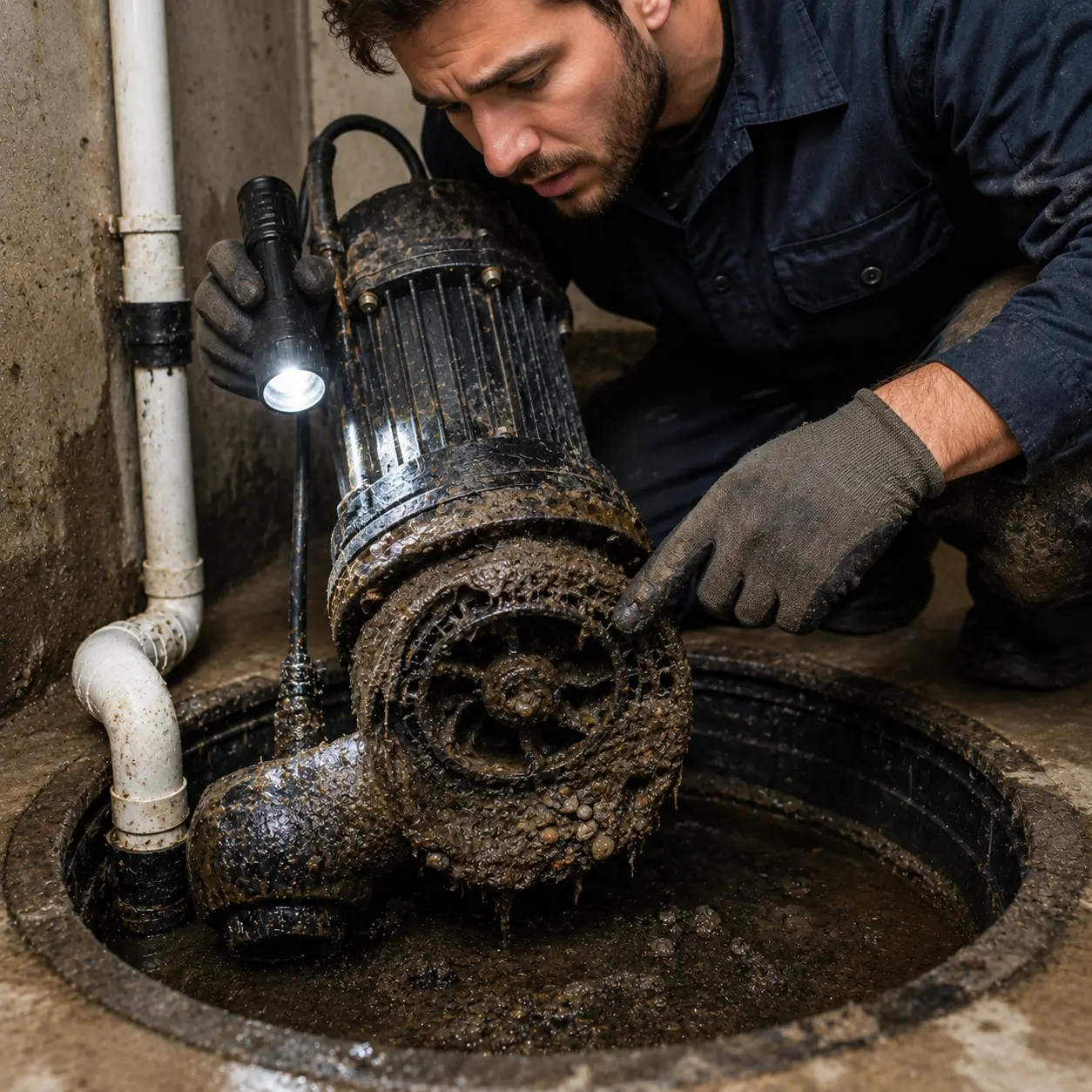
The impeller is responsible for moving water through the discharge line. Dirt, sediment, and small debris inside the sump basin can gradually wear down impeller blades or block movement entirely.
As efficiency declines, the motor must compensate by working harder during each cycle. This additional strain increases the likelihood of overheating and eventual burnout.
Impeller problems are particularly common in sump pits that have not been cleaned for extended periods.
Aging Mechanical Parts
Older sump pumps often experience declining performance as bearings, seals, capacitors, and internal electrical components wear down over years of repeated operation. During heavy rainfall, aging parts may struggle to handle prolonged run times efficiently, increasing the likelihood of overheating and reduced drainage performance.
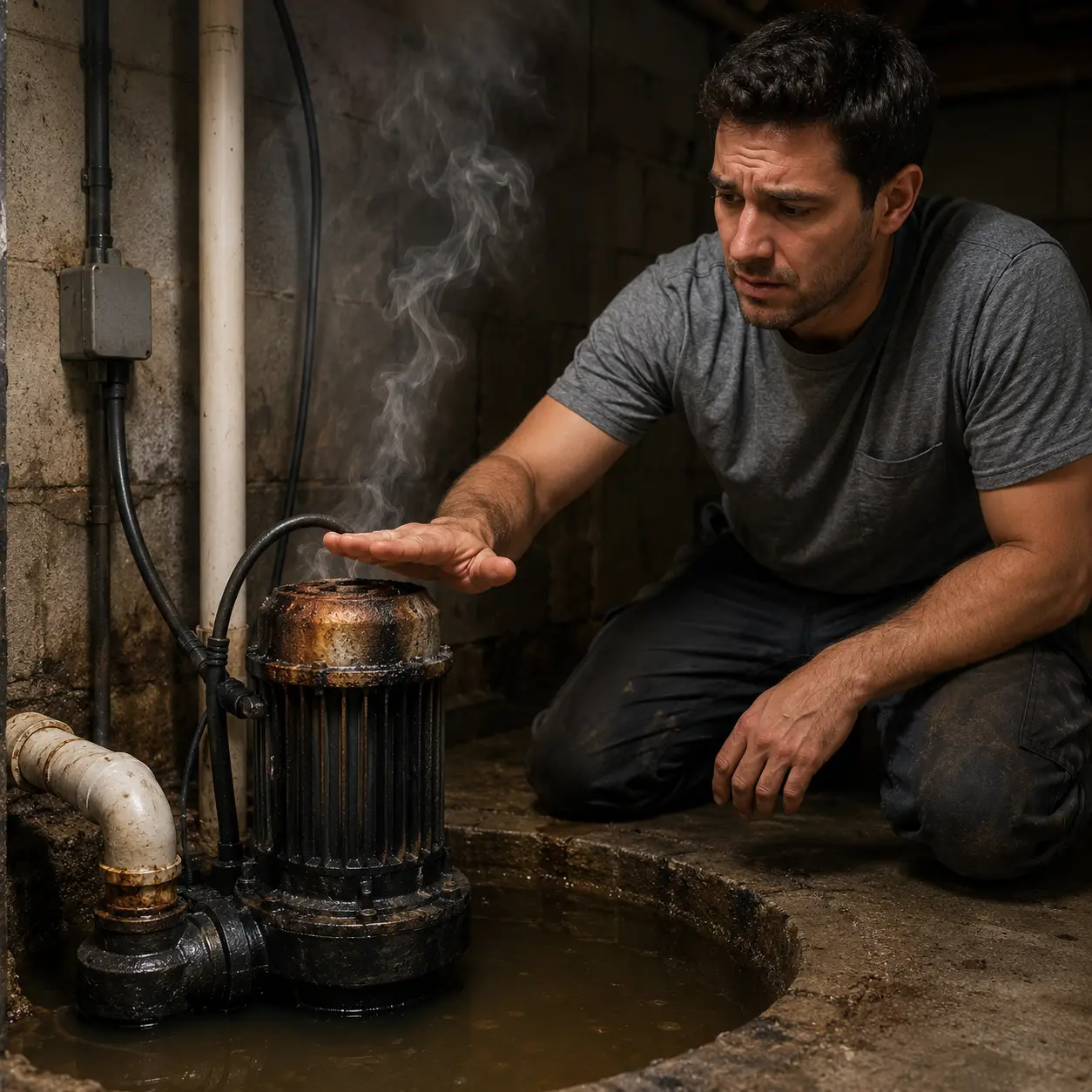
Warmth around the pump housing or a faint burning smell near the sump area may indicate overheating electrical windings or excessive motor friction caused by worn bearings. Slow water removal can develop when worn impeller components, restricted discharge lines, or weakened motor performance reduce pumping efficiency.
Grinding, rattling, or vibrating noises often occur when internal bearings loosen, impeller blades become damaged, or motor components begin losing alignment. If these conditions continue during periods of heavy groundwater pressure, the system should be inspected before major motor failure develops.
Practical Ways to Reduce Heat Buildup Inside the System
Homeowners can often improve sump pump reliability significantly through proper upkeep and seasonal inspections.
Keep the Sump Basin Clear
Removing dirt, gravel, and sediment from the basin helps maintain smooth water flow through the system. Clean pits place less stress on moving parts and reduce the chance of impeller obstruction.
A clear basin also allows the float switch to move freely during operation.
Monitor the Discharge Line
The discharge line should move water well away from the home without leaks or standing water near the exit point. Homeowners should check for freezing, visible cracks, or drainage restrictions before periods of severe weather.
Addressing small drainage issues early often prevents larger failures later.
Test Pump Cycling Periodically
Adding water to the basin occasionally allows homeowners to observe how the system activates and shuts off. Delayed shutoff, irregular cycling, or weak drainage may indicate developing problems inside the pump.
These checks are especially useful before spring storms and winter freeze conditions.
Schedule Professional System Inspections
Professional sump pump inspections allow plumbing technicians to evaluate electrical connections, pump performance, discharge conditions, and internal wear before serious failure develops.
If your sump pump runs nonstop, struggles during prolonged wet conditions , or shows signs of reduced drainage performance. Professionals can inspect the system and identify developing issues before major water intrusion occurs.
How to Extend the Life of a Sump Pump
Sump pumps often last longer when homeowners address smaller drainage issues before they become larger mechanical problems. Seasonal servicing, proper pump sizing, and keeping moisture accumulation away from the foundation all help reduce unnecessary strain on the system.
Improving exterior drainage conditions can also make a significant difference. Downspouts that discharge too close to the home, poor yard grading, or standing water around the foundation may increase the amount of excess water entering the basin entering the sump basin during high demand periods .
In homes with recurring basin operation demand, installing a secondary backup system often reduces operating pressure on the primary pump and improves overall reliability during severe weather conditions.
Conclusion
Sump pump motor overheating is often linked to continuous operation, blocked drainage lines, float switch problems, or long-term mechanical strain. Ignoring early warning signs can eventually lead to pump failure during periods of heavy groundwater pressure. DNA Plumbing and Heating can diagnose overheating problems, inspect sump pump performance, and provide repair or replacement solutions that help restore dependable basement drainage protection.