Introduction
Water inside commercial fire sprinkler systems can remain stagnant for long periods, allowing corrosion, sediment buildup, and other contaminants to develop inside the piping network. If pressure conditions suddenly change, this water may reverse direction and threaten the building’s potable water supply unless proper backflow protection is installed.
Because fire suppression systems remain continuously connected to municipal water lines, many commercial properties require dedicated fire sprinkler backflow preventers together with regular backflow testing services and inspection compliance. Understanding how these systems operate helps property owners maintain safer water conditions while meeting local plumbing and fire protection requirements.
Why Fire Sprinkler Systems Create Backflow Risks
Fire sprinkler systems remain continuously connected to municipal water supplies, which means stagnant water inside fire service piping can create contamination risks if pressure conditions suddenly change. During water main failures, emergency firefighting demand, or major pressure fluctuations, contaminated sprinkler water may potentially reverse into the potable plumbing system. For readers who want a deeper explanation of how backflow develops and why pressure changes create these risks, see our guide on backflow testing requirements in new construction plumbing systems.
Common Contamination Sources Inside Fire Sprinkler Systems
Water inside fire sprinkler piping does not remain in the same condition as fresh municipal water. Over time, aging pipes and stagnant conditions can affect water quality inside the system.
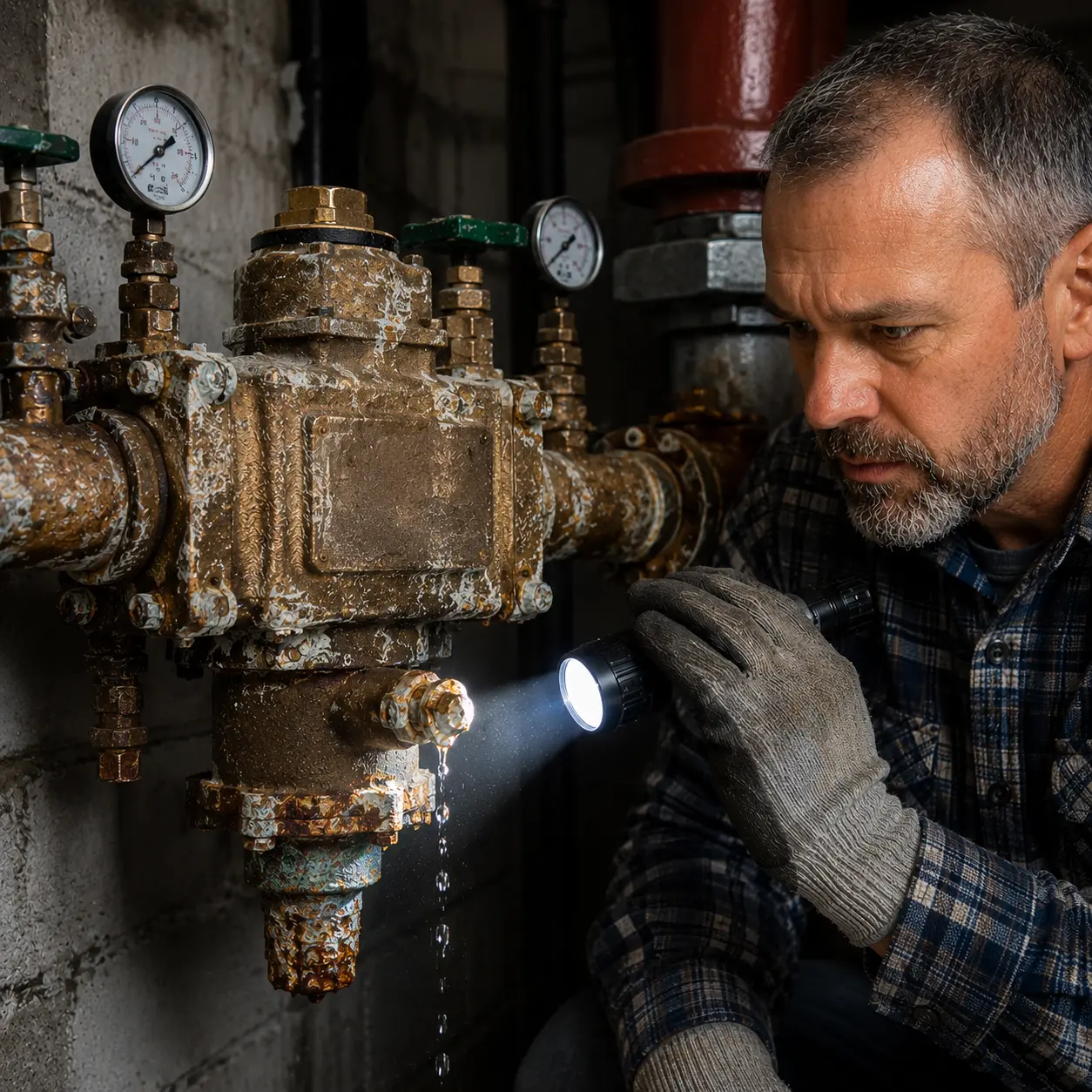
Common contamination sources inside fire sprinkler systems include rust, internal pipe corrosion, sediment accumulation, mineral deposits, bacterial growth in stagnant water, damaged piping debris, and chemical additives used in antifreeze systems. Cross connections with auxiliary water supplies can also increase contamination risks in certain commercial properties.
Older commercial systems are often more vulnerable because years of internal corrosion may gradually accumulate inside sprinkler piping without obvious visible symptoms.
These contamination risks are one of the main reasons local plumbing authorities require certified backflow prevention assemblies on many commercial fire suppression systems.
Fire Sprinkler Backflow Preventer Requirements
Backflow prevention requirements vary by municipality, but most jurisdictions follow local plumbing codes together with fire protection standards connected to NFPA guidelines and cross-connection control programs.
Most jurisdictions require approved backflow preventer installation, certified annual testing, accessible testing connections, proper assembly clearance, inspection documentation, and forward flow testing capability.
Building owners are generally responsible for maintaining these systems and scheduling inspections at required intervals.
Failure to maintain compliant fire sprinkler backflow preventers may lead to failed inspections, plumbing code violations, water authority penalties, delayed occupancy approvals, and broader fire protection compliance issues.
How Building Hazard Classification Affects Device Selection
One of the most important factors in choosing a fire sprinkler backflow preventer is the hazard classification assigned to the building and sprinkler system.
Lower hazard systems without chemicals or auxiliary water connections often qualify for DCVA protection. Higher hazard systems involving chemical additives, industrial processing, or healthcare environments usually require RPZ assemblies because contamination risks are greater.
Plumbing professionals usually evaluate the building occupancy type, fire suppression system design, presence of antifreeze chemicals, cross connection risks, municipal regulations, and local water authority requirements before selecting the proper backflow prevention device.
Because requirements vary between jurisdictions, the final decision is usually based on local inspection authority approval.
Why Annual Fire Sprinkler Backflow Testing Is Important
Even properly installed assemblies can develop internal wear over time. Check valves, seals, springs, and relief valve components are constantly exposed to pressure fluctuations, mineral buildup, sediment, and corrosion. These internal problems may not be visible from the outside.
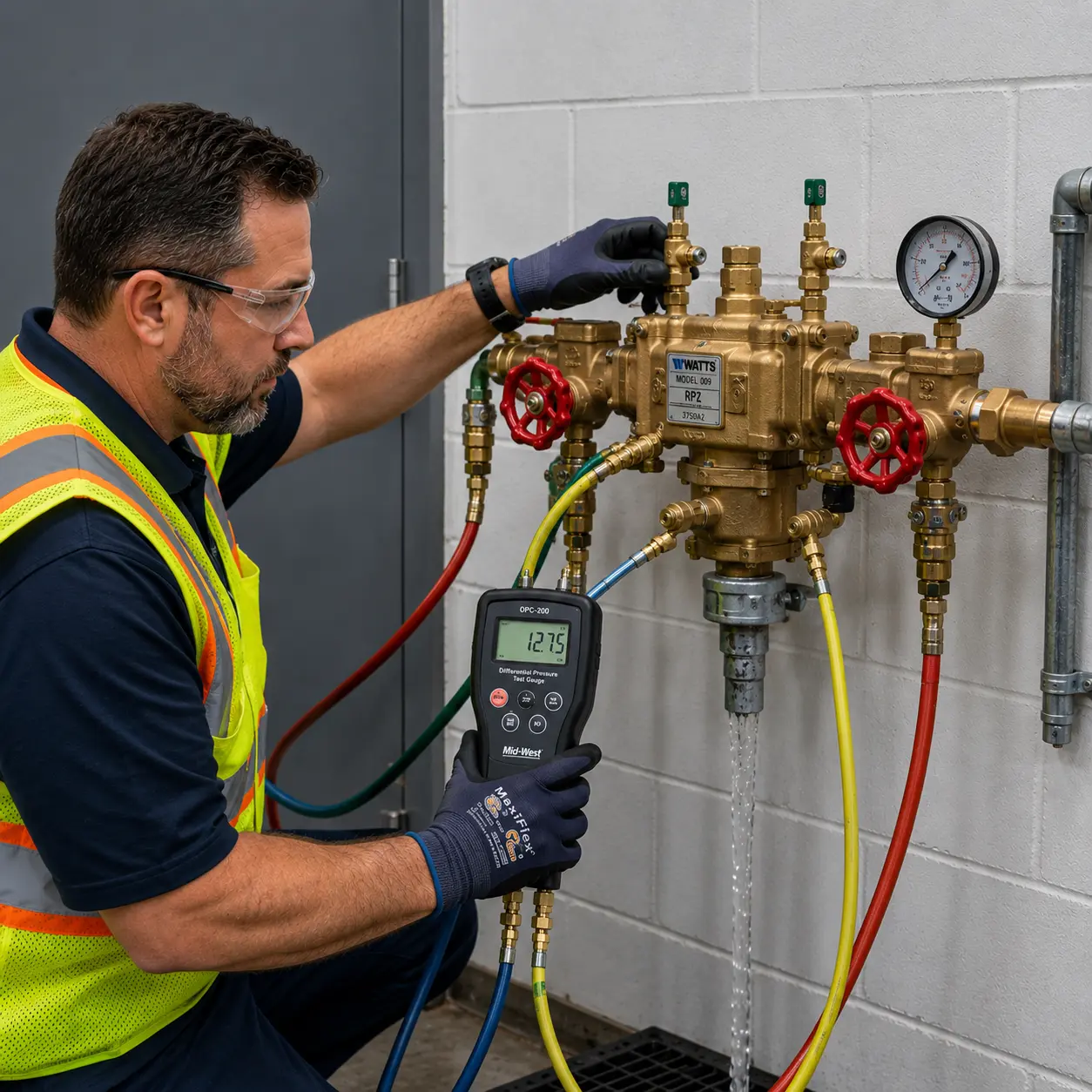
Annual backflow testing verifies that the assembly can still stop reverse water movement under changing pressure conditions. Certified annual testing typically includes pressure differential measurements, internal valve performance evaluations, relief valve inspections, assembly integrity verification, and water flow performance checks to confirm the device is operating properly. Routine testing helps identify developing component failures before the assembly stops functioning properly.
Understanding Forward Flow Testing
Forward flow testing confirms that the fire sprinkler system can deliver enough water during an actual emergency event while water passes through the backflow prevention assembly.
This process helps verify that the assembly does not excessively restrict water movement during fire suppression operations.
Forward flow testing often involves sprinkler riser flow testing, hose valve discharge testing, and water supply verification procedures to confirm the system can deliver sufficient water during an actual emergency.
These procedures are especially important in larger commercial systems where emergency water demand is significantly higher.
Typical Lifespan of Fire Sprinkler Backflow Preventers
The lifespan of a fire sprinkler backflow preventer depends on water quality, pressure conditions, environmental exposure, and maintenance frequency.
Many commercial assemblies operate reliably for 10 to 15 years or longer when properly maintained. However, neglected systems may experience internal corrosion, seal deterioration, or valve failure much sooner.
Assemblies exposed to heavy mineral buildup or fluctuating pressure conditions often require repairs earlier than systems operating under stable conditions.
Routine inspections help determine whether the assembly requires rebuilding, component replacement, or full system replacement.
The Importance of Routine Preventive Maintenance
Routine maintenance helps keep fire sprinkler backflow preventers operating reliably while reducing long-term wear on internal components such as seals, springs, relief valves, and check valve assemblies.
Preventive maintenance often includes internal valve inspections, pressure evaluations, seal replacement, drain testing, and periodic exercising of check valve components to help maintain reliable system performance. Consistent maintenance also helps identify developing internal wear early, extend assembly service life, and improve long-term system reliability.
Choosing the Right Plumbing Professional
Fire sprinkler backflow systems require specialized knowledge because they involve both plumbing safety and fire protection compliance.
Property owners should work with contractors who have certified backflow testing credentials, commercial fire protection experience, strong knowledge of local plumbing codes, and familiarity with cross connection control requirements.
Working with qualified professionals helps ensure testing, inspections, and repairs are completed according to local regulatory requirements.
Conclusion
Fire sprinkler backflow preventers play an important role in protecting both fire suppression systems and potable water supplies inside commercial properties. Proper assembly selection, annual testing, and preventive maintenance all contribute to safer building operation and long term compliance.
Working with a certified professional helps ensure inspections, testing, and maintenance meet local plumbing and fire protection requirements.
If your property requires fire sprinkler backflow testing, inspection support, or assembly maintenance, DNA Plumbing and Heating can help evaluate your system and identify potential issues before they develop into larger safety or compliance problems.