Introduction
Rusty hot water is often one of the earliest signs that corrosion or sediment accumulation may be affecting a home’s water supply. In some cases, discoloration develops gradually as water heater components age. In others, brown hot water may appear suddenly following plumbing disturbances or corrosion within older water lines. Regular maintenance and professional water heater service can help identify developing issues before they begin affecting water quality.
Many homeowners first notice rust colored water while using showers, sinks, or laundry appliances connected to the hot water supply. Questions such as why is my hot water rusty often point to water heater deterioration, aging pipes, or mineral accumulation within the plumbing system. Identifying the source early can help prevent leaks, equipment damage, and declining hot water performance.
Sources of Rusty Hot Water
How Corrosion Develops Inside Water Heaters
Water heaters operate under constant exposure to heat, moisture, and mineral-rich water. Over time, this environment can slowly contribute to corrosion inside water heater tanks and internal metal components.
Rust in water heater systems often develops when protective components begin wearing down, or sediment remains trapped inside the tank for long periods. As corrosion increases, rust particles may begin mixing with the home’s hot water supply and create visible discoloration at fixtures throughout the property.
Aging Pipes and Rust Buildup in Water Lines
Older homes sometimes contain galvanized steel pipes that gradually deteriorate after years of water exposure. As the interior pipe walls wear down, small rust deposits may enter the water supply, particularly after periods of low water usage.
Aging plumbing materials and deteriorating water heater components can also reduce water flow and contribute to hidden pipe deterioration throughout the property. Depending on the location of the problem, discoloration may affect hot water, cold water, or both.
Common Signs Associated With Rusty Hot Water
Brown or Yellow Water From Hot Water Fixtures
Brown water from faucet fixtures or yellow water from faucet lines often becomes most noticeable when homeowners first turn on hot water taps. In many cases, rust in tap water appears strongest after the water heater has been sitting unused overnight.
Discolored hot water may appear cloudy, orange-tinted, or dark brown, depending on the amount of rust sediment moving through the plumbing system.
Metallic Smells and Rust Sediment
A metallic odor sometimes accompanies visible discoloration. Small rust particles may collect in sinks, tubs, appliance filters, or other fixtures while affecting water quality throughout the home.
Homeowners may also notice gritty residue left behind in bathtubs, utility sinks, or washing machines connected to the hot water supply.
Staining Around Sinks, Tubs, and Fixtures
Mineral rich water can leave visible staining on household fixtures over time. These marks often appear around drains, toilets, shower surfaces, and sink basins where water regularly evaporates.
When staining continues appearing despite cleaning, it may suggest an ongoing issue involving deteriorating plumbing materials or water heater corrosion that warrants further investigation.
Water Heater Issues Behind Rusty Hot Water
Sediment Buildup Inside the Tank
Sediment buildup in water heater tanks commonly develops as minerals, rust particles, and debris settle along the bottom of the tank during regular heating cycles. Over time, this sediment may disturb water quality and contribute to rusty water from water heater systems.
Rust in hot water tank systems may become more noticeable once sediment layers begin shifting during heavy water use or changes in water pressure.
Worn Anode Rods and Internal Corrosion
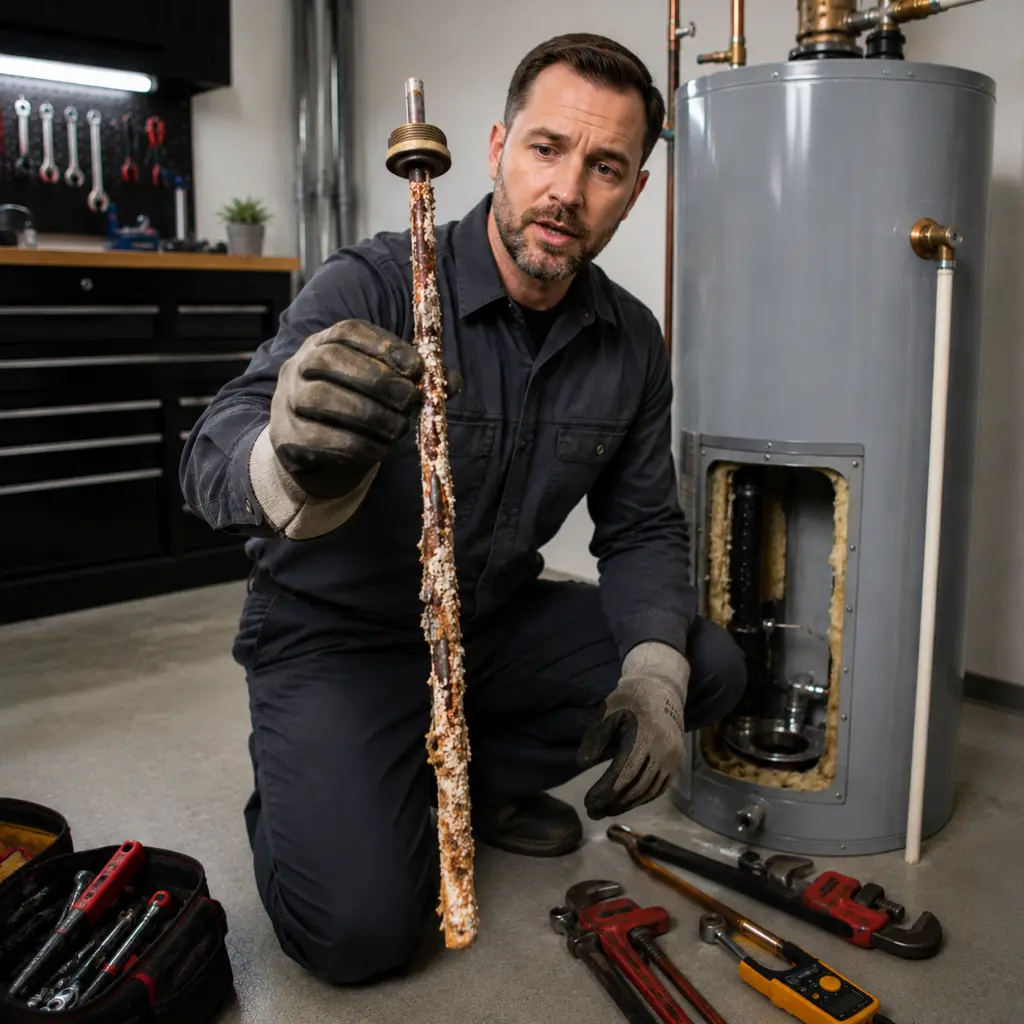
Water heaters contain sacrificial anode rods designed to help slow corrosion inside the tank. Once these rods wear down, internal tank surfaces may become more vulnerable to rust formation and corrosion damage.
Anode rod replacement may help reduce internal tank corrosion before water heater tank corrosion begins affecting water quality or weakening the tank structure itself.
Tank Deterioration and Leak Risks
As corrosion continues affecting older tanks, weakened metal surfaces may eventually develop moisture leaks or visible rust spots around fittings and plumbing connections. A leaking water heater tank may begin with small drips before progressing into larger water heater leak risks.
Internal tank corrosion often becomes more severe once rust buildup and sediment remain untreated for long periods.
Other Sources of Rusty Hot Water
Corroded Water Supply Pipes
Rusty water does not always originate from the water heater. In some homes, aging supply lines release small amounts of rust into the water as pipe walls continue deteriorating over time.
This issue is often found in older properties where water line wear has been developing behind walls, beneath floors, or within underground service lines for many years.
Water Main Disturbances and Temporary Rusty Water
Municipal water system maintenance or nearby water main repairs may occasionally disturb sediment inside public water lines. Rusty water from water main disturbances often appears temporarily before clearing once the lines stabilize again.
If rusty water continues for extended periods or affects only the hot water supply, the issue may involve the home’s plumbing system rather than the municipal water source.
When Rusty Hot Water Becomes a Serious Problem

Warning Signs That Should Not Be Ignored
Recurring rusty hot water, visible rust around the tank, pressure fluctuations, or unusual water heater noises may indicate developing problems that require attention. Changes in water quality are often accompanied by declining system performance as wear progresses.
Homeowners should also monitor for moisture near plumbing connections, rust spots around the tank base, or inconsistent hot water delivery.
Situations That May Need Emergency Inspection
Sudden dark discoloration, complete loss of hot water, active leaks, or visible rust around plumbing connections may require immediate professional attention.
If water quality continues deteriorating or new symptoms begin appearing alongside discoloration, a plumbing inspection may help identify developing equipment or pipe failures before more extensive damage occurs.
Reducing Corrosion Risks
Routine flushing helps remove rust particles and sediment before corrosion problems become more severe and begin affecting water quality.
Routine inspections can help identify hidden corrosion, weakened piping materials, or aging water heater components before leaks begin developing. Early evaluation also gives homeowners the opportunity to plan upgrades gradually instead of facing unexpected failures.
A professional assessment can help determine whether repairs, pipe replacement, or water heater upgrades may improve long term system reliability.
Long-Term Solutions for Rust Prevention
Water Treatment and Filtration Systems
Filtration equipment and iron removal solutions can help reduce mineral contamination, rust particles, and other factors that affect household water quality. Water softeners may also help limit scale accumulation that contributes to corrosion and plumbing wear.
These treatment options are particularly beneficial in homes with recurring hard water conditions or elevated iron content in the local supply.
Modern Plumbing Upgrades for Older Homes
Replacing deteriorating materials with modern corrosion resistant alternatives can help reduce future rust related concerns. PEX and copper are commonly selected when upgrading aging galvanized water lines.
These improvements may also support better water flow, improved reliability, and fewer long term water quality concerns throughout the home.
Conclusion
Rusty hot water is often a sign that aging components, mineral deposits, or corrosion are affecting part of the home’s plumbing network. Whether the source is the water heater or older supply lines, ongoing discoloration should not be ignored.
Routine flushing, preventive maintenance, and timely inspections can help identify developing issues before they lead to leaks or equipment failure. If rusty hot water continues appearing, DNA Plumbing and Heating can inspect the system, identify the source of the problem, and recommend appropriate solutions to help protect water quality and maintain reliable hot water performance throughout the home.