Quick Summary
Picture a pipe letting go in the basement on a cold night, water pooling fast, and you realizing you have no idea where to shut it off. This guide shows you how to trace your main water line from the street to the point it enters your home, where to find the shutoff that goes with it, and what to do when the line is buried out of sight. If you cannot find your main water line or need help locating the shutoff valve, expert plumbing inspections can inspect your system and identify it safely.
Main Water Line vs Main Shutoff Valve: Know the Difference
These two terms often get used as if they mean the same thing, but they are not identical. The main water line is the pipe that carries water from the city supply or your well into your home.
The shutoff valve is corroded, stuck, or leaks when you try to turn it. Corrosion on the valve often points to older supply pipe, which can also leave water tasting metallic.
Finding the line usually leads you to the valve, since the valve is where the line enters the house. It helps to think of it as following the pipe until you reach the handle.
Where the Main Water Line Runs
Your water line does not begin at the wall. It travels underground before it ever reaches your home, and knowing that path makes the indoor search much easier.
If you are on city water
The line begins at the water main under the street and passes through a curb stop valve near your property line. In Michigan, it is buried deep below the frost line, so it does not freeze in winter. It then rises and enters the house, usually through the foundation wall or the basement floor on the side facing the street.
If you have a private well
On a well system, there is no city main. Water travels from the wellhead to a pressure tank inside the home, often in the basement or a utility area. The whole-house shutoff is usually located near that pressure tank.
How to Find the Line Inside Your Home
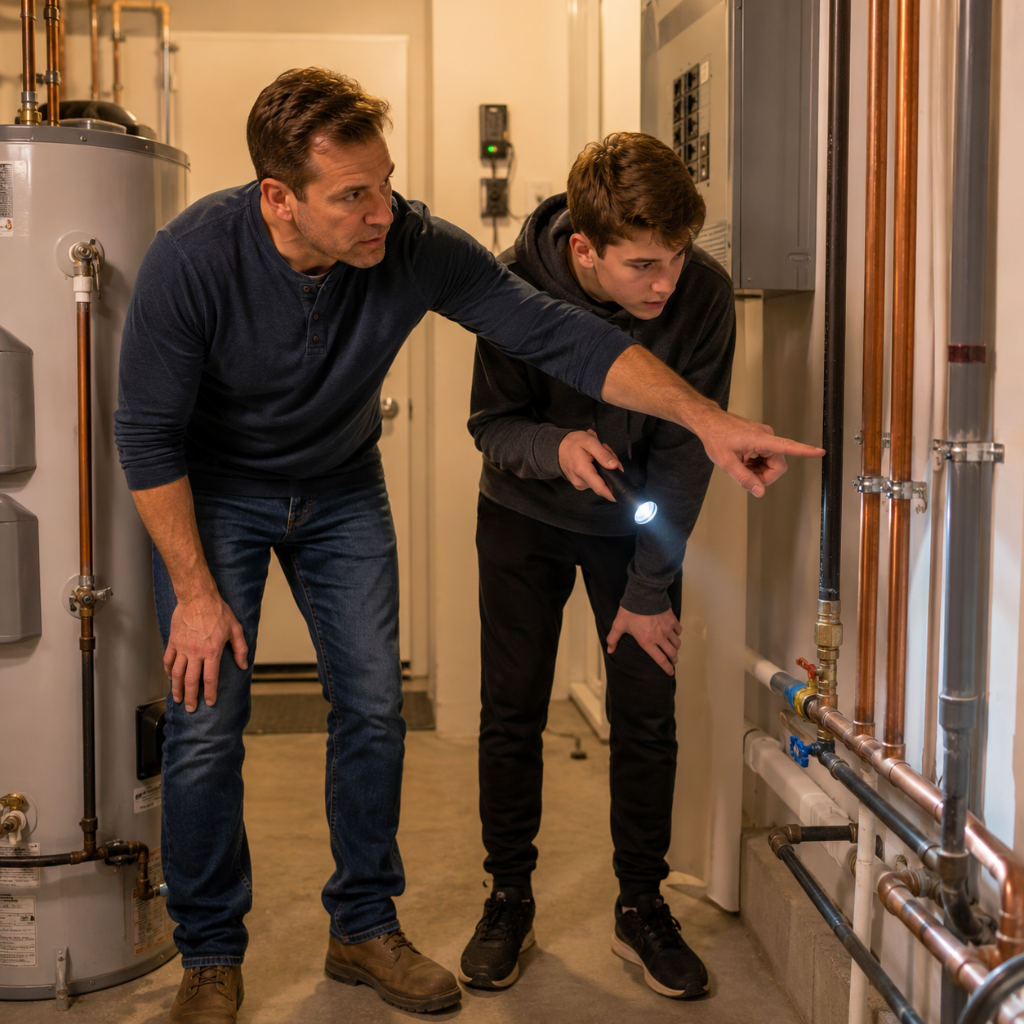
Start at the most likely spot and work outward. In our experience, the line and its shutoff turn up in a small number of predictable places.
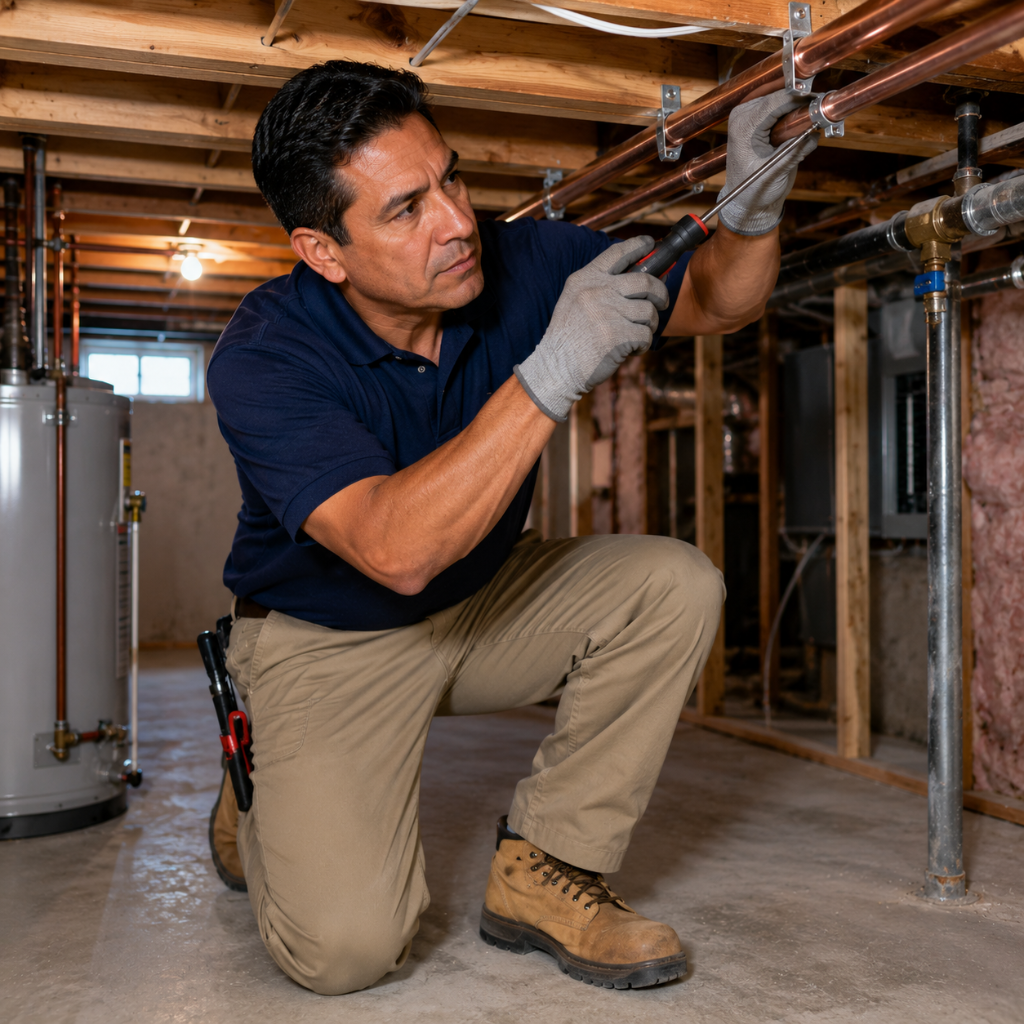
The basement or crawlspace, on the wall facing the street. This is the most common entry point in the area.
Near the water meter. Follow the pipe on either side of the meter to find the valve that sits on the line.
In a utility or mechanical room, close to the water heater or furnace.
On a slab home with no basement, check near the water heater, in the garage, or behind an access panel in an outside wall.
On well water, look near the pressure tank in the basement or a utility closet.
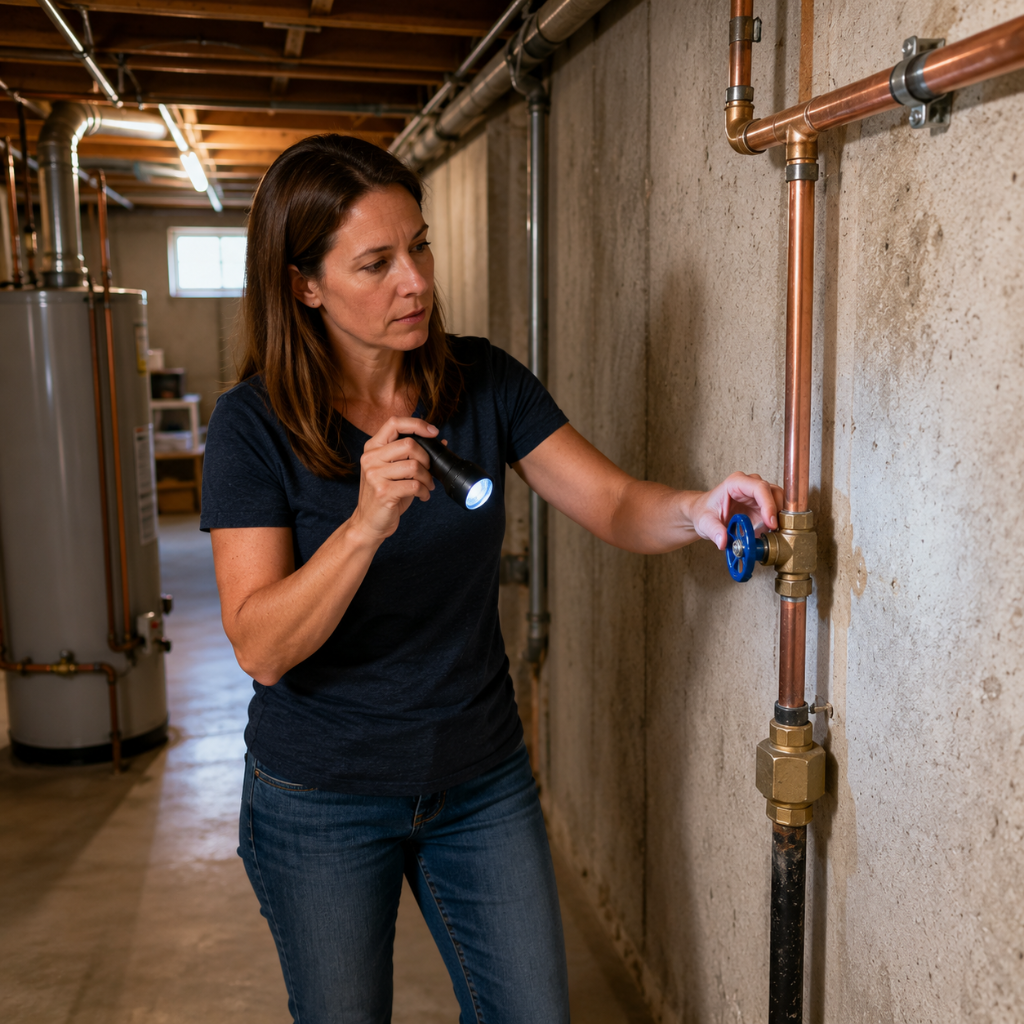
The shutoff will have one of two handles. A lever style closes with a quarter turn, while a wheel style closes when you turn it clockwise. It is worth turning it a little now to make sure it is not seized, then labeling it so anyone in the house can find it fast.
Tracing the Line Out to the Street
Sometimes you need to know where the line runs underground, for a repair, a suspected leak, or before any digging. The water meter and the curb stop near the property line mark the two ends of the buried run, and the pipe generally takes the shortest sensible path between them and the house.
A locator will mark your underground utilities at no cost, which keeps you from striking a gas or electric line by accident. For an exact route without tearing up the yard, professional line locating equipment can trace the pipe precisely.
What to Do If You Cannot Find It
Some homes make this harder than others. Older properties, finished basements, and unmarked or painted-over valves can all hide the line.
In our experience, the quickest route is to follow the cold-water pipe back from the water heater to the point where it enters the home. If that still leads nowhere, your water utility can tell you where the service line enters the property, and a plumber can locate both the line and the valve for you.
When to Call a Professional
Locating the main water line is something many homeowners can do themselves. Repairing the line or the plumbing around it usually needs professional equipment and know-how. Consider calling a plumber if:
The shutoff valve is corroded, stuck, or leaks when you try to turn it.
You notice wet patches in the yard, an unexplained increase in your water bill, a sudden drop in water pressure, or unusual gurgling noises or vibrating, that could indicate a plumbing problem requiring further investigation.
The main water line is older galvanized steel or lead pipe and may be due for replacement.
You need to dig near the line or replace part of it, since accidental damage turns a small job into a costly one.
Conclusion
Knowing where your main water line enters your home can save valuable time during an emergency and help you recognize potential plumbing problems early, from low water pressure and recurring leaks to changes in water quality. In many cases, aging or corroded water supply pipes are the underlying cause.
If you cannot find your main water line, your shutoff valve will not budge, or you need help locating a buried service line, DNA Plumbing and Heating is here to help. Our trusted plumbers serving the Ann Arbor area can trace the line, inspect its condition, and recommend the right solution before any work begins. We also provide 24/7 emergency plumbing services when urgent water line problems can’t wait.