Introduction:
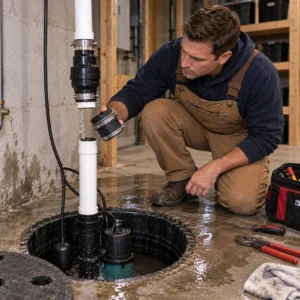
A sump pump discharge pipe disconnected anywhere along its run needs putting right immediately, because the pump keeps working and everything it lifts pours out at the break instead of leaving the house. If the separation is indoors, that water lands on the basement floor and drains back to the pit, so the pump cycles endlessly and moves nothing.
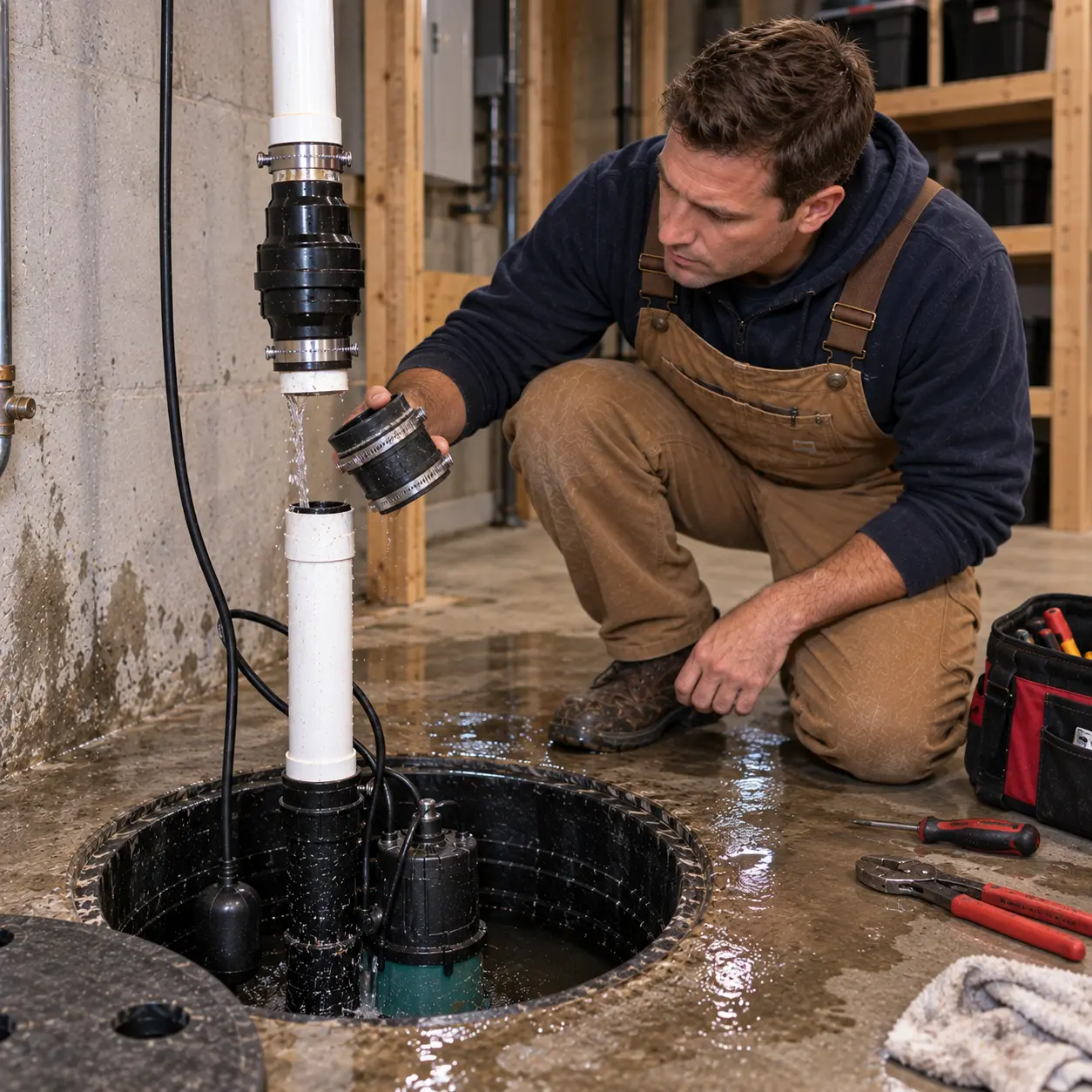
The repair itself is straightforward. We inspect the full discharge connection, find the exact point of separation, establish why it let go, then replace the damaged fitting or section, secure the joint and test the system before we leave. If the pipe has damaged the surrounding setup or the cause is unclear, sump pump repair can address the problem properly.
Why Does a Sump Pump Discharge Pipe Keep Disconnecting?
A discharge line lives a harder life than most of the pipework in a house. It is jolted every time the pump starts and stops, and it usually relies on two or three joints to hold the whole run together.
Vibration is the most common reason one of those joints gives way. A connection held by friction or by a slack clamp works itself loose over a season or two, and a check valve that slams shut at the end of every cycle sends a shock straight into the nearest fitting.
Materials age as well. Rubber couplings harden, screw clamps corrode and lose their tension, and that is why the vertical section just above the pump is where we most often find the pipe has come apart.
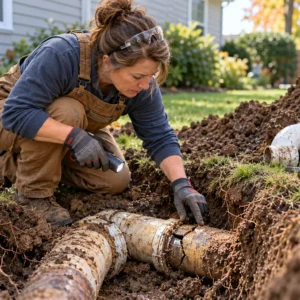
Some joints were never right to begin with. A push fit that was never glued, a mismatched adapter or a clamp cranked far too tight will all separate under nothing more than normal running. Outdoors the causes are seasonal and physical. Water trapped in an exposed run expands as it turns to ice and forces joints apart without necessarily cracking the pipe, while frost heaving , settling soil and landscaping work pull buried sections away from each other.
Two installation faults make every one of these more likely. A long run with no strapping puts its entire weight onto a couple of connections, and a pump that is not sitting flat in the basin twists the pipe at the first fitting each time the motor kicks in.
What Happens When a Sump Pump Discharge Pipe Comes Loose?
The pump can sound completely normal while all this is going on, which is why the fault usually goes unnoticed until there is water across the floor.
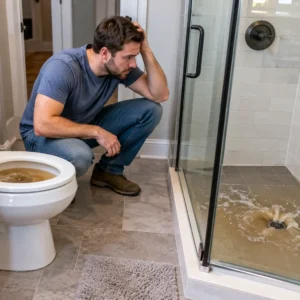
A break indoors discharges into the room, and most of that water finds its way back into the pit, so the pump lifts the same water over and over. Constant running wears the motor and the switch quickly, and a pump already working flat out has nothing left to give when a storm arrives.
The wet floor brings problems of its own. Standing water keeps that corner of the basement damp and soaks anything stored near the pit, which is how mold takes hold around the pit if the break goes unnoticed for a few weeks. Water pooling around a pump that is plugged in is also a reason to isolate the circuit at the breaker before going anywhere near it.
A separation outside is quieter but no less costly. The water is released beside the wall, soaks down to the drain tile and returns to the pit within the hour, which keeps the ground against the foundation saturated.
How We Fix a Disconnected Sump Pump Discharge Pipe
The approach is the same whether the pipe lets go at the pump or halfway across the yard, and we set out an estimate before any work begins.
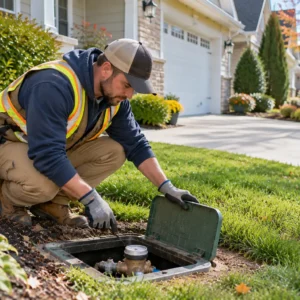
- Inspect the full discharge connection. We follow the line from the fitting at the pump, up through the check valve and out to the point where the water is released.
- Find the exact point of separation. Running the pump under controlled conditions shows where the water is escaping, which is not always where the wet floor suggests.
- Replace damaged fittings or pipe. Perished couplings, split adapters and cracked sections are cut out and renewed rather than patched back together.
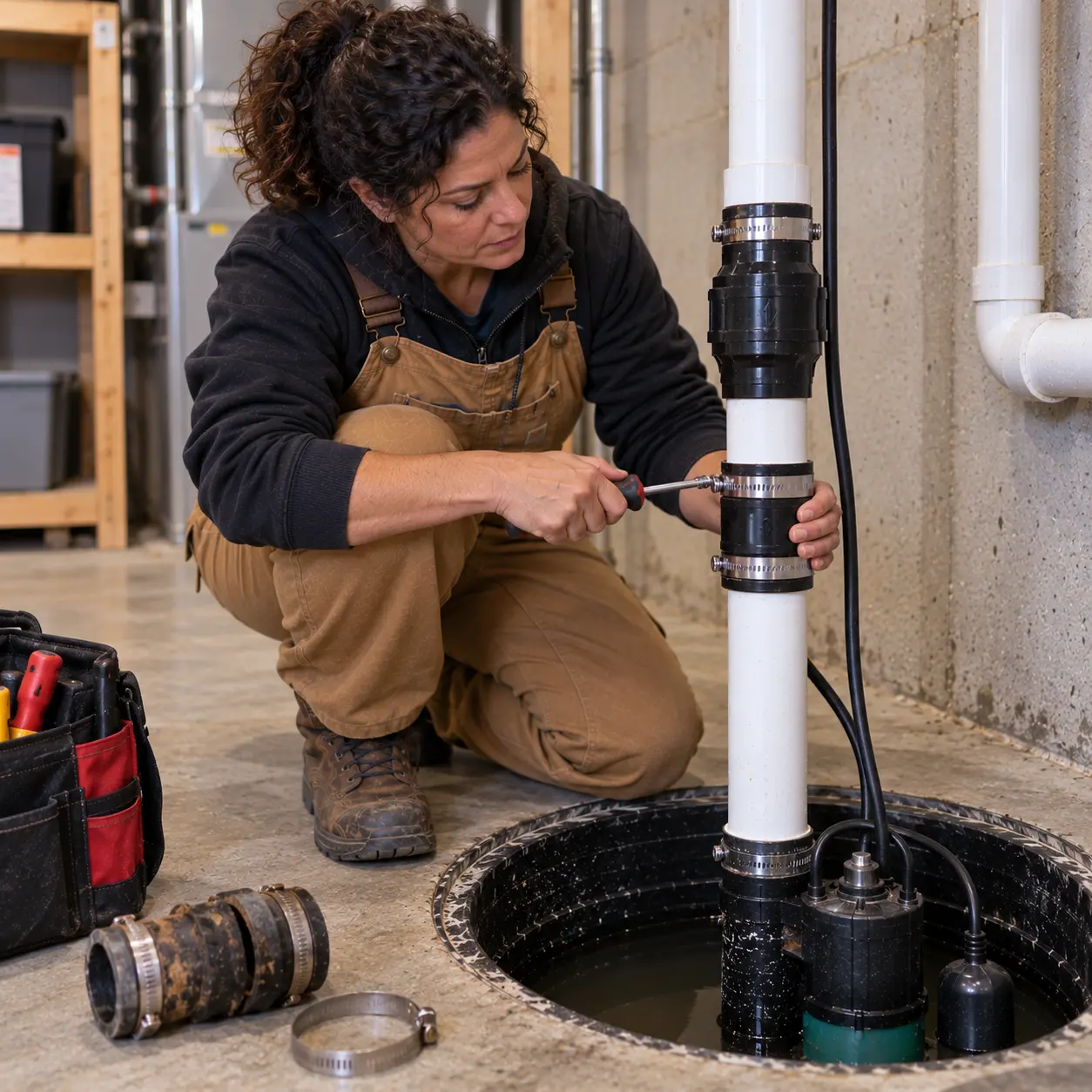
- Secure the connection properly. The joint is remade to suit the pipe and the position, and the run is supported so the load is not carried by the fitting.
- Check for blockage or another cause. A restricted line raises pressure at the joints, so we confirm the pipe is clear and the flow is what it should be.
- Test the system afterward. We run the pump through full cycles and check every connection under load before finishing.
How to Prevent the Discharge Pipe From Coming Loose Again
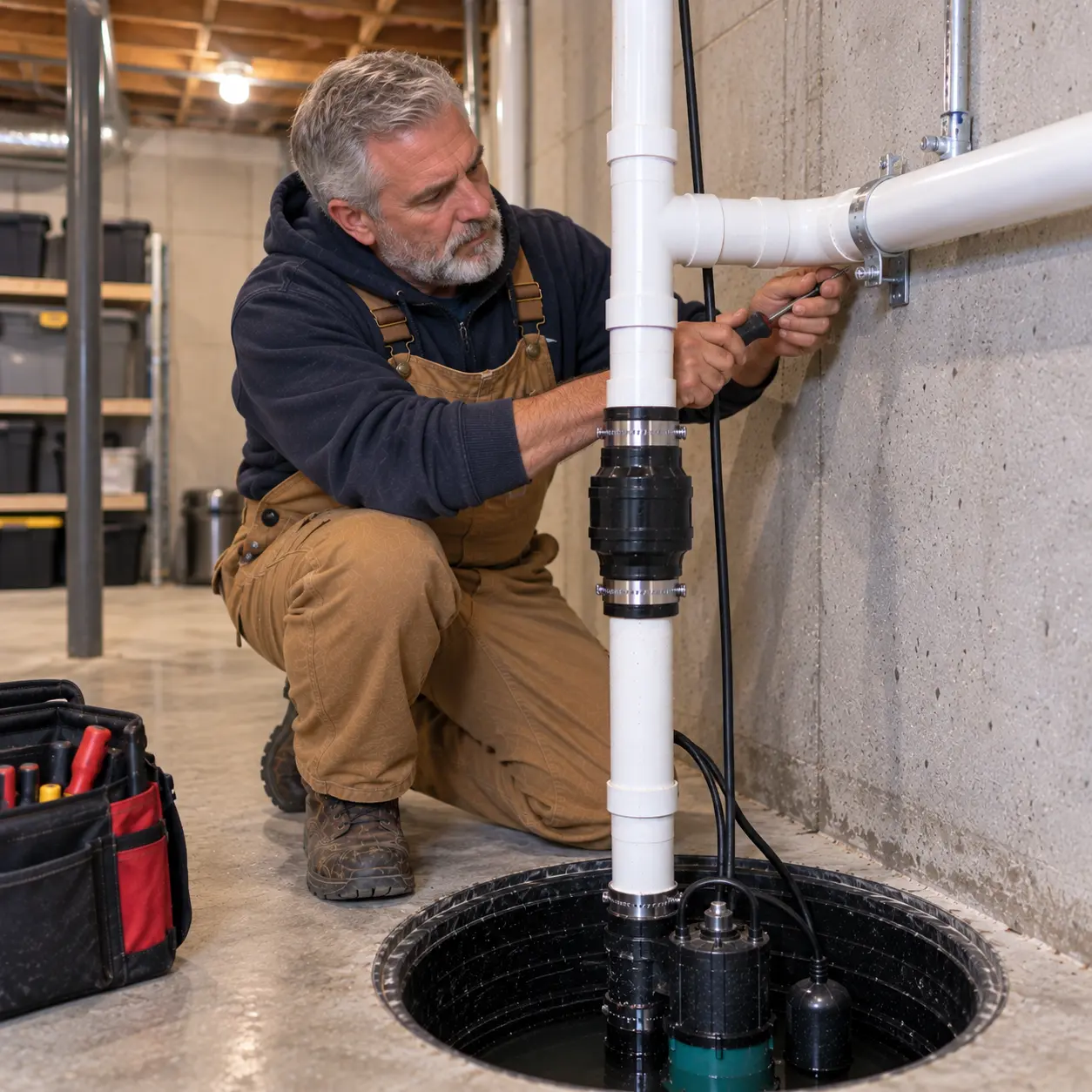
Support does most of the work. Straps on the vertical section and along any horizontal run stop one joint carrying all the movement, and a flexible union at the pump absorbs vibration that would otherwise travel into the fixed pipework.
The rest is seasonal attention. Check the clamps twice a year, replace rubber couplings that have gone hard or shiny rather than waiting for them to split, and make sure the pump sits level in the basin so it cannot rock against the pipe as it runs.
If the pipework thumps at the end of every cycle, a quiet check valve takes that shock out of the system. It is also worth knowing where the buried line runs before any digging or planting, and noting down any hose taken off for winter so it goes back on once the ground thaws.
When Should You Call a Professional?
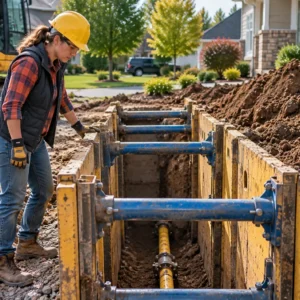
Anything you cannot reach or see is the obvious line to draw. That covers a pipe that has separated underground, glued PVC that needs cutting and refitting, a section that is cracked or crushed as well as loose, and any situation where there is already water sitting around the electrics.
A joint that keeps coming apart however often it is clamped is telling you something else is wrong, usually the support, the alignment or the pressure in the line. The same goes for a pump that has been running continuously, since it needs checking over as well as the pipework.
Our technicians handle this work for homes and commercial properties across Northville, Ann Arbor and the surrounding Michigan area.
Getting the Line Reconnected for Good
A sump pump discharge pipe disconnected once will usually come apart again unless the reason is dealt with, whether that is vibration, a tired coupling or a run with nothing holding it up. Reconnecting it is quick work. Making sure it stays connected is the part worth getting right.
If your pipe has come loose, or the pump is running far more than it should, arrange a visit from our team and we will inspect the system, explain what we find and put it back together properly. Emergency support is available 24/7 if there is water on the floor now.