Introduction:
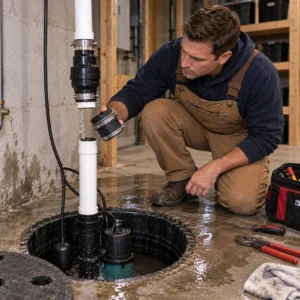
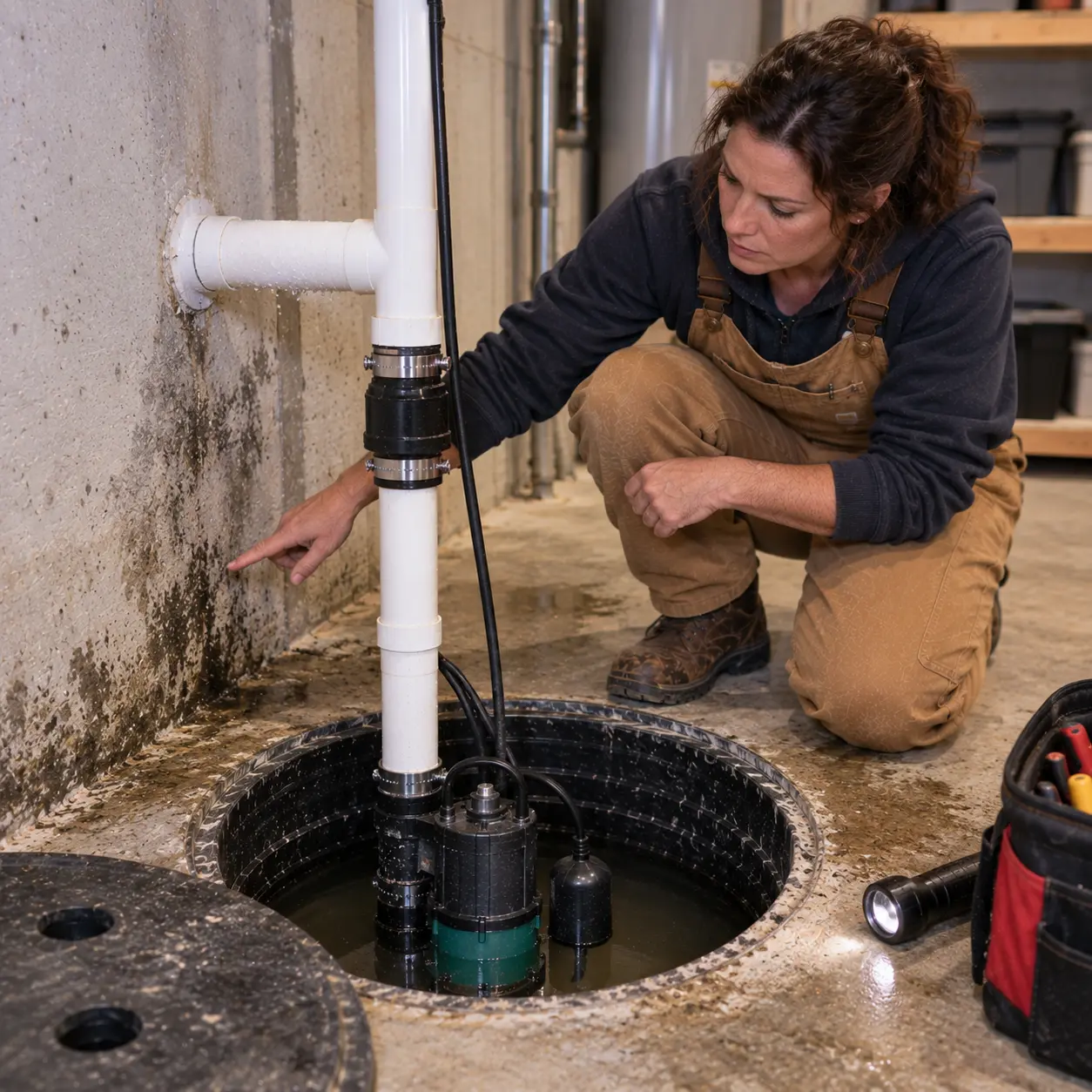
Mold grows around a sump pump because the pit holds standing water in the coolest, least ventilated corner of the house, and mold needs nothing more than moisture, still air and something organic to feed on. So yes, a sump pump can cause mold, though only when the system is leaking, the pit is left uncovered, or water sits in the basin between cycles instead of being cleared.
The growth itself is the visible part of a water problem. Wiping it off deals with what you can see, and it returns within weeks unless the moisture source is found and stopped. A properly installed sump pump system can help control basement moisture and reduce the conditions that allow mold to return.
What Is Causing the Moisture Around Your Sump Pump?
Work out which of these applies before you clean anything, because the answer decides the repair.
- An open or ill fitting lid. An uncovered pit evaporates water into the room all day, and that corner of the basement stays humid enough for growth on nearby wood, drywall and boxes.
- Water permanently standing in the pit. A float set too high, an undersized pump or a constant flow of groundwater leaves the basin part full at all times.
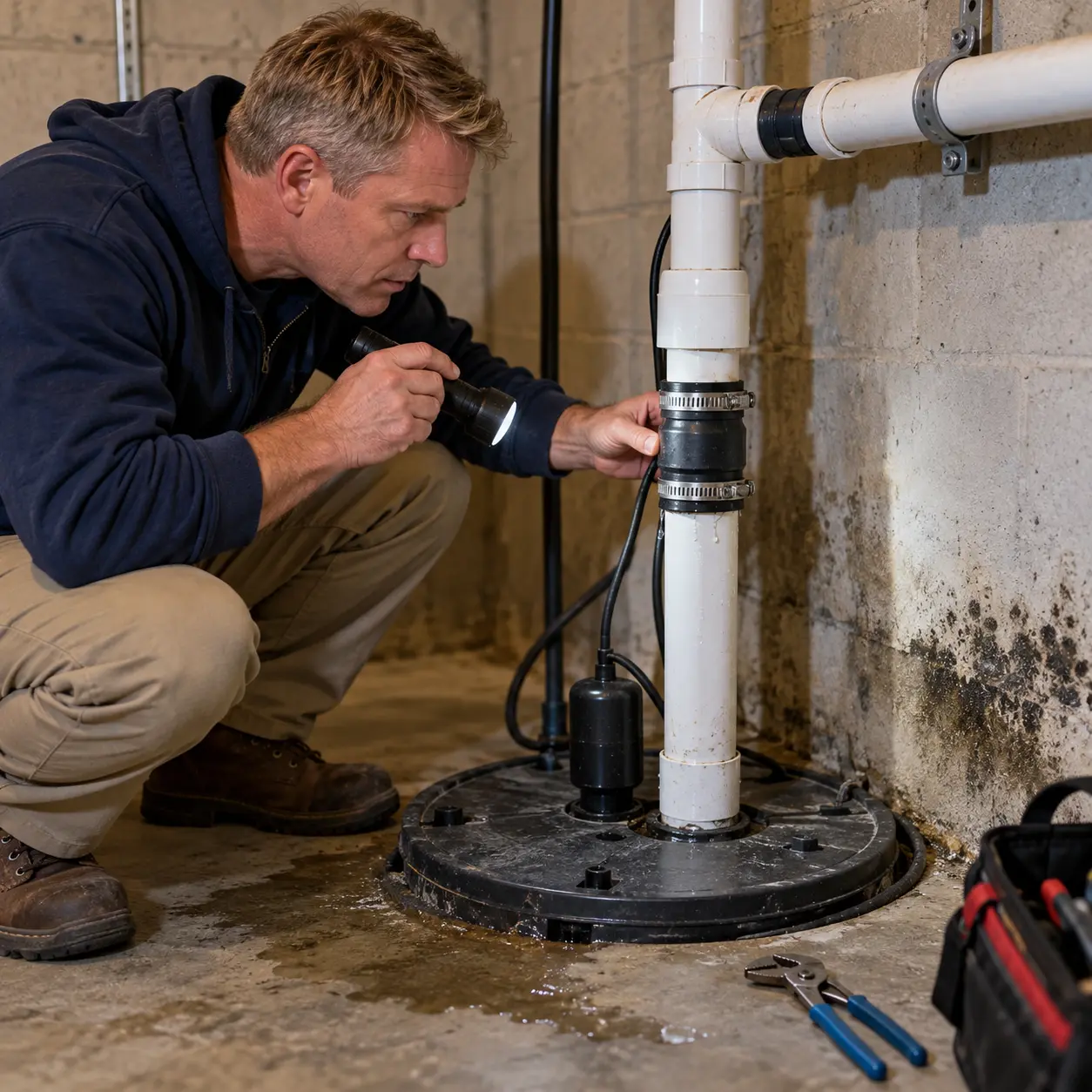
- Drips at the pump and pipework. Perished couplings, loose clamps and a cracked discharge fitting put a slow trickle onto the floor, often behind the pit where nobody looks. The same clamps and couplings are what let go entirely when a sump pump discharge pipe disconnected above the basin empties the whole cycle onto the slab.
- Water coming back down the discharge line. A pit that refills the moment the pump stops never gets a chance to dry out between cycles, and the reasons discharge water keeps coming back sit on the pipe side rather than the pump.
- Seepage through the wall or slab. Damp patches, white mineral staining or a dark line at the base of the wall point to water arriving through the structure rather than the pump.
- Summer condensation. Warm humid air meeting a cold basin and discharge pipe leaves them wet with no leak involved at all.
- Silt and organic debris in the basin. Leaf matter, soil and grit washed in from the drain tile decay in the water, which is where a sour, musty smell usually starts.
How to Fix Mold Around the Sump Pump
Take it in order. Water first, cleaning second, drying third, because cleaning a surface that is still being wetted achieves nothing.
Switch the pump off at the breaker before you handle anything in or around the pit. Clear the silt and debris out of the basin while the power is off, then rinse it with clean water and let the pump send that away, which takes the smell with it.
Now deal with the growth itself. Small surface patches on concrete or block can be cleaned with a household mold cleaner used to its instructions, with gloves, eye protection and a mask, plenty of ventilation, and never two cleaning products mixed together.
Stop and call a mold remediation specialist if the growth covers a large area, has spread into drywall, insulation or framing, or if the water involved was sewage or drain water. That is a different trade to plumbing, and the material usually has to come out rather than be washed down.
Then dry the space out. Run a dehumidifier until the area stays dry, get wet cardboard and fabric out of the basement, and leave the corner clear enough for air to move around the pit.
How to Prevent Mold Around the Sump Pump
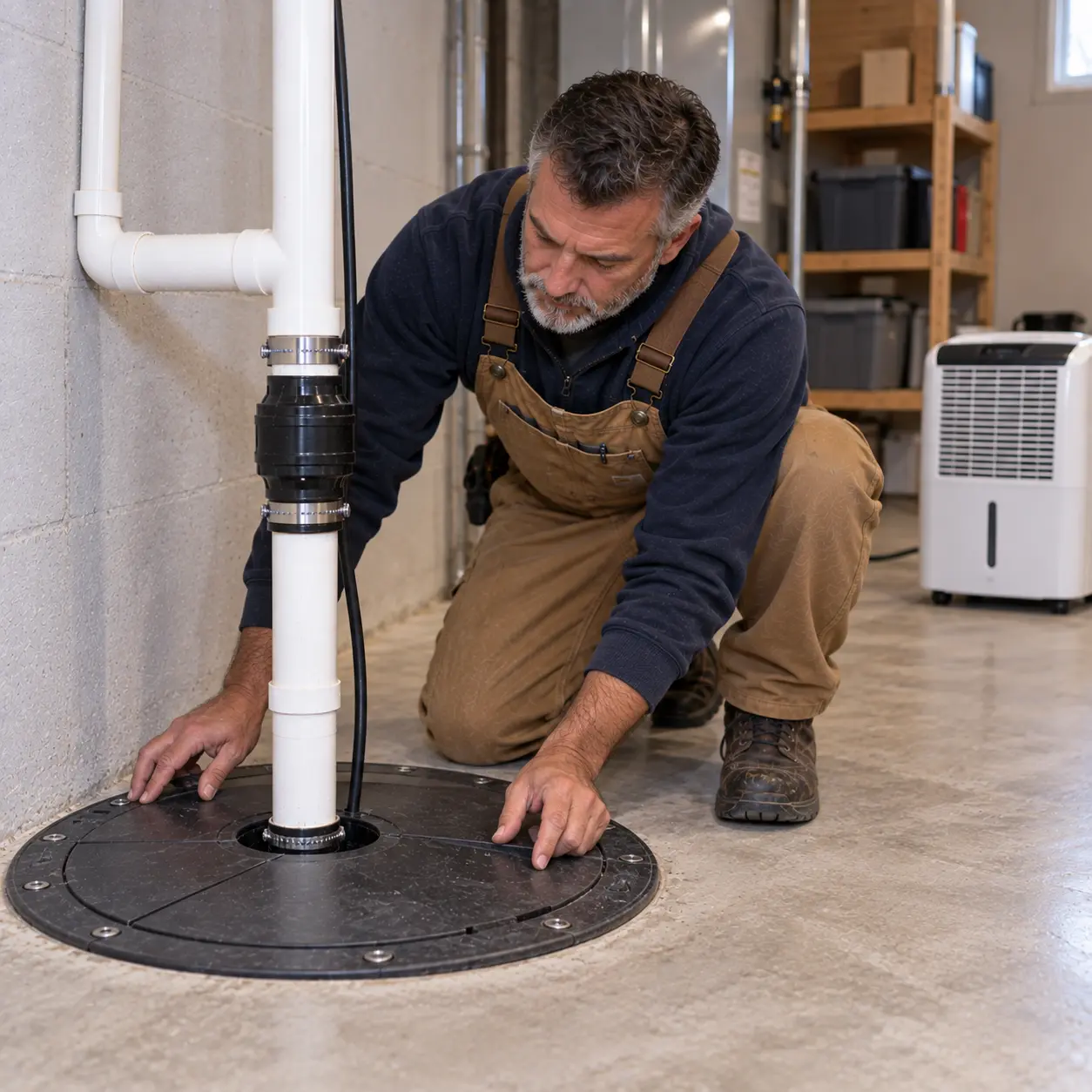
- Keep a sealed lid fitted and check the seal has not been left off after a service visit.
- Put the pump on a maintenance schedule so that a weak float switch or a tired motor is caught before the pit starts sitting full.
- Run a dehumidifier through the humid months and empty or plumb the reservoir so it is not adding to the problem itself.
- Never vent a clothes dryer into the basement, which puts warm moisture into the same still air.
- Keep stored belongings off the floor and out of that corner, especially cardboard, paper and anything upholstered.
- Look for the early signs. A musty smell, a rust streak at a joint or a damp ring on the floor all arrive before anything visible grows.
What If Mold Keeps Coming Back?
Recurring growth means the water source was never found. Cleaning removes the evidence, so the second or third return is worth treating as a diagnostic clue rather than a nuisance.
Consider a typical case. The pit looks dry, the pump sounds fine, yet the wall beside it darkens for two days after every heavy rain and the growth reappears in the same spot each spring.
How to Tell if the Sump Pump Is Really the Problem
Mold around a sump pump does not always mean the pump itself is causing the moisture. Check for leaking pipe connections, water seeping through the wall or floor, condensation, poor drainage, or high basement humidity. If the pump is working normally but the same area stays damp, the real problem may be somewhere around the sump system rather than the pump itself.
Conclusion
If mold around the sump pump keeps returning after every clean, the sensible next step is to have the water source traced properly rather than guessing at it. Tell our team what your basement is doing and we will inspect the pit, the pump and the pipework around it, explain what we find and set out an estimate before any work starts, for homes and commercial properties across Northville, Ann Arbor and the surrounding area. Emergency support is available 24/7.