At a glance
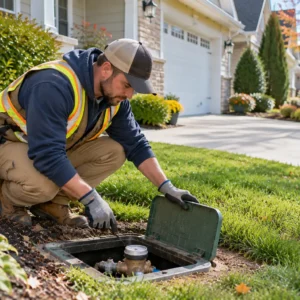
If sump pump discharge water comes back into the pit within seconds of the pump shutting off, the discharge line may be returning the same water rather than the ground refilling the basin. The pump should carry that water away from the house, so check the check valve first and inspect the discharge pipe for blockages, freezing, sagging or an outlet that is too close to the foundation. Sump pump services can help identify and correct problems with the pump and discharge setup.
What Causes Sump Pump Discharge Water to Come Back?
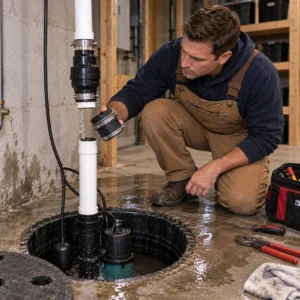
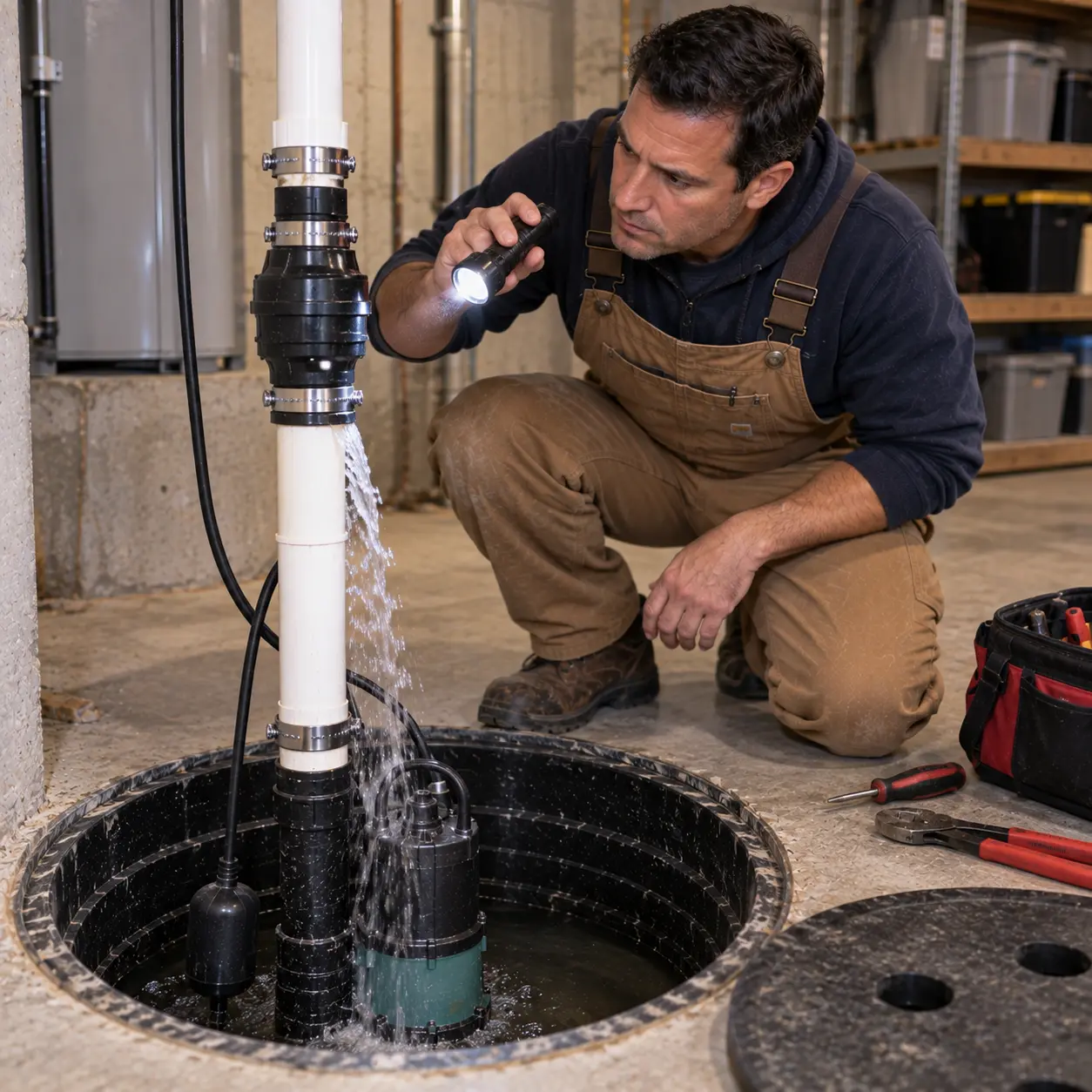
Failed or Missing Check Valve
The check valve is the one-way valve on the discharge pipe that holds the column of water above the pump. With no valve fitted, or with a flap held open by grit or worn out of shape, that column drops straight back into the pit. This is the most common source of sump pump backflow and the quickest to confirm, because the water returns immediately rather than after a delay. Grit on the seat, a hardened flap and a valve fitted the wrong way round are all what makes a check valve stop sealing in the first place.
Clogged or Blocked Discharge Pipe
Silt, leaves, stones and small animals all find their way into an open outlet. A restricted line lowers the flow rate, so the pump cannot clear the pit and the water it does lift falls back once the motor stops. An outlet buried under mulch, snow or a flower bed is a common culprit and easy to miss from indoors.
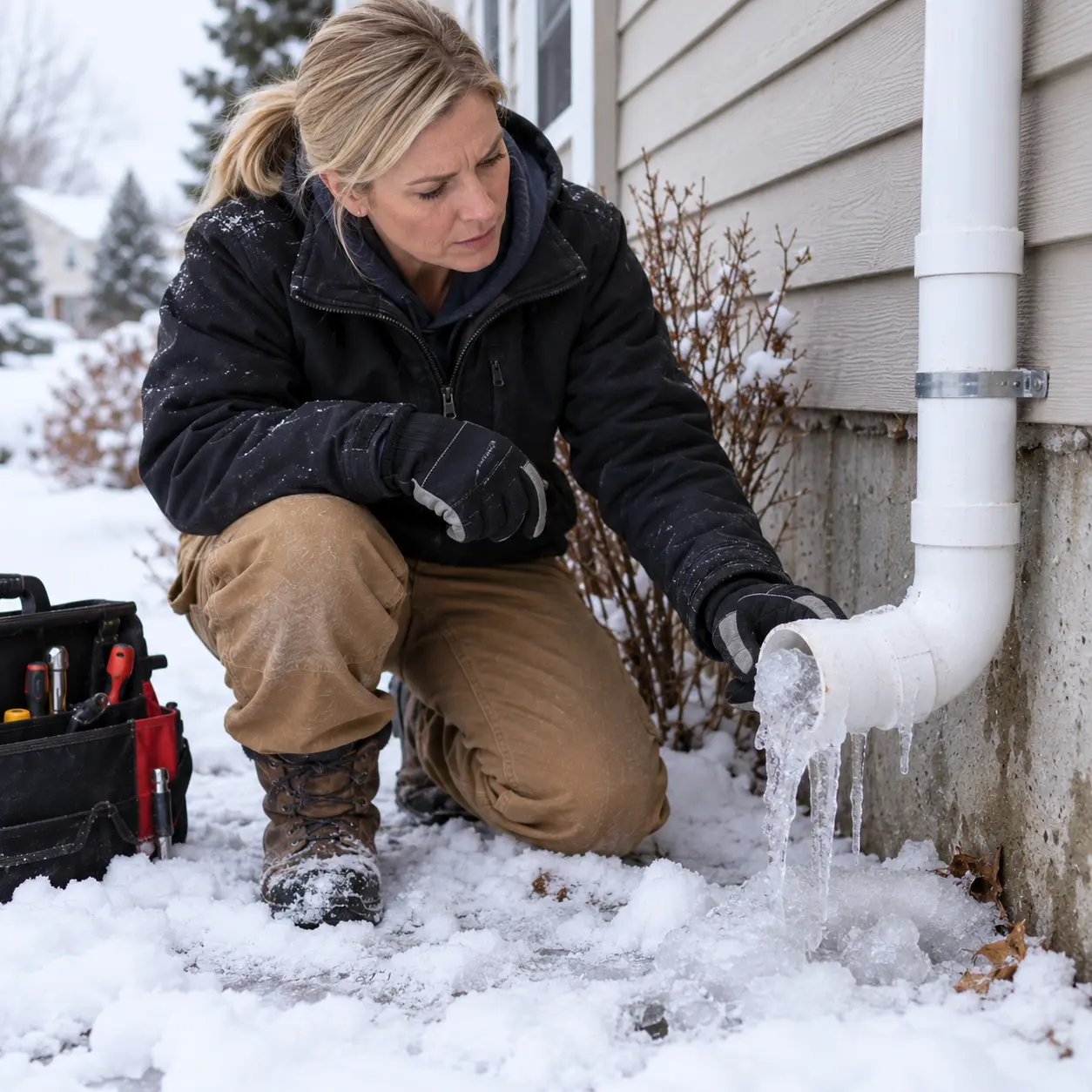
Frozen Discharge Pipe
In a Michigan winter, water sitting in an exposed line freezes at the outlet first and the ice plug grows back up the pipe. The pump then runs against a closed pipe, moves nothing, and everything it lifts returns to the pit.
Improper Discharge Pipe Slope
The line should run continuously downhill once it leaves the vertical section at the pump. A flat run leaves standing water in the pipe, which drains back whenever the valve lets go and freezes readily in cold weather.
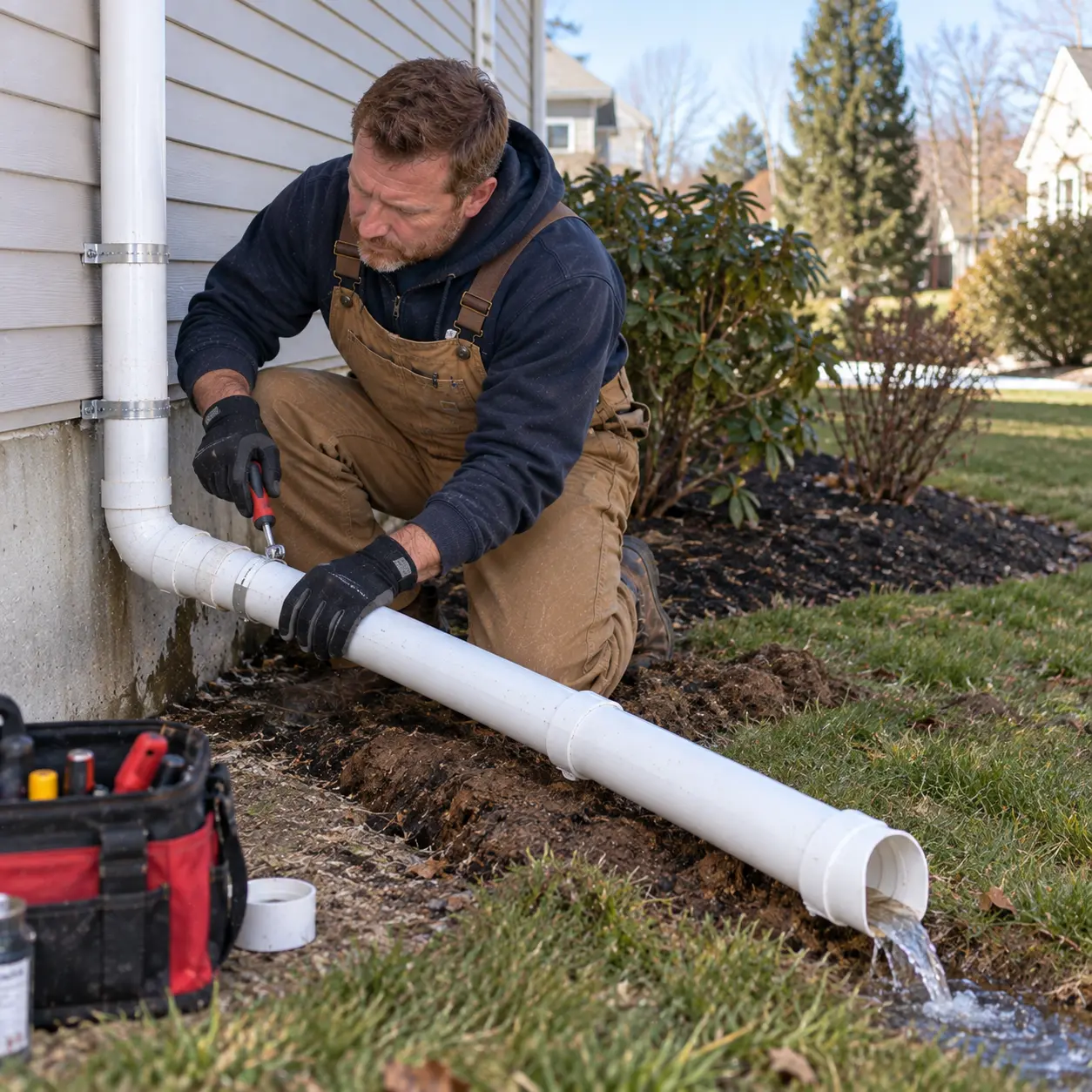
Discharge Pipe Is Too Close to the Foundation
Water released beside the wall soaks into the backfill and finds its way to the drain tile, and the pump lifts the same water again. That cycle keeps the soil against the foundation saturated, which is what leads to seepage and pressure on the wall over time.
The outlet needs to sit several feet clear of the house on ground that slopes away, and local rules also govern where sump water may be released.
Damaged, Crushed, or Sagging Pipe
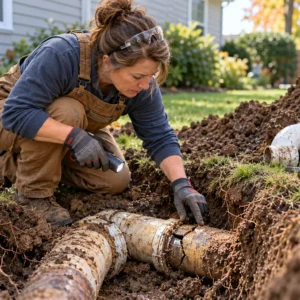
Buried lines get crushed by vehicles, settling soil and landscaping work. Low spots in an unsupported run hold water permanently, and that trapped water is often what homeowners hear returning to the pit. Cracked joints leak water back into the ground beside the house, which returns to the pit by a slower route.
Excessive Groundwater or High Water Table
Sometimes nothing is broken. During a spring thaw or a run of wet weather, groundwater reaches the drain tile faster than usual.
The pit refills within a minute or two of the pump stopping, over and over, and the water arrives from the inlet rather than down the pipe. This matters because replacing a working check valve will not change it, and the answer is usually pump capacity or a backup pump instead.
How to Tell If Water Is Flowing Back or New Water Is Entering
Lift the lid, run the pump through one cycle and watch the pit for a minute. The pattern tells you which problem you have.
- Backflow. The pump stops, water audibly runs down the discharge pipe, and the level jumps within a few seconds. The pump often restarts almost immediately.
- New groundwater. The pump stops, the pit stays quiet, and the level creeps up gradually as water seeps in through the drain tile.
Make that check before you buy any parts. A new valve fitted to a pit that is filling with genuine groundwater solves nothing, and a pump that is short cycling on returned water will keep wearing itself out until the discharge side is put right.
How to Stop Sump Pump Discharge Water From Coming Back
- Fit or replace the check valve, matching the pipe size and pointing the arrow away from the pump.
- Clear the outlet and the line of silt, leaves and debris, and screen the end against animals.
- Support and repair the pipe so there are no crushed sections or low spots holding water.
- Correct the slope so the run falls away from the house along its whole length.
- Extend the outlet farther out onto ground that drains away from the foundation.
- Deal with freezing by clearing the outlet before winter and reviewing how the line is routed and terminated.
- Get the system inspected if the cause is not obvious or the line runs underground.
What Happens If You Ignore Sump Pump Discharge Backflow?
The soil next to the foundation stays saturated, which is the condition that causes seepage, damp and pressure against the wall. A pit that never fully empties keeps that corner humid too, which is how mold takes hold around the pit while the pump appears to be working normally.
A pump already working twice as hard is the one most likely to quit during the heaviest rain of the year.
When Should You Call a Professional?
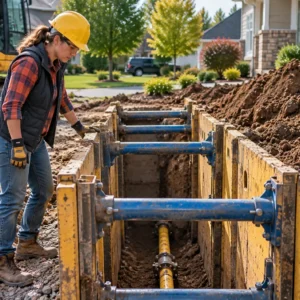
The discharge line is buried and you cannot trace where it ends. The pipe keeps freezing every winter despite clearing the outlet. Water is pooling against the foundation or appearing on the basement floor. The line needs re-routing, re-sloping or digging out.
Our technicians trace the discharge from the pit to the outlet, test the valve and check the pump itself before recommending anything, for homes and commercial properties served by our plumbers covering Ann Arbor and the surrounding area. If sump pump discharge water comes back every time the motor stops, it is worth having looked at before the next storm.