
Introduction:
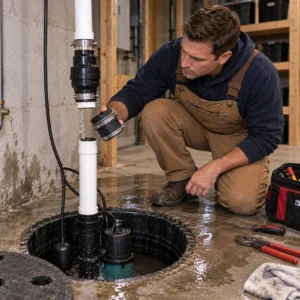
Sump pump check valve failure means the one-way valve on the discharge pipe can no longer seal, so water the pump has just pushed out runs straight back down into the pit. The common causes are debris holding the flap open, a rubber flap that has hardened or worn, a valve fitted the wrong way round or on the wrong section of pipe, corrosion inside an older valve, and a discharge line that is blocked or sagging.
The signs are easy to spot once you know them. The pump restarts every few seconds, you hear a thud or a gurgle after it shuts off, the pit refills as soon as it has emptied, and the couplings stay damp. For ongoing check valve problems, our sump pump installation services can inspect the discharge setup, and restore a reliable sump pump system.
What Is a Sump Pump Check Valve?
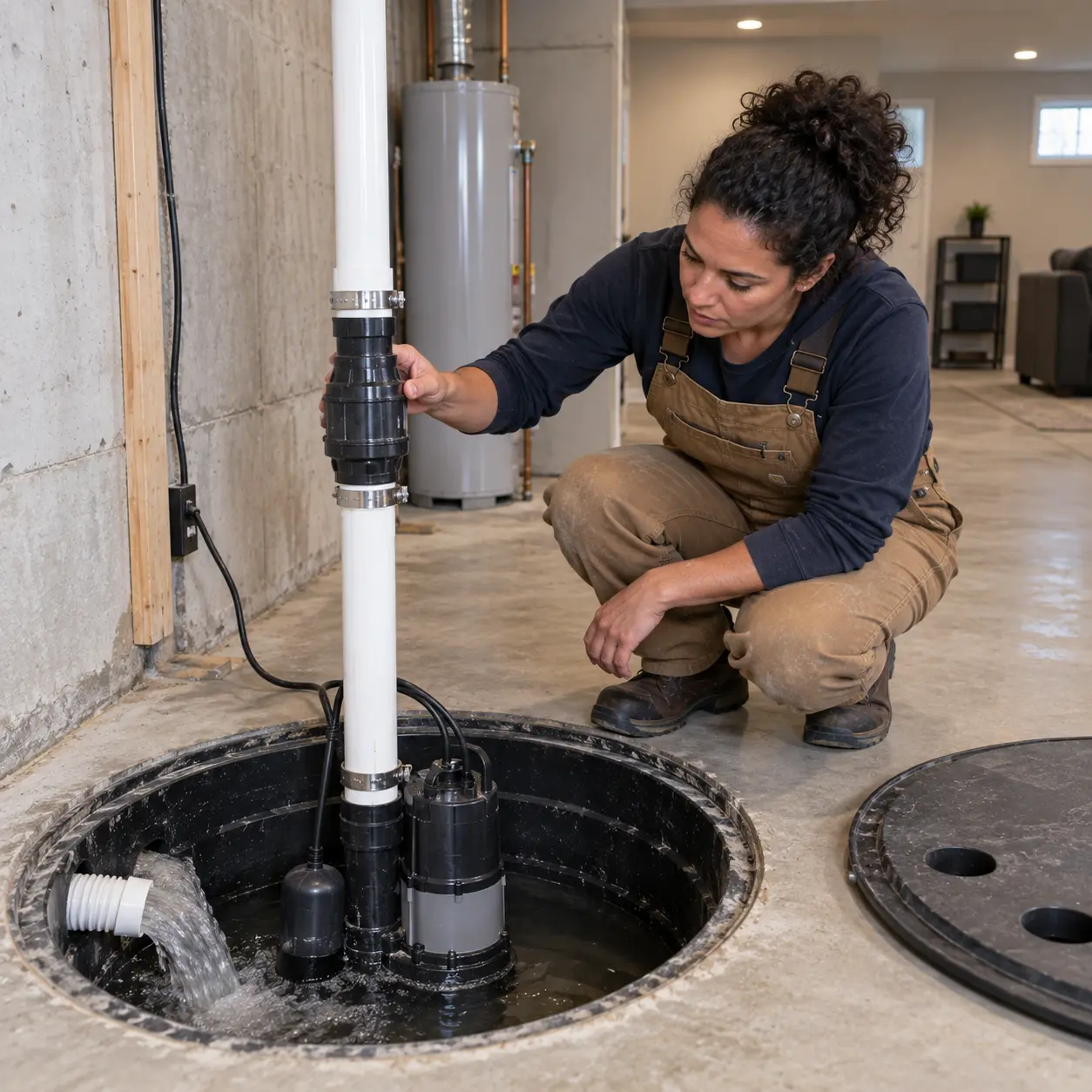
The check valve is a short one-way valve fitted into the vertical discharge pipe just above the pump, usually joined with rubber couplings and hose clamps so it can be removed. Inside is a flap or spring loaded disc that opens under the pressure of pumped water and drops closed when the pump stops, and an arrow on the body shows which way the water should travel.
Its job is to hold the column of water standing in the discharge pipe. Without it, that water falls back the moment the motor stops, and the pump lifts the same water again.
Common Causes of Sump Pump Check Valve Failure
Dirt and debris: Silt, gravel, and grit can collect around the valve seat, preventing the flap from closing properly.
Worn seals: Stiff, cracked, or misshapen rubber seals can allow water to flow back into the sump pit.
Incorrect installation: A valve fitted in the wrong direction or position may restrict water flow or fail to close correctly.
Age and corrosion: Over time, the valve body, hinge, and other components can deteriorate, particularly when handling dirty or gritty water.
Discharge pipe problems: A sagging, restricted, or partially blocked pipe can affect flow and place extra pressure on the valve, sometimes mimicking check valve failure. Check the whole discharge system before replacing the valve, because there are several reasons discharge water keeps coming back into the pit that have nothing to do with the flap.
Warning Signs of a Failing Check Valve
- Short cycling. The pump runs, stops, then restarts within seconds, which is the classic sign that the water it just moved has come back.
- A bang after shutoff. Returning water slams the flap shut and sends a thud through the pipework. Quiet, spring loaded valves are made to prevent it.
- Gurgling or trickling. Water running back into the pit once the motor stops points to a flap stuck open or fouled.
- Water rises straight after a cycle. A pit that refills without any rain is refilling from the pipe, not the ground.
- Damp around the valve. Drips or mineral staining at the couplings usually mean loose clamps or a cracked body.
Sump Pump Check Valve Problems vs Other Pump Problems
Several sump pump faults look alike from the top of the pit, so separate them before buying parts.
- Frequent cycling. A failed valve is one cause. A float set too low, or a pit undersized for the water coming in, produces the same pattern without any backflow.
- Slow draining. A blocked or frozen discharge line, a clogged impeller or an undersized pump will all empty the pit slowly, even with a sound valve.
- The pump does not start at all. That points to power, the switch or a float jammed against the side of the pit, because a valve fault never stops the motor running.
- A leak near the pipework. Water can come from the valve body, but loose clamps and a perished rubber coupling are just as likely.
When Should You Replace the Check Valve?
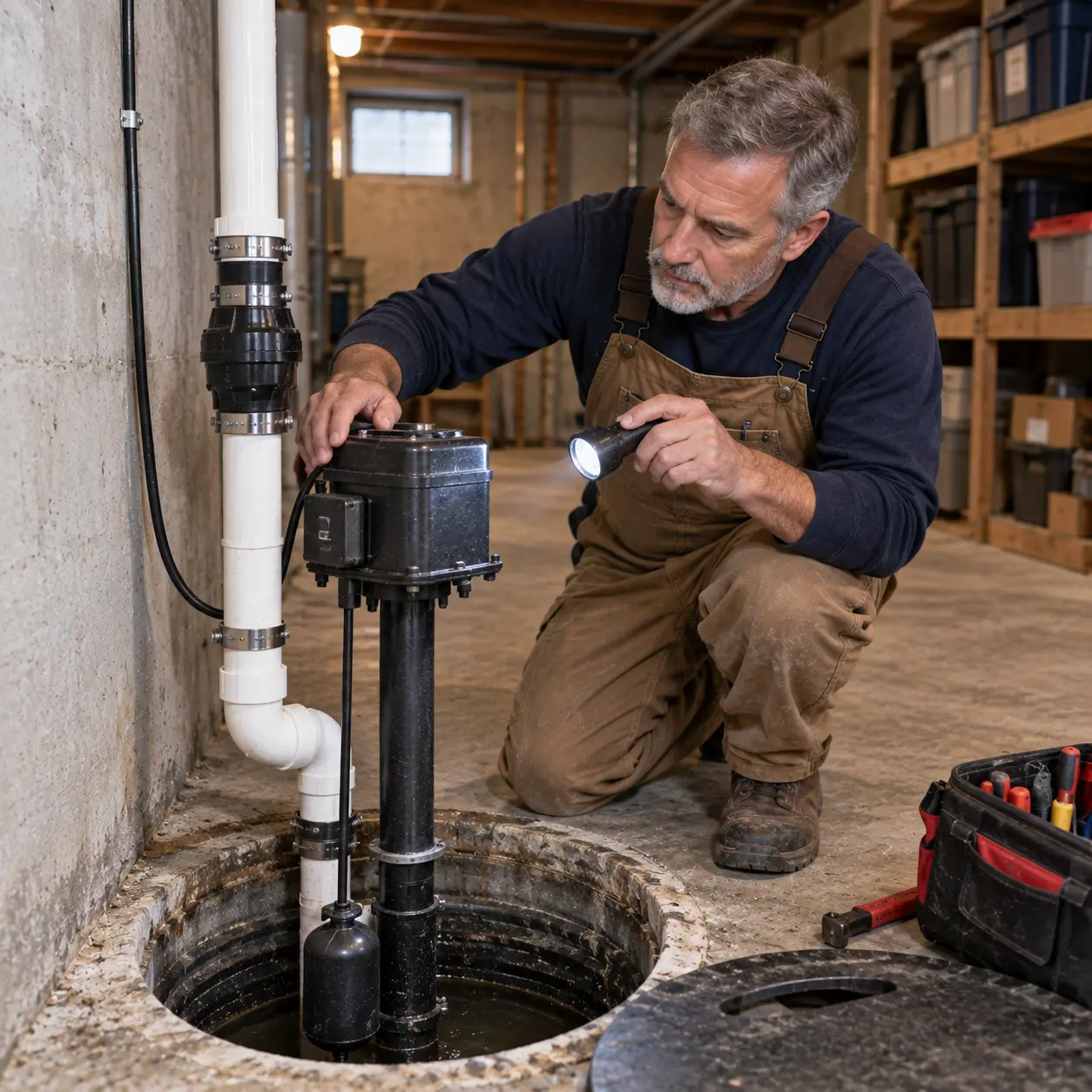
Cleaning the check valve is worth trying once, but if the problem continues, replacement is usually the sensible option. You should consider replacing it if the valve keeps sticking after cleaning, water continues to flow back into the sump pit after the pump shuts off, or the valve body is cracked or leaking. A hardened or misshapen seal that no longer sits properly against the valve seat is another sign that replacement is needed. If you are already replacing the sump pump, replacing an old check valve at the same time can also help prevent future problems.
When installing the new valve, make sure its size matches the discharge pipe diameter and that the flow arrow points away from the pump. It should also be installed in an accessible location so it can be inspected or replaced easily in the future. If you are already replacing the sump pump, replacing an old check valve at the same time can also help prevent future problems, and it is the point at which whether a submersible or pedestal pump unit suits your pit is worth settling too, since the pump type affects the pit clearance the new valve has to work in.
How to Prevent Check Valve Problems
- Include it in routine maintenance. Look at the valve whenever the pump is inspected, rather than waiting for a storm to expose it.
- Keep the pit clear. Less silt and gravel in the basin means less debris reaching the seat.
- Check the clamps. Look for rust streaks, then dry the area so a fresh drip is obvious next time.
- Listen to the pump. A change in sound usually arrives before a change in performance.
- Test with a bucket. Pour water in until the pump kicks in, then watch the ten seconds after it stops. Nothing should come back.
Can You Replace a Sump Pump Check Valve Yourself?
Sometimes. If the valve sits on an accessible vertical pipe with rubber couplings, someone comfortable with plumbing connections can swap it, provided the power is isolated and the replacement matches the pipe size and the flow direction.
It becomes a job for a licensed professional when the pipework is glued, buried or awkward to reach, or when the symptoms do not clearly point to the valve. Our technicians can arrange a sump pump repair or replacement visit for homes and commercial properties across Northville, Ann Arbor and the surrounding area.