Introduction
Many kitchen drain problems develop slowly as grease, oils, and food residue collect inside drain pipes. What begins as minor grease buildup may eventually lead to severe drain clogs or sewer blockages.As grease hardens inside pipes, it traps debris and restricts drainage. If kitchen drain problems keep returning, professional drain cleaning services from our experienced plumbing team may help prevent larger sewer or wastewater backup issues later.
How Grease Buildup Starts Inside Drain Pipes
How Grease Changes After Entering Plumbing Pipes
Many homeowners assume hot grease moves safely through plumbing pipes because it appears liquid when poured down the drain. In reality, grease begins cooling almost immediately after entering the plumbing lines. As temperatures inside the pipes drop, grease starts forming sticky residue along the pipe walls.
This buildup gradually collects food particles, soap scum, and organic debris moving through the kitchen drain. As fats, oils, and grease buildup continues growing, pipe openings slowly narrow and water movement becomes more restricted.
Why Kitchen Drains Are Especially Vulnerable
Kitchen drains handle constant exposure to grease, oils, food scraps, sauces, and soap residue during daily cooking and cleanup. Unlike bathroom drains, kitchen plumbing regularly carries substances that can harden once temperatures inside the pipes begin cooling.
Even small amounts of grease accumulation can slowly narrow drain openings when repeated consistently over time. Combined with food debris and soap buildup, these materials often contribute to clogged plumbing pipes and recurring kitchen sink drainage problems.
Common Signs of a Grease-Clogged Drain
Slow Draining Kitchen Sinks
One of the earliest clogged drain warning signs is slower drainage inside the kitchen sink. As grease coats the inside of drain pipes, the available space for wastewater movement gradually becomes smaller.
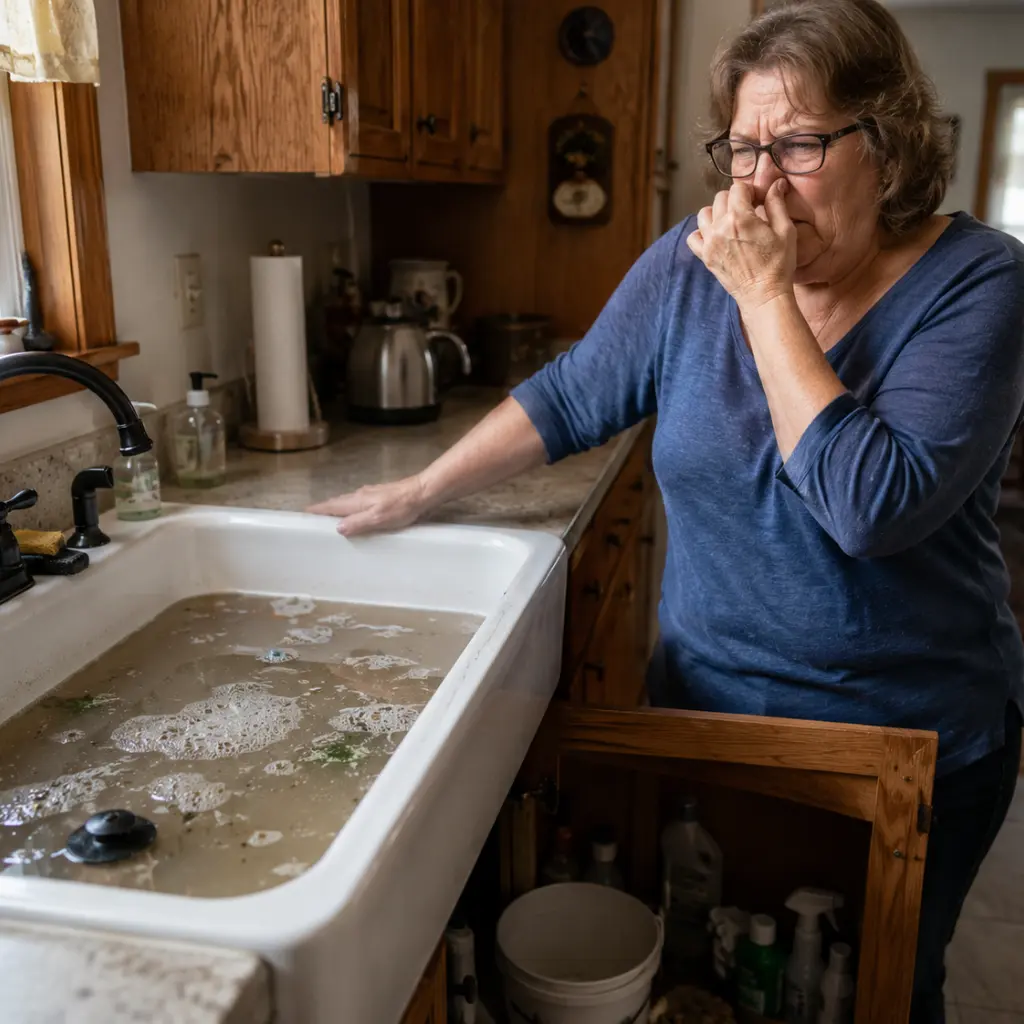
Homeowners often first notice a slow draining sink after washing dishes or using the garbage disposal. In many cases, drainage performance continues worsening until standing water begins collecting inside the sink basin.
Foul Drain Odors and Water Backup Problems
Kitchen drain odors often develop when grease traps food particles and organic debris inside the pipes. As this material begins breaking down, unpleasant smells may rise from the sink drain during normal kitchen use.
A blocked kitchen sink may also begin showing water backup problems once the grease blockage inside the drain becomes severe enough to interrupt normal flow. In some homes, wastewater drainage issues may eventually affect nearby fixtures connected to the same plumbing line.
Gurgling Sounds and Recurring Drain Clogs
Recurring drain backup issues often suggest that hardened grease continues restricting flow even after temporary drain cleaning attempts. Homeowners may also notice gurgling noises from the kitchen sink, a symptom sometimes associated with drainage restrictions. If the same drain repeatedly clogs, deeper buildup inside the plumbing line may already require professional removal.
How Grease Buildup Damages Plumbing Systems
Pipe Corrosion and Interior Pipe Damage
Grease buildup affects more than drainage speed alone. Thick grease residue can trap moisture, bacteria, and organic waste against pipe surfaces for long periods, especially inside older plumbing systems.
As debris continues collecting along the pipe interior, surfaces may remain damp longer than normal. This ongoing exposure can gradually contribute to pipe corrosion from grease while weakening sections of the plumbing infrastructure over time.
Increased Risk of Sewer Line Blockages
Grease-related plumbing problems can extend well beyond the kitchen sink itself. Once grease moves deeper into the sewer line, it may combine with wipes, food waste, paper products, and additional debris already present inside the wastewater system.
These materials can eventually create clogged wastewater lines or larger sewer system blockages affecting several plumbing fixtures throughout the home. In more difficult situations, wastewater backup problems may require professional sewer and drain repair services to remove the obstruction fully.
Pressure on Older Plumbing Infrastructure
Older homes often experience additional plumbing strain when grease buildup begins restricting drain flow. Aging pipes weakened by corrosion or mineral buildup may become more vulnerable to cracking, leaks, or drainage failures once wastewater movement slows.
Routine plumbing infrastructure maintenance becomes increasingly important in homes with recurring kitchen drain problems because ongoing flow restriction can place extra pressure on aging plumbing materials.
Why Grease Disposal Habits Create Plumbing Problems
Garbage Disposal Misuse and Grease Disposal Habits
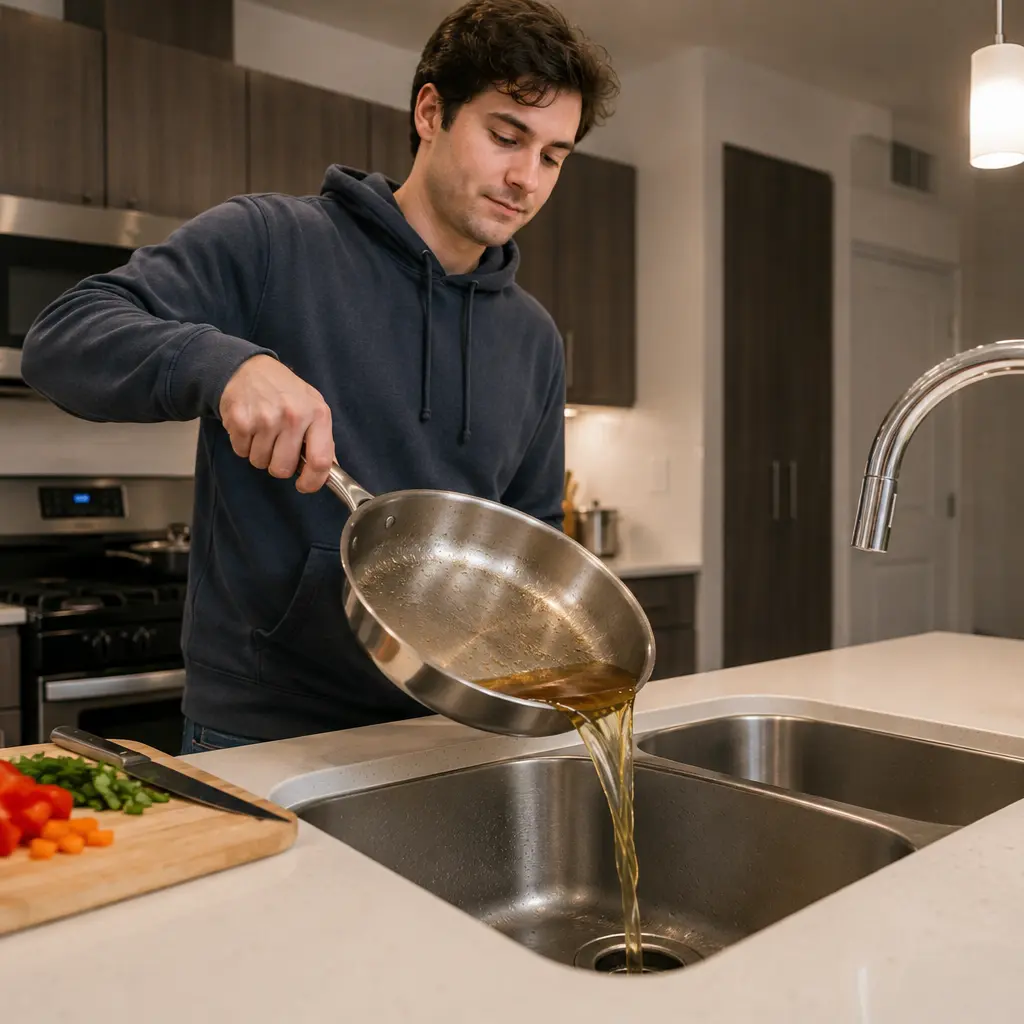
Many homeowners assume garbage disposals prevent grease-related drain problems, but disposals do not remove grease from the plumbing system. While food scraps may be broken into smaller particles, grease and oils still coat the inside of drain pipes after entering the sink.
Pouring grease down the drain with hot water may temporarily move the material farther through the pipes, but the grease eventually cools and hardens again deeper inside the plumbing lines.
Grease and Municipal Sewer Problems
Household grease disposal habits can also affect larger public wastewater systems. Grease and oil disposal contribute to fatbergs in sewer systems, wastewater infrastructure problems, and municipal sewer blockages that interfere with normal wastewater movement.
As grease combines with debris inside public sewer lines, treatment systems may experience additional strain and maintenance demands. Grease disposal awareness helps support both residential plumbing protection and wider wastewater disposal awareness efforts.
Professional Solutions for Grease Drain Blockages
Hydro Jetting and Drain Cleaning Services
Professional drain cleaning may become necessary once hardened grease in pipes begins restricting normal drainage. Hydro jetting services use high-pressure water to break apart heavy grease buildup while cleaning residue from the interior pipe walls.
Unlike temporary chemical cleaners, professional drain cleaning focuses on removing accumulated grease and debris throughout the affected plumbing lines rather than treating only surface symptoms.
Drain Line Inspection and Pipe Evaluation
Drain line inspection services allow plumbers to identify hidden blockages, damaged drain sections, or recurring grease accumulation inside residential plumbing systems. A sewer camera inspection may help locate underlying issues that are not visible from the surface.
If kitchen drain problems continue returning, DNA Plumbing and Heating can inspect the system and recommend the most effective drain cleaning or sewer repair solution before larger wastewater backup issues develop.
Grease Disposal Habits That Help Prevent Drain Clogs
Better Ways to Dispose of Cooking Grease
One of the safest grease disposal methods involves allowing cooking grease to cool fully before placing it into sealed disposal containers for trash removal. Paper towels may also help remove smaller grease residue from cookware before washing dishes in the sink.
Following proper grease disposal safety practices helps reduce drain clog prevention concerns while supporting better long term household plumbing maintenance.
Kitchen Maintenance Habits That Protect Drain Pipes
Daily kitchen habits play a significant role in preventing grease related drain problems. Allowing cooking grease to cool before disposal, limiting food waste entering the sink, and using drain strainers can help reduce buildup inside drain lines.
Addressing slow drainage early may also help prevent minor restrictions from developing into larger kitchen drain blockages.
When Grease Drain Problems Need Immediate Attention
Repeated kitchen sink backups, standing wastewater, recurring foul drain odors, or slow drainage affecting multiple fixtures may indicate severe grease blockage inside the plumbing system. In these situations, homeowners should avoid continuing to use the affected drains because additional wastewater may worsen the blockage.
Emergency drain cleaning, clogged pipe repair, or plumbing emergency repair services may become necessary if wastewater backup problems continue spreading throughout the home. If grease-related drain issues repeatedly return, contacting DNA Plumbing and Heating for professional plumbing services may help prevent larger sewer and drain repair situations later.
Conclusion
Grease related drain problems usually begin with everyday kitchen habits rather than a single plumbing failure. Small amounts of grease entering the drain repeatedly can gradually restrict wastewater flow and contribute to larger sewer and drainage issues.
Proper grease disposal and early attention to drainage changes can significantly reduce the likelihood of recurring clogs. Preventing buildup before it hardens inside the pipes remains one of the most effective ways to protect residential drain systems.