Introduction:
A submersible sump pump is the better option for most basements in Northville and Ann Arbor, and a pedestal pump makes sense mainly when the sump pit is too narrow for a submersible or when easy access to the motor matters more than pumping volume. This Submersible vs Pedestal Sump Pump comparison explains the key differences and helps you choose the right option for your basement.
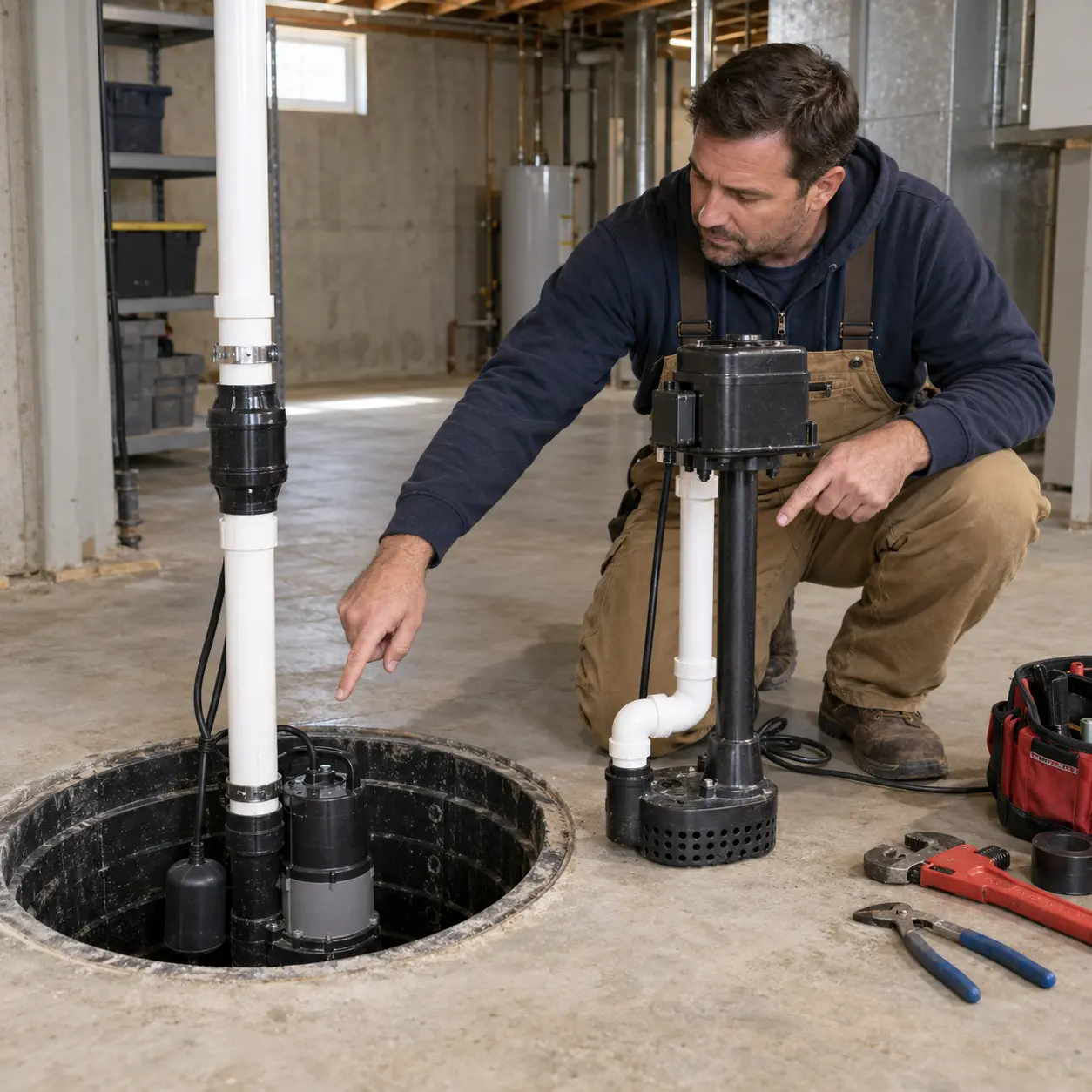
Submersible pumps sit inside the pit under a sealed lid, move more water per minute and run quietly enough for a finished basement. Pedestal pumps hold the motor on a column above the pit, so it stays dry and is simple to inspect, but they are louder, clear less water and sit exposed to knocks and dust. If the problem continues, our sump pump installation services can inspect the discharge setup, identify the cause, and restore a reliable sump pump system.
Which Sump Pump Is Better for Your Basement?
Four checks in your own basement will usually settle it before you look at a single model.
- Measure the pit. A standard basin gives a submersible room to sit with its float free to rise and fall. Older, narrower pits often leave no clearance, and a pedestal column is the practical fit.
- Watch how often the pump cycles. A pump that runs briefly after heavy rain is doing light duty. One that runs every few minutes through the spring thaw needs the higher flow rate a submersible gives, though it is worth ruling out the cause of a check valve that has stopped sealing first, since returning water produces the same rapid restarts. .
- Look at what is in the pit. Silt, gravel and grit washed in from a drain tile favor a pump built to pass small solids.
Submersible vs Pedestal Sump Pump: Key Differences
The table below sets the two designs side by side on the points that change day to day performance.
| Feature | Submersible sump pump | Pedestal sump pump |
|---|---|---|
| Motor position | Sealed inside the sump pit, below the water line | Mounted on a column above the pit, out of the water |
| Noise in the room | Quiet, muffled by the water and a sealed lid | Noticeable, because the motor runs in open air |
| Water volume handled | Higher flow rate, suited to frequent or heavy pumping | Moderate flow rate, suited to lighter or occasional water |
| Debris tolerance | Copes with silt and small solids drawn into the pit | Intake sits low in the pit and blocks more easily |
| Pit requirements | Needs a wider, deeper basin | Fits narrow or shallow pits |
| Maintenance access | Pump is lifted out of the pit for inspection | Motor stays visible and simple to reach |
| Typical fit | Finished basements and homes with regular water | Unfinished basements and low-volume situations |
| Upfront cost | Typically higher | Typically lower |
What Is a Submersible Sump Pump?
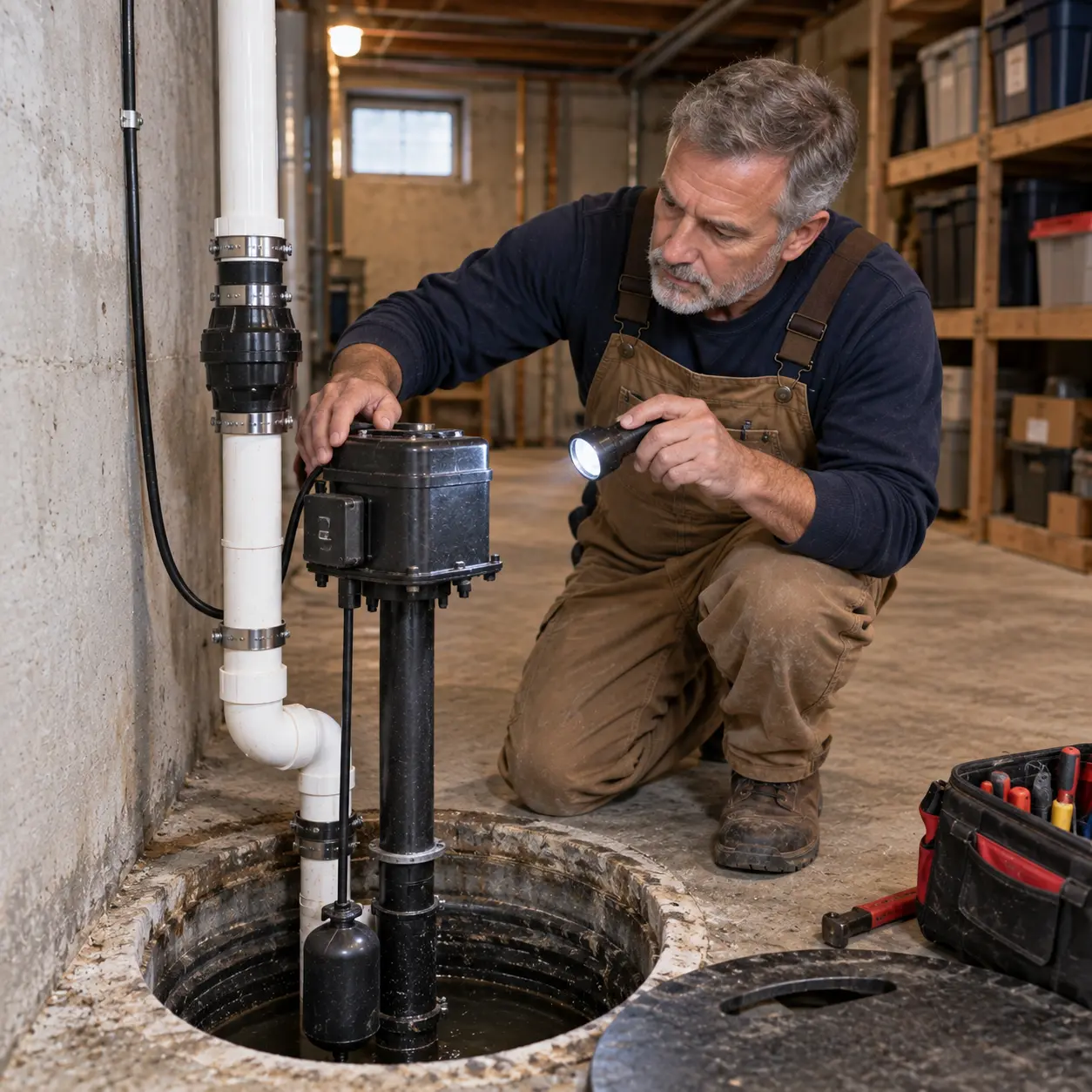
A submersible sump pump is a sealed unit that sits on the floor of the sump pit and works while covered in water. As the water level rises, a float switch closes and the motor drives an impeller, which forces water up the discharge pipe and out past a check valve so it cannot run back into the pit.
Sitting in water works in its favor. The surrounding water carries heat away from the motor, so the pump copes with long runs during a storm without overheating, and the sealed lid keeps damp air and pit odors out of the room.
The trade-offs are worth knowing. The motor is submerged, so a failed seal usually means replacing the pump rather than repairing it, and the unit has to be lifted out of the pit for a proper look. It also needs a basin with enough width and depth to hold it and let the float move freely.
What Is a Pedestal Sump Pump?
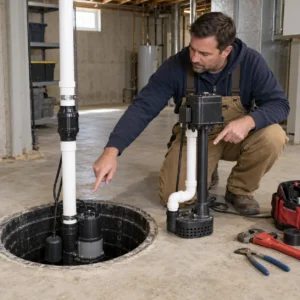
A pedestal sump pump keeps the motor on a column that stands above the pit, connected to an intake at the bottom by a shaft or a length of pipe. A float rod rides the water level and switches the motor on, drawing water up and out through the same style of discharge line.
Because the motor never touches water, it is easy to see, easy to service and unaffected by a seal failure. The narrow footprint suits older or shallow pits, and the motor is cooled by air rather than by the water around it.
That air cooling is also a limitation. A pedestal motor is not built for long continuous running, the open pit lets humidity rise into the basement, and an exposed column can be knocked out of alignment in a basement used for storage. Sound carries too, which matters more than homeowners expect once the pump starts cycling at night.
Can You Use Both Types in a Sump Pump Backup System?
Yes, and pairing two sump pumps is often more useful than agonizing over which single unit to buy. A primary pump handles normal duty, while a second pump mounted higher in the pit only starts when the water climbs past the level the first one should have cleared.
The second pump is commonly a battery backup unit, which matters in Michigan because storms take the power out at exactly the moment the pit is filling. In a pit too tight for two submersibles, a slim pedestal pump can serve as the secondary while the submersible stays as the workhorse below it.
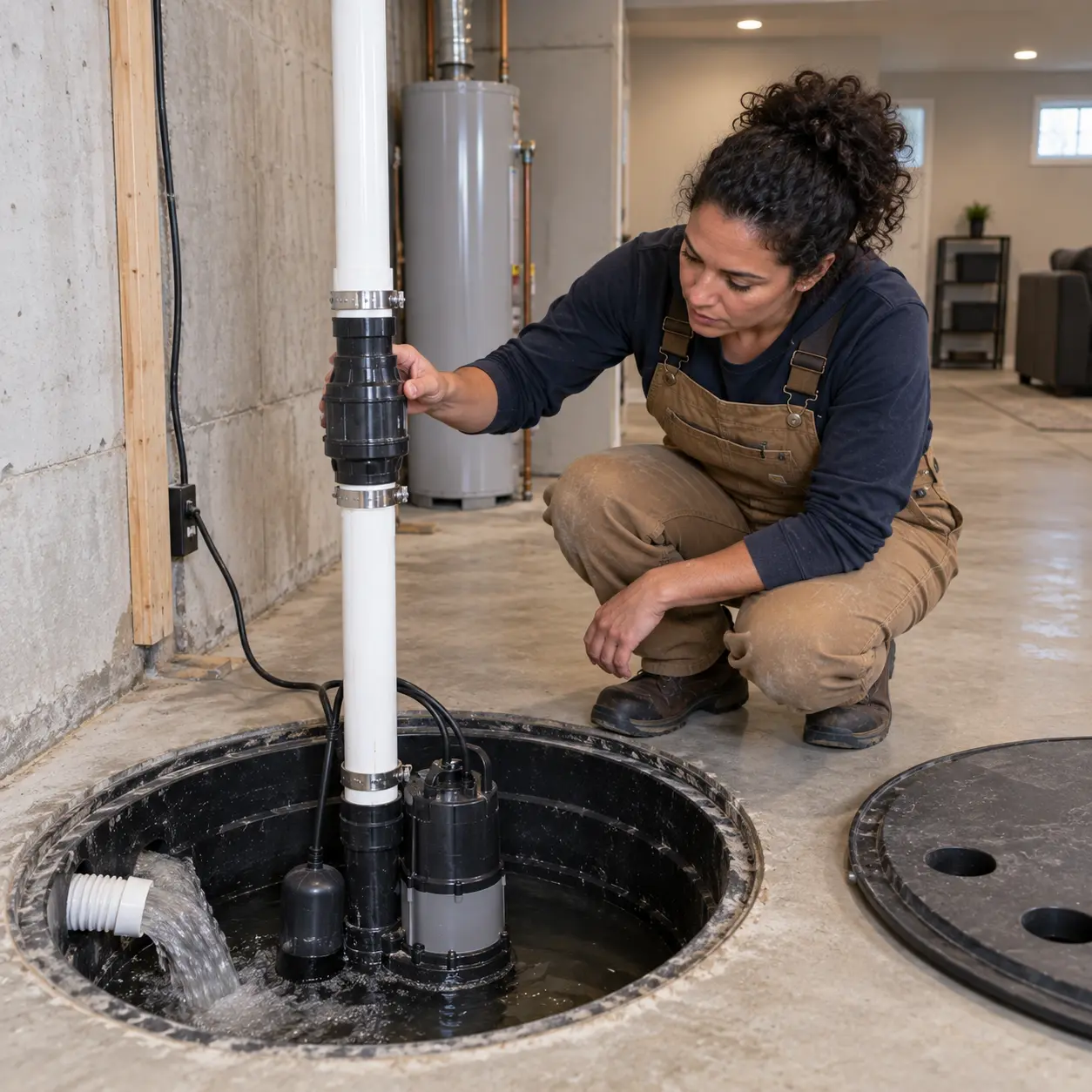
Get Your Sump Pump Sized and Fitted Properly
Our technicians can measure your pit, check how fast it fills and recommend a pump that matches the water your home actually deals with, for homes and commercial properties across Northville, Ann Arbor and the surrounding area. Emergency support is available 24/7 if the water is rising now.
Frequently Asked Questions About Sump Pumps
Are pedestal sump pumps good for heavy flooding?
Generally no. A pedestal unit moves less water per minute and is not designed to run continuously for hours, so a fast filling pit can outpace it. Remember that flow drops as the pump lifts water higher, so a deep pit with a long vertical discharge run reduces the output further, and that is where a higher capacity pump earns its place.
Can I install a sump pump myself?
Swapping an existing pump for a similar model is within reach of a confident DIYer, provided the power is isolated first and the check valve is refitted the right way round. A brand new pit is a different job, involving concrete cutting, a tie in to the drainage, a discharge route away from the foundation and a dedicated grounded outlet.
That work is also subject to local code and inspection, so it should be handled by a licensed professional. If you would rather have it checked over, speak to our Ann Arbor plumbing team before you start.
Does a finished basement need a submersible sump pump?
A finished basement does not require a submersible sump pump, but it is usually the better choice. Its sealed lid helps contain moisture, and its quieter operation makes it more suitable for finished living spaces. If the pit is narrow, a compact submersible model may still work.