
Quick Summary
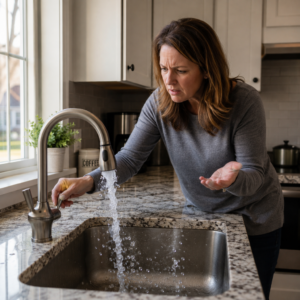
You fill a glass from the kitchen faucet and notice that your drinking water has a sharp, coin-like taste instead of the clean flavor you are used to. You might dismiss it the first time, but when the same metallic taste keeps coming back day after day, it is a sign that something has changed.
This guide explains what that taste usually means, the most common causes, how to tell whether it is coming from your water supply or your own plumbing, and when it is worth testing your water or calling a professional. If the taste persists or you suspect a plumbing issue, water quality inspections can help determine whether the source is your plumbing or water supply.
What a Metallic Taste in Your Water Usually Means
A metallic taste almost always comes from tiny amounts of dissolved metals in your water. Iron, copper, manganese, and zinc are the usual suspects, and your tongue is remarkably sensitive to them. Even a trace amount that is harmless to the touch can be enough to notice in a glass of water.
The Most Common Causes of Metallic-Tasting Water
Most metallic-tasting water traces back to one of the following.
Aging water lines and corroding pipes
A metallic taste can develop as water passes through older main water lines and household plumbing. Corroding iron or galvanized steel pipes may release iron, while aging copper pipes can add trace amounts of copper. The taste is usually strongest after the water has been sitting in the pipes overnight.
Metals in your water source
The water arriving at your home may already carry dissolved metals. Many properties in the surrounding Michigan area draw from private wells, where groundwater naturally picks up iron and manganese from the soil and rock. Municipal supplies can carry trace metals too, though treatment usually keeps them low.
Acidic, low pH water
Water with a low pH, meaning it is slightly acidic, is more corrosive. Acidic water wears away at metal pipes and fittings faster, which pulls more iron, copper, and zinc into the water that comes out of your faucet. Well water, in particular, can run acidic, which is why a metallic taste and older plumbing so often appear together.
Sediment in the water heater
If the taste shows up mainly in hot water, your water heater may be the source. Over time, sediment and mineral deposits build up inside the tank, and a component called the anode rod can corrode and add a metallic edge. This is a common cause that many homeowners overlook.
Hot, Cold, or Both? How to Narrow Down the Source
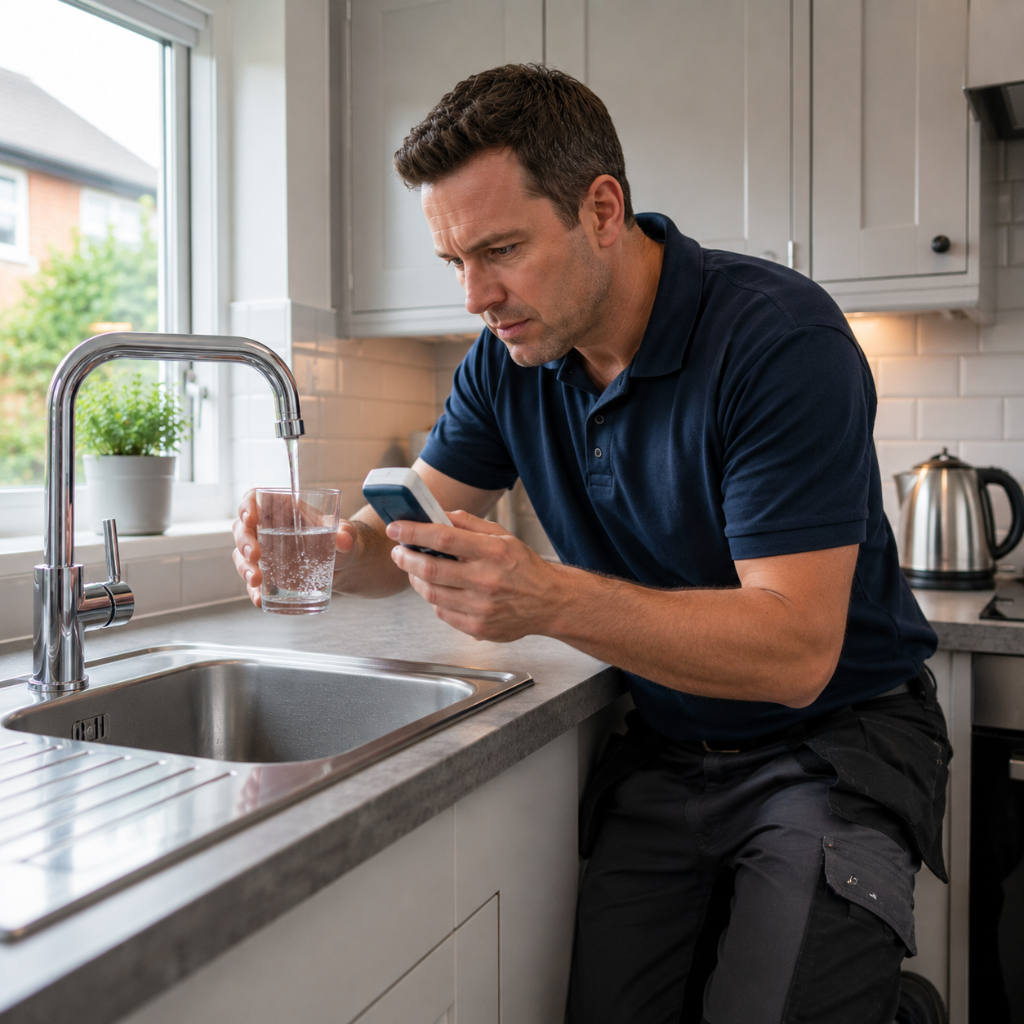
One of the fastest ways to find the cause is to notice when the taste appears.Run the cold water first, then the hot water, and note which one carries the metallic flavor.
If only the hot water tastes metallic, the water heater is the likely culprit. If both hot and cold taste the same, the cause is more likely in your supply pipes or the water source itself. If the taste is strongest first thing in the morning, water left standing in older pipes overnight is a strong clue.
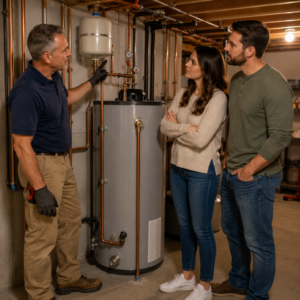
A homeowner in the area recently called us because their cold water tasted fine, but the hot water had a strong metallic edge. When our team inspected the system, the cause turned out to be years of sediment and a worn anode rod in an aging water heater, and a flush and service cleared it up.
Is Water That Tastes Like Metal Safe to Drink?
In many cases, metallic-tasting water is more unpleasant than harmful. Small amounts of iron or manganese can affect taste and stain sinks, but they are not usually a health concern at low levels. Copper and zinc are similar in small quantities, though higher concentrations can cause stomach upset.
The important exception is lead. Lead can leach from older service lines, fittings, or solder, and unlike iron or copper, it often has no taste or smell. That is exactly why a metallic taste should prompt you to have your water tested, especially in an older home, since the metals you can taste may hint at others you cannot.
The only reliable way to know what is in your water is to test it. A home test kit gives a quick snapshot, and a professional water test provides a fuller picture. If you have any concerns about lead or your overall water quality, testing is the sensible first step before deciding on a fix.
How to Fix Metallic-Tasting Water
Some of these steps take a couple of minutes at home.
Flush the water lines. Run the faucet for one to two minutes after water has sat overnight, since water picks up more metal the longer it sits still. This is a temporary check, not a cure.
Flush the water heater. If the metallic taste is limited to hot water, flushing the tank according to the manufacturer’s instructions may help remove built-up sediment that is affecting the water.
Clean or replace the faucet aerators. Rust and mineral deposits collect in the aerator screen and can add taste and slow the flow, so clearing them is a quick win.
Fit a treatment system if a test calls for it. Depending on what the water test shows, a whole-house filter, an iron filter, a softener, or a neutralizer for acidic water can bring down dissolved metals across every faucet.
When to Call a Professional
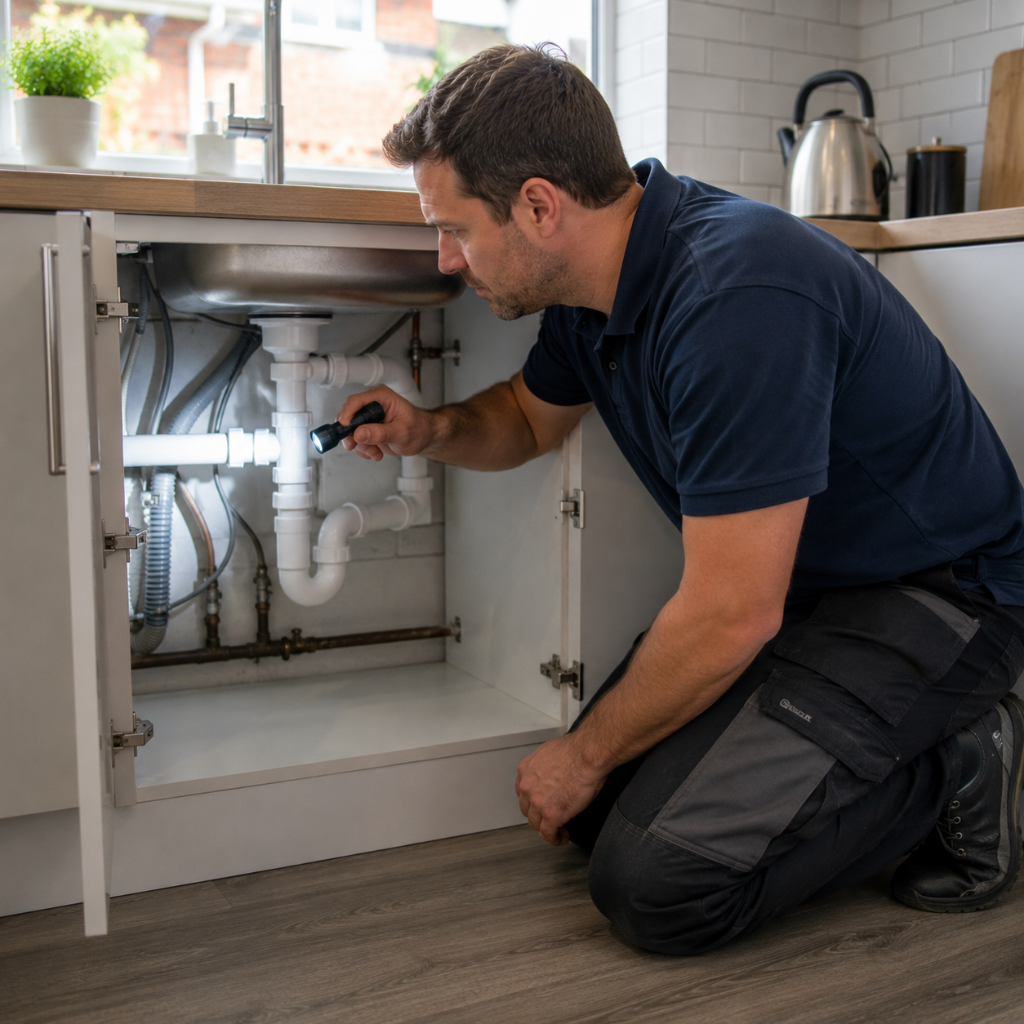
A few situations are worth a plumber’s attention rather than a home fix. Reach out if any of these apply.
The taste came on suddenly across the whole house, which can signal a change in the supply.
The water is rusty or discolored, not just off in flavor.
Your home has older service lines and you want to rule out lead.
If flushing the water heater doesn’t solve the problem, have it professionally inspected.
For any of these, our plumbers across the Ann Arbor area can trace the metal back to its source and handle the repair, whether that means work on the supply line or the water heater.
Bringing It All Together
A metallic taste in your water should not be ignored, even if it seems like a minor annoyance. Caught early, it is usually simple to deal with, and acting before it worsens helps you avoid bigger plumbing trouble and keeps your faucet water tasting the way it should.
If the taste sticks around or you are not sure what is behind it, DNA Plumbing and Heating can help. Book an appointment online and our plumbers will track down the source and put it right, with a clear estimate before any work starts. We also offer 24/7 emergency support for problems that cannot wait.