
Introduction:
A homeowner in Northville noticed that the water from their kitchen tap had started looking slightly brown and had a metallic taste. At first, they assumed it was a temporary issue, but a plumbing inspection revealed that years of corrosion had weakened the inside of the pipes. What started as a small warning sign could have eventually led to leaks and costly pipe repairs.
Pipe corrosion often develops slowly and stays hidden inside your plumbing system until noticeable problems appear. Regular plumbing maintenance services can help identify early signs of corrosion before they become serious.
In this guide, we will explain what causes pipe corrosion, the warning signs to look for, and the steps homeowners can take to protect their plumbing system and prevent future damage.
The Small Clues That Show Up Before a Pipe Fails
Corroded pipes rarely fail without warning. Long before a pipe actually splits or leaks, it usually leaves behind a trail of smaller clues that are easy to write off as unrelated.
- Water that looks rust colored, runs cloudy, or carries a metallic taste.
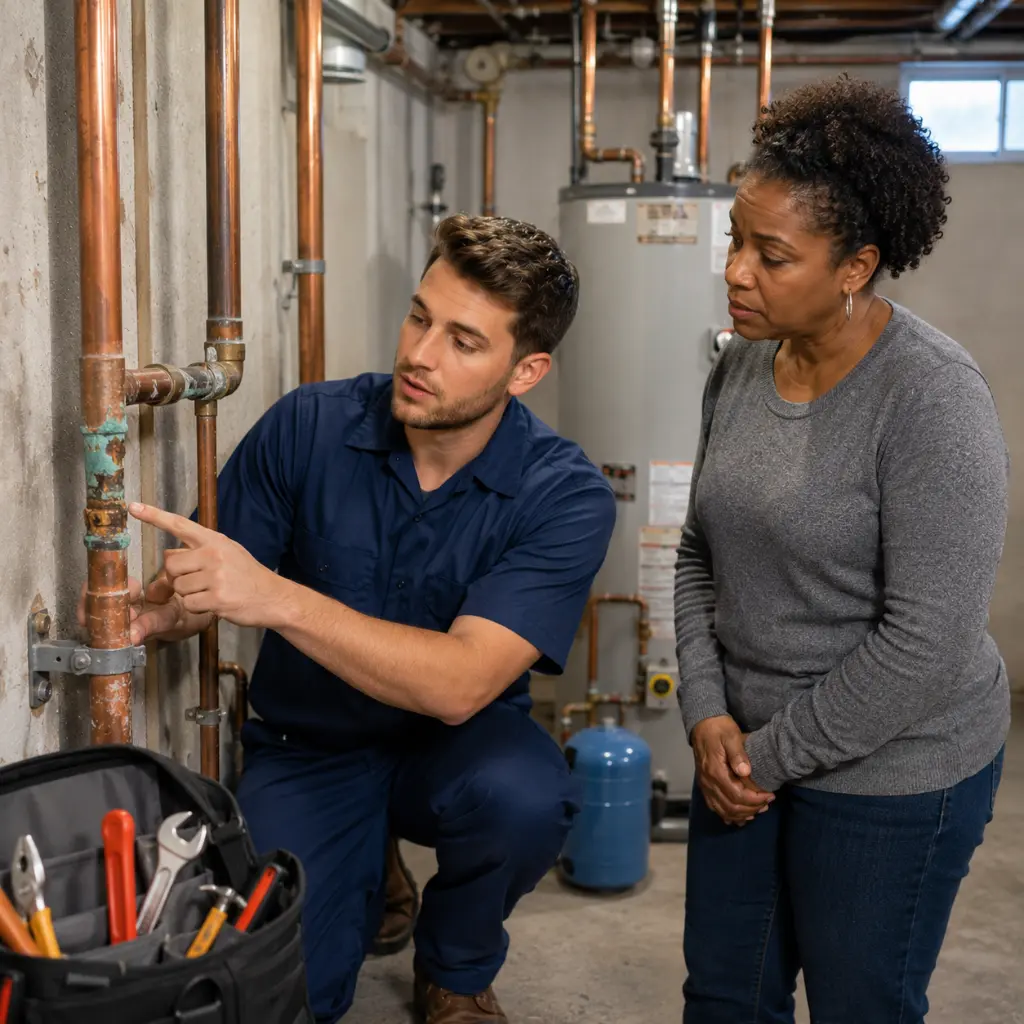
- Blue-green stains around a drain or faucet, often a sign copper pipe is breaking down.
- Water pressure that has dropped gradually rather than all at once.
- Small, damp spots on a wall or ceiling near a plumbing line.
- A pinhole leak that reappears nearby after an earlier repair.
Any one of these on its own might not mean much. Several of them together, especially in a home more than a few decades old, is worth a closer look.
What Is Actually Eating Away at Your Pipes
Corrosion happens when water reacts with the metal inside your pipes over time, and a few conditions speed that reaction up. Water chemistry is one of the biggest factors, since water that runs too acidic or too alkaline can slowly wear away at copper and galvanized steel alike.
Hard water adds its own version of the problem. Mineral deposits build up inside the pipe, narrow the space water flows through, and trap moisture against the pipe wall longer than it should sit there, which over time can also show up as weaker water pressure at a faucet, a shower that suddenly runs cold, or fixtures that take longer to deliver hot water.
Water moving through pipes faster than it should, often the result of a pressure issue elsewhere in the system, can wear away the thin protective layer that naturally forms inside a pipe over time. Once that layer is gone, the metal underneath corrodes faster than it would under normal flow.
Where two different metals meet, like copper connected directly to a steel fitting, a reaction called galvanic corrosion can wear away the weaker metal surprisingly fast. This shows up often in older homes where plumbing has been patched piecemeal over the years.
Habits inside the home play a role too. Repeated use of chemical drain cleaners can damage pipe walls from the inside, and water pressure that runs consistently high puts extra strain on fittings and joints. Rather than reaching for another bottle of drain cleaner, a drain cleaning clears the blockage without the side effects.
Why This Shows Up So Often in Michigan Homes
A lot of homes in this area still have sections of galvanized steel pipe, especially anything built before more modern materials became standard. That material corrodes from the inside out, which means a pipe can look fine on the outside while narrowing and weakening internally.
Michigan’s freeze and thaw cycle adds another layer of stress. A pipe already thinned by corrosion has far less capacity to handle the expansion that comes with freezing temperatures, which is part of why corroded pipes repair calls tend to show up together during the colder months.
Not All Pipe Materials Age the Same Way
Copper holds up reasonably well against corrosion overall, but it is not immune, especially when water chemistry runs acidic or when it connects directly to a dissimilar metal without the right fitting in between.
Galvanized steel is more vulnerable, since the zinc coating that protects it wears away over time and exposes the steel underneath to rust from the inside out. Newer plastic piping does not corrode the same way metal does, but the fittings and metal transitions at each end of a run still can.
Knowing which material runs through your home changes how closely you should watch for the signs above, and it is usually one of the first things worth understanding before deciding on a repair.
Habits That Actually Slow Corrosion Down
You cannot reverse corrosion that has already happened, but you can slow how fast it spreads and catch new issues early.
- Have your water tested for hardness and pH, since knowing what your pipes are dealing with makes any treatment decision easier.
- Skip chemical drain cleaners for anything beyond a quick, occasional use.
- Ask about a pressure regulator if your home’s water pressure runs on the high side.
- Make sure any repair connecting different pipe materials uses the correct fitting to prevent a galvanic reaction.
- Schedule a periodic look at exposed pipes and any area with a known history of leaks.
None of these steps require tearing into a wall, since anything beyond that usually calls for judgment about what is safe to handle yourself versus what requires a professional. They are mostly about paying attention and adjusting a few habits before a small issue turns into a bigger one.
When It Is Time to Call a Professional
A homeowner in the area had already repaired the same section of pipe twice before calling us. Once our technicians took a closer look, the surrounding pipe was corroded enough that a full section needed replacing rather than another patch.
If the corrosion has reached the water line coming into your home, or a sewer line is showing slow drains and odor throughout the house, those are jobs where water line services and sewer line repair both go well beyond what a homeowner can safely handle.
Conclusion
Pipe corrosion is not something you fix once and forget. A short conversation with someone who can look at your specific plumbing, rather than guessing from a stain or a change in water pressure, is often the fastest way to know whether you are dealing with a minor issue or the early stage of something bigger.
DNA Plumbing & Heating can inspect your pipes, identify early signs of corrosion, and recommend the right solution to keep your plumbing system safe, reliable, and efficient for the long term.