Introduction
Backflow preventer freeze issues are a common concern during cold winters. When temperatures drop, any water left inside the device can freeze and expand, putting pressure on components. This can lead to cracks, leaks, and system failure if not addressed early.
Before temperatures drop further, arranging a seasonal backflow test can confirm the system is prepared for colder conditions. Taking the right steps before winter reduces the risk of cold weather damage and keeps the system operating safely throughout the season. Even properties in milder climates remain vulnerable to sudden cold spells, so acting before temperatures drop is always the better approach.
Types of Backflow Preventers and Cold Weather Risk
All outdoor backflow preventers are vulnerable during winter, including pressure vacuum breakers (PVB), double check valve assemblies (DCVA), and reduced pressure zone (RPZ) units. While they serve similar functions, each has specific weaknesses in freezing conditions.
A Pressure Vacuum Breaker (PVB) is particularly exposed because the air inlet at the top can trap moisture, making it the first component to crack when temperatures drop. A Double Check Valve Assembly (DCVA) typically has a bronze or iron body, both of which can crack under the pressure of expanding ice if water is not fully drained. A Reduced Pressure Zone (RPZ) device is more complex and costly to repair, with the relief valve being especially vulnerable to freeze damage.
Above-ground units, especially those in shaded or north-facing locations, tend to freeze faster than those exposed to sunlight or installed in sheltered areas.
What Happens When a Backflow Preventer Freezes
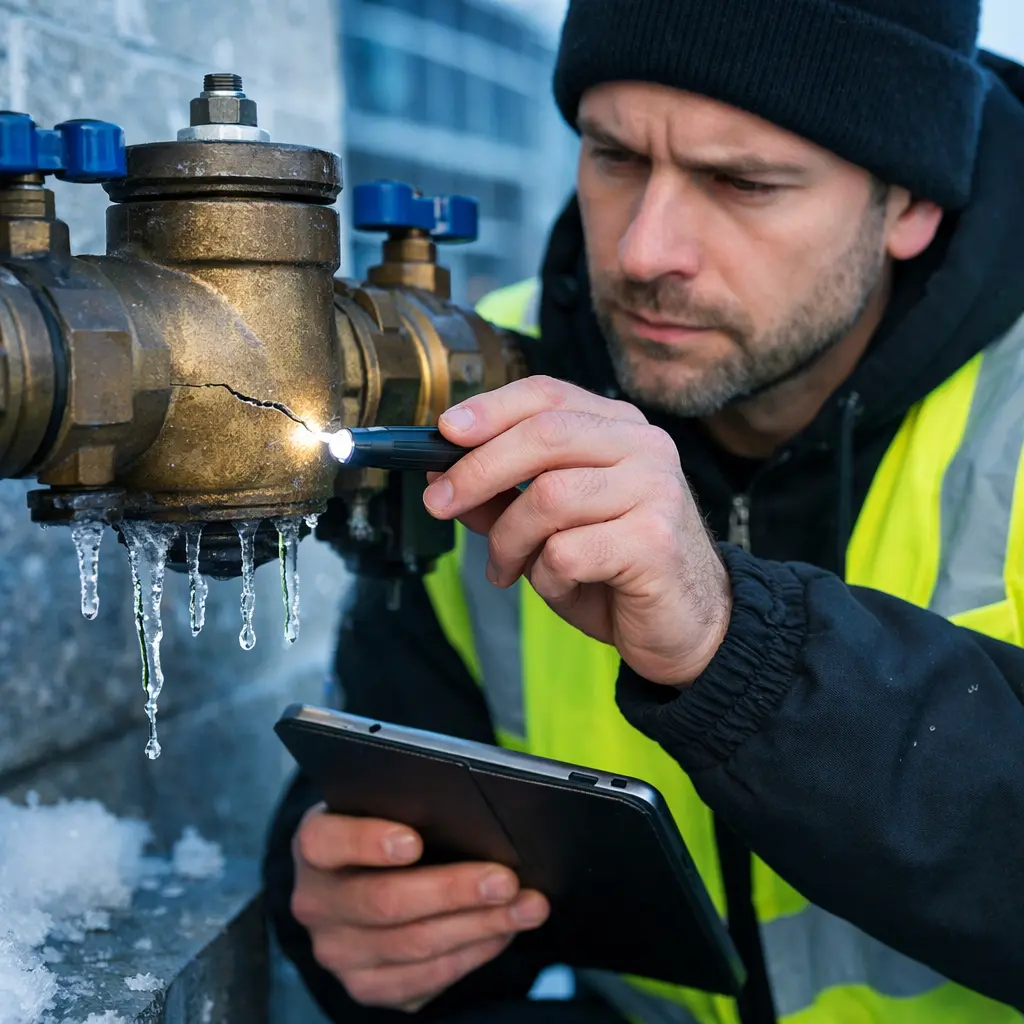
When temperatures drop below freezing, trapped water expands and places stress on components. This can cause parts to split, leading to leaks and reduced effectiveness.
Common outcomes include:
- Cracked valves or fittings
- Water leakage around the device
- Reduced ability to prevent reverse flow
- Higher repair costs if left until spring
Unusual noises such as humming or vibrating may also occur when components are under stress from ice buildup. These sounds often indicate pressure imbalance or restricted movement inside the device.
If the damage is extensive, repairing individual parts may not be enough. In these situations, a full backflow preventer replacement is often required to restore proper operation and ensure the system remains reliable.
At What Temperature Does a Backflow Preventer Freeze?
A backflow preventer can begin to freeze when temperatures drop to around 28°F (-2°C) for two hours or more, especially if the unit is above ground and not protected. Once freezing starts, internal components can become restricted or damaged, affecting performance.
Using an insulated cover can significantly improve protection. A properly fitted cover can help protect the unit down to approximately 15°F (-9°C) in calm conditions. However, exposure to wind increases the risk, as wind removes the small amount of retained heat around the valve. In windy areas, freezing can occur even when temperatures are slightly above 32°F (0°C).
How to Protect and Winterize Your Backflow Preventer
Proper winterisation helps prevent freeze damage, maintain performance, and extend the life of your backflow preventer.
Install an Insulated Cover
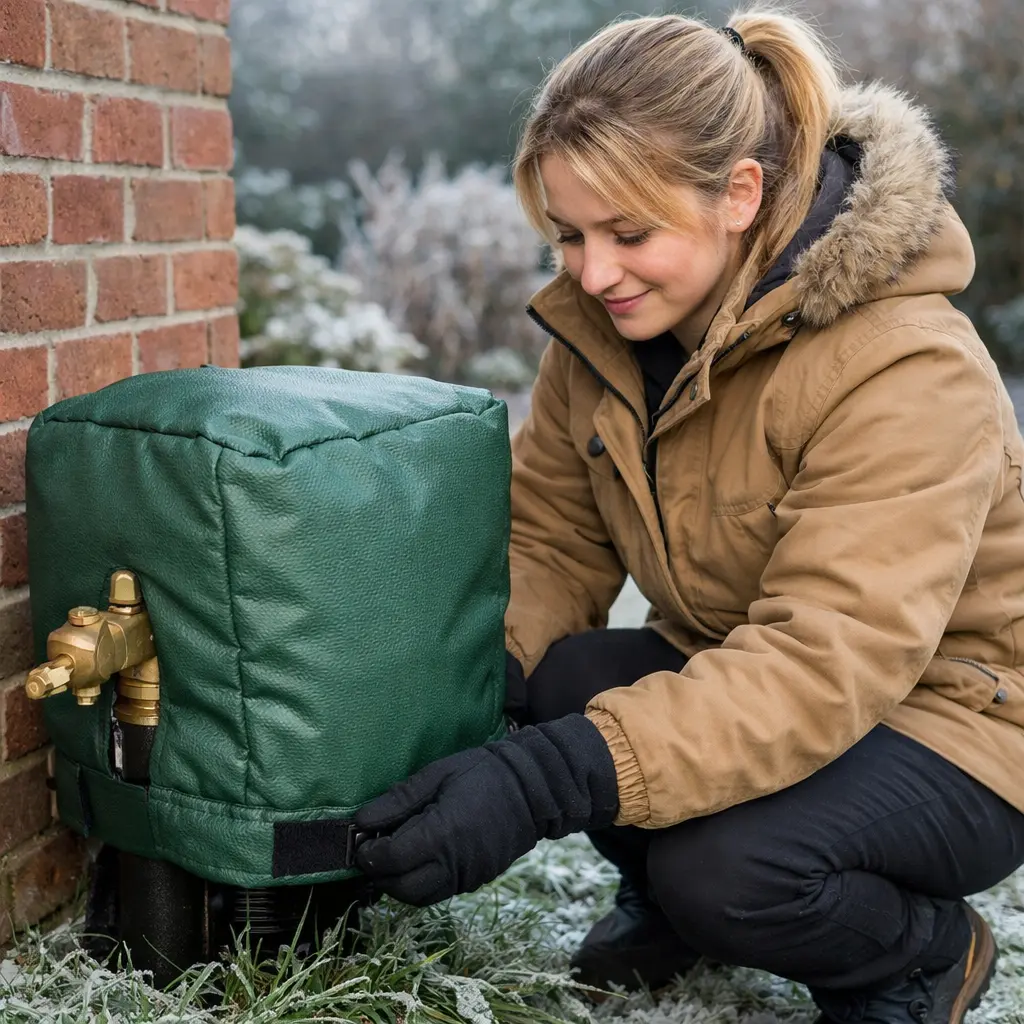
A quality insulated cover protects the unit from cold air and temperature swings. Look for covers made from closed-cell foam or fibreglass wrap, secured with weatherproof straps to keep them in place. For short-term protection during sudden cold snaps, a thick towel covered with a plastic bag can provide temporary insulation. Avoid using duct tape directly on the valve body, as it can trap moisture and accelerate corrosion.
Drain and Prepare the Device
Draining the unit is one of the most effective ways to prevent freezing:
- Shut off the upstream isolation valve (supply stop) completely.
- Open both test cocks on the preventer body to release pressure and allow water to drain.
- For PVB systems, the air inlet will open automatically once pressure drops—check for slight bonnet movement.
- Leave the test cocks open throughout winter to prevent trapped water.
- If connected to irrigation zones, blow out downstream lines with compressed air before draining the preventer.
Use a Heated Enclosure
In colder regions, a heated enclosure adds an extra layer of protection. It should maintain a minimum internal temperature of around 40°F (4°C) during the coldest nights. Heat tape (pipe heating cable) can be wrapped around the preventer and controlled with a thermostat, an affordable and reliable solution. Ensure the enclosure has slight ventilation to prevent moisture buildup and corrosion.
Insulate Nearby Pipes
The connected pipework is just as vulnerable as the device itself. Use foam pipe insulation and extend it at least 12 inches on either side of the preventer. Pay close attention to elbows and tees, as these thinner sections freeze more quickly and can cause system-wide issues.
Temporary Protection for Sudden Cold
For unexpected drops in temperature, temporary coverings can help reduce exposure. These should only be used as a short-term solution until proper insulation or drainage measures are in place.
Schedule a Pre-Winter Inspection
A pre-winter inspection ensures the system is ready for colder conditions. This includes checking valve seating, seal condition, test cock operation, and overall body integrity. It also confirms whether the device passed its last annual test; if not, underlying issues may already exist before freezing temperatures arrive.
What to Do If Your Backflow Preventer Has Already Frozen
If your backflow preventer has frozen, avoid taking actions that could cause further damage. Do not try to force the valve open, as ice inside can crack the internal components or body.
Begin by applying gentle heat using a hairdryer on a low setting, warm towels, or a heat lamp. Never use an open flame, as this can damage the device and create safety risks. Thaw the unit slowly, starting from the outlet side and working back toward the inlet to prevent pressure buildup behind the ice.
Once fully thawed, carefully inspect for hairline cracks, warped fittings, or split seams. When restoring water supply, open the upstream valve gradually about a quarter turn at a time and monitor closely for leaks before fully reopening.
Conclusion
If the device has not been drained and insulated yet, the time to act is before the first frost, not after.
Cold-weather damage moves fast once temperatures fall, and delaying preparation often leads to avoidable repairs. DNA Plumbing and Heating can provide practical support to ensure your system is ready and continues to operate reliably throughout the winter season.