Introduction
If you are dealing with backflow preventer noise, it can be frustrating and concerning, especially when the sound appears without warning. These noises often point to pressure changes, internal wear, or debris affecting operation. You might hear humming, vibration, or sudden banging in your plumbing system. These issues should not be ignored, as they can impact performance and reliability.If these sounds continue or become more noticeable, scheduling a backflow system inspection can help identify the underlying cause early.
Common Backflow Preventer Noises and Their Causes
Different sounds from a backflow preventer often indicate specific underlying issues. Recognising the type of noise can help identify the cause quickly and guide you toward the right solution.
Humming or Vibration
A constant humming or vibration is usually caused by pressure imbalance or restricted water flow. This can happen when internal valves do not seat properly or when partial blockages create resistance within the system.
Banging or Knocking
Banging noises are typically a result of water hammer. Sudden changes in flow create pressure waves that travel through the pipes, striking fittings and producing a sharp knocking sound.
Gurgling or Bubbling
Gurgling sounds often indicate trapped air within the pipework. These air pockets interrupt steady water movement, leading to irregular flow and audible bubbling.
Hissing or Dripping
A hissing sound usually points to pressure imbalance or a relief valve that is not sealing correctly. If accompanied by dripping, it may suggest debris buildup or wear in the valve components, allowing water to escape.
What Causes These Noises to Develop?
Several conditions can lead to these noises, most of which relate to pressure, debris, or component wear.
Uneven pressure can cause internal parts to operate inconsistently, leading to humming or vibration. Debris or sediment inside valves can block passages and create turbulence, while air pockets can disrupt flow through the pipes. Worn components such as seals or valves may also fail to function correctly, contributing to noise.
Poor installation or inadequate pipe support can increase stress on fittings, resulting in audible sounds. In colder months, issues linked to backflow preventer freezing can further restrict internal flow, causing pressure buildup and unusual noise during operation.

How to Identify Where the Noise Is Coming From
These noises often trace back to pressure or flow changes, and identifying when they occur can help narrow down the cause.
Pay attention to patterns. If the sound happens during water use, it is usually linked to changes in flow through the system. If it occurs without any fixtures running, supply pressure fluctuations may be affecting the valve. Signs such as inconsistent water flow or visible movement in the pipework can indicate imbalance or restriction within the system.
To pinpoint the exact source, you can use a simple method such as placing a screwdriver against the pipe and pressing your ear to the handle, or using a basic stethoscope. This helps isolate where the noise is coming from.
Also note the time of day. Municipal water pressure is often highest in the early morning, which is when pressure-related noises tend to be most noticeable.
Step-by-Step Troubleshooting
A few structured checks can help resolve noise issues and restore smooth operation.
Inspect for Debris
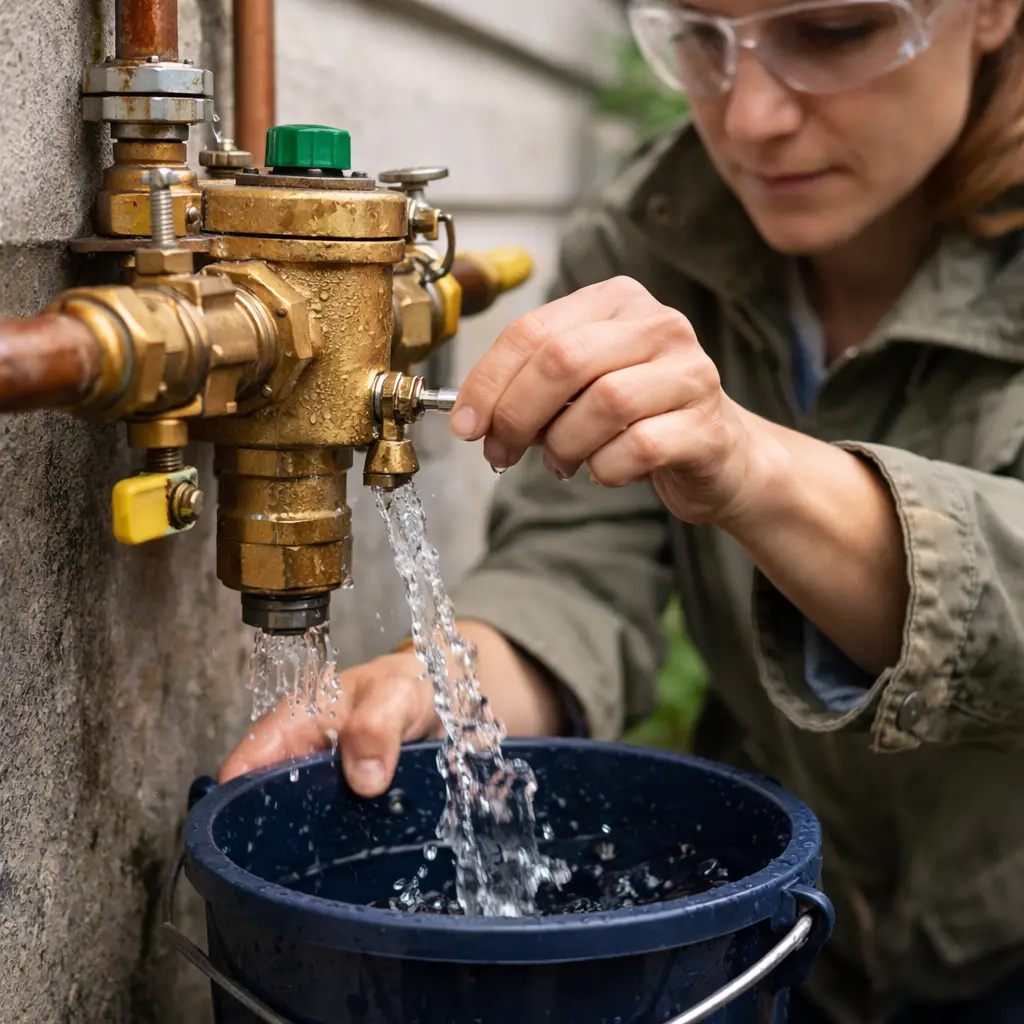
Start by checking for sediment or buildup inside the valve. Shut off the water supply, remove the bonnet carefully, and access the strainer screen. Pull out the strainer and rinse it thoroughly under running water to clear any debris. Fine sediment is a common issue in properties connected to older iron supply mains, and even small particles can restrict flow and create noise. For this reason, annual strainer cleaning is recommended to maintain consistent performance.
Flush the System
Flushing helps remove trapped sediment and buildup from the pipework. Open the test cocks in the correct sequence upstream first, then downstream to ensure debris is pushed out in the direction of flow. Allow water to run through each port until it appears clear, typically 30–60 seconds per port. This process helps eliminate internal restrictions that may be causing turbulence or pressure imbalance.
Adjust Pressure
Excessive water pressure can increase vibration and noise within the system. Pressure levels above 80 PSI are generally considered high and can affect most backflow preventers. Use a pressure gauge at the main supply stop to test the system it takes only a few minutes and provides a clear reading. If pressure is elevated, adjusting or installing a pressure reducing valve (PRV) can help stabilise operation.
Inspect Internal Components
Examine internal parts such as seals, springs, and valve assemblies for wear or misalignment. Damaged components can disrupt normal flow and lead to inconsistent operation. Replacing worn parts helps restore proper function and reduces unwanted noise.
Address Water Hammer
If banging or knocking sounds persist, installing a water hammer arrestor can help absorb sudden pressure surges. For best results, place the arrestor as close to the backflow preventer as possible on the supply side. Most residential applications can be handled with standard-rated arrestors, which are designed based on fixture unit load and effectively protect fittings from shock pressure.
How Backflow Preventer Noise Affects System Longevity
Persistent noise is often a sign of mechanical stress that can shorten the lifespan of a backflow preventer. Continuous vibration can gradually loosen threaded connections, leading to small leaks that may go unnoticed until visible water damage occurs.
Water hammer is another concern, as each pressure surge places stress on internal check discs. Even a single strong impact can crack or dislodge these components. A constant hissing sound, often caused by a partially open relief valve, can slowly erode the valve seat, preventing it from sealing properly over time.
A noisy system typically wears out faster, while a properly functioning, quiet unit can last 10–15 years with regular maintenance. Addressing noise early is not just about comfort it directly extends the working life of the device.
Can I Fix Backflow Preventer Noise Myself?
Some backflow preventer noise issues can be handled with basic maintenance. Cleaning the strainer, tightening loose pipe supports, or installing a water hammer arrestor can often reduce vibration and sudden pressure-related noise. However, more complex work should not be attempted as a DIY fix. Adjusting the relief valve set point, replacing internal check discs, or modifying the pipe layout requires professional expertise to avoid damaging the system.
In most jurisdictions, any internal repair must be tested and certified by a licensed backflow tester, and unrecorded DIY work can lead to compliance issues. For irrigation or commercial systems, all repairs must meet local plumbing code requirements.
When to Contact a Professional
If the issue continues after basic checks or the cause remains unclear, it may indicate problems that require proper diagnosis. Persistent sounds are often linked to uneven pressure, internal wear, or installation concerns that need expert evaluation.
In these situations, a detailed inspection can help identify the source of the issue and prevent further complications.
Conclusion
Sounds like these often signal underlying problems that develop over time. Left unattended, minor issues can become costly repairs. If the same problem keeps returning, it is likely related to pressure or setup issues rather than a simple blockage. DNA Plumbing and Heating can assess the system, identify the root cause, and carry out the necessary work to restore reliable operation.