Introduction
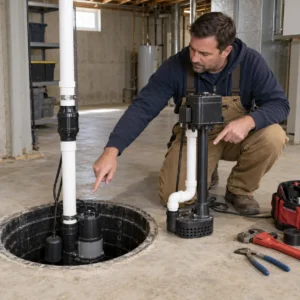
If your sump pump is running but not pumping water, it can quickly become a serious concern, especially during heavy rainfall or snowmelt. A system that operates without removing water often signals an underlying issue that needs attention before it leads to flooding or structural damage. You may hear the unit running or notice activity, yet the water level remains unchanged. When your pump runs without removing water, upgrading through sump pump installation services can help ensure your system handles drainage reliably.
How to Check If Your Sump Pump Is Draining
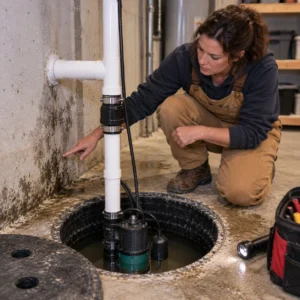
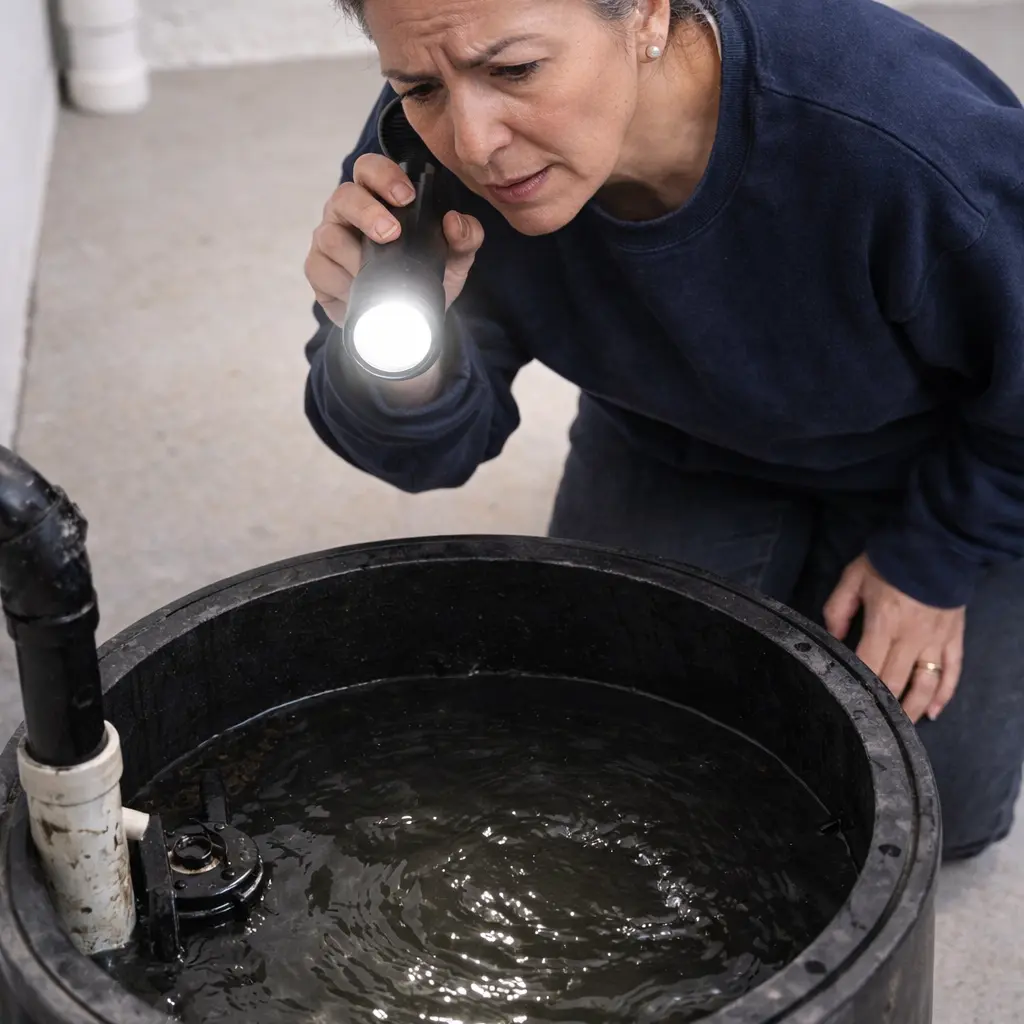
Before diagnosing a fault, confirm whether water is actually being removed from the pit. A simple test can help you see whether the system is draining properly or just running without moving water.
Step-by-Step Test
- Pour a bucket of water into the sump pit until the float switch activates the pump.
- Watch how quickly the water level begins to drop.
- Time the drainage cycle and compare it with normal performance.
- Listen for unusual sounds such as humming, grinding, or straining.
- Check the discharge outlet outside the property to confirm that water is actually being expelled.
A healthy sump pump will usually clear a typical pit in around 10–15 seconds, depending on the pump size and water volume. During the test, the water level should drop steadily and the pump should switch off once the level is low enough.
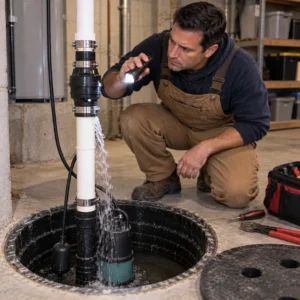
If the motor runs but the water level stays the same, or no water exits through the outside discharge point, the issue is likely within the pumping or discharge system rather than the activation mechanism.
Common Causes of the Problem
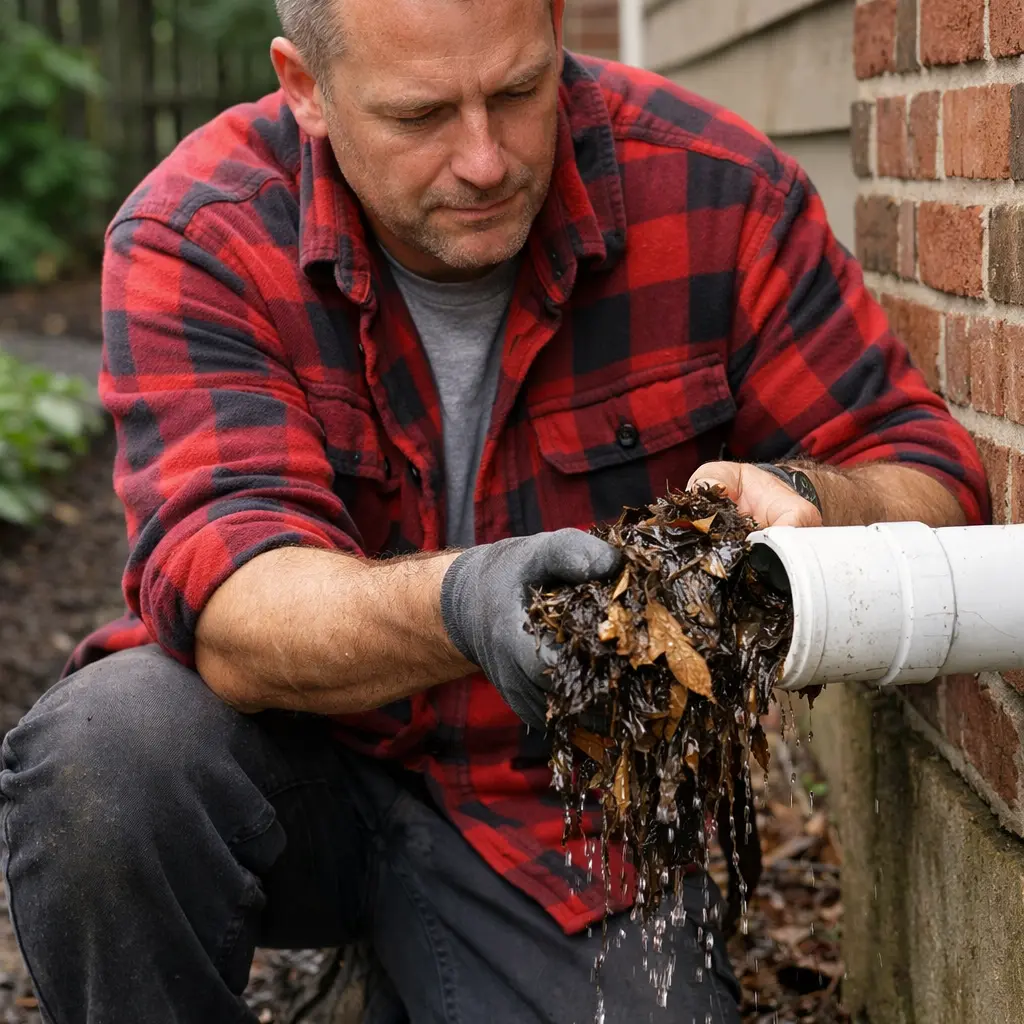
Clogged Discharge Line
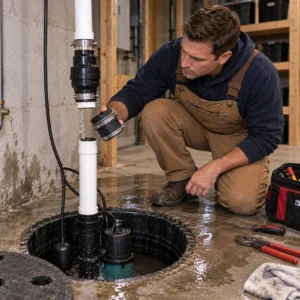
A blocked discharge pipe is one of the most common reasons flow is restricted. Dirt, debris, or ice can prevent water from exiting the system.
Typical signs include:
- Motor running longer than usual without discharge
- Little or no water is visible at the outlet
- Reduced flow outside
Clearing the obstruction often restores normal performance.
Malfunctioning Check Valve
The check valve prevents water from flowing back after it has been discharged. When it fails, the system cycles repeatedly without effectively clearing the pit.
This may lead to:
- Repeated on and off cycling
- Longer run times with less output
- Water returning into the system
Impeller Problems
The impeller is responsible for pushing water through the system. If it becomes blocked or worn, water movement is reduced or stops completely.
Impeller failure can develop over time due to buildup or internal wear, preventing the pump from generating enough force to move water.
Cleaning or replacing the impeller can restore proper water flow.
Float Switch Issues
The float switch controls when the system activates. If it becomes stuck or misaligned, the pump may not respond correctly to changing water levels.
This can lead to short cycling, where the pump activates repeatedly without lowering water levels effectively, placing extra strain on the system.
Possible symptoms:
- Continuous operation
- Failure to shut off
- Frequent on and off cycling
Airlock in the System
Air trapped within the discharge line can interrupt flow. Even when the motor is working, trapped air prevents water from moving through the pipe.
Indicators include:
- Audible operation without output
- Inconsistent or interrupted flow
- The outlet pipe appears completely dry
Adjusting the system to release the trapped air restores normal flow.
Incorrect Pump Size or Overload
If the system is not suited to the volume of water it needs to handle, it may struggle during heavy rain or high groundwater conditions.
This is often seen in:
- Older systems
- High water table areas
- Properties with increased runoff
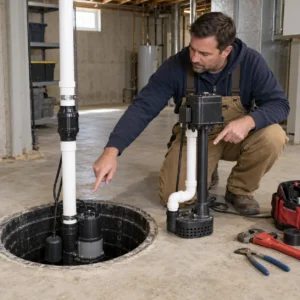
Upgrading to a properly sized system can improve performance.
How Long Should a Sump Pump Run Per Cycle?
A properly functioning sump pump typically runs for around 10–20 seconds per activation cycle under normal conditions. This allows it to remove collected water efficiently without unnecessary strain. During heavy rain, the pump may activate more frequently, but each cycle should still lower the water level noticeably. In dry conditions, activation should be occasional and brief. If the pump runs for several minutes without reducing water levels, it usually indicates a pumping issue. If the pump runs continuously for over 30 minutes and the water isn’t clearing, switch it off and investigate the cause immediately.
Could the Problem Be Electrical?
Electrical issues can also prevent a sump pump from working properly. A tripped GFCI outlet, loose power connection, or voltage drop from using an extension cord can interrupt performance. Pumps connected to GFCI outlets may trip under heavy load, especially during storms, so it’s best to plug the unit directly into a wall outlet.
Quick checks include:
- Inspecting the outlet for power
- Checking the circuit breaker
- Resetting the GFCI button if present
Always avoid handling electrical components near standing water. If you’re unsure or notice repeated power issues, it’s safest to call a professional.
Maintenance Checklist
Regular upkeep helps prevent common failures and extends system life.
Recommended checks:
- Clean internal components and remove debris
- Keep the sump pit free from buildup
- Inspect pipes for any blockage
- Test system operation periodically
- Listen for unusual noises during operation
- Ensure water pathways remain clear
- Monitor system performance during heavy rain
Consistent maintenance reduces the likelihood of unexpected issues.
When to Call a Professional
While some sump pump issues can be resolved with basic checks, certain situations require expert attention to avoid further damage or system failure. If the pump continues to run without effectively removing water after you’ve checked for visible blockages or simple faults, it often points to a deeper mechanical or electrical issue.
You should consider professional support if the system shows inconsistent performance, struggles during heavy rainfall, or produces unusual sounds such as grinding or excessive vibration. Electrical concerns, motor inefficiency, or internal component wear are not always visible but can significantly affect how the system operates.
A professional inspection can identify hidden faults, assess whether a system matches your drainage demand and water volume , and ensure all components are working as intended. This not only resolves the immediate issue but also helps prevent unexpected failures when the system is needed most.
Conclusion
Most cases come down to a blockage, a worn component, or a system that is not suited to current conditions. Addressing these issues early helps avoid larger problems and keeps your drainage system reliable. While simple checks can resolve minor concerns, persistent issues or internal faults require a more careful approach. If you want clarity on what is causing the problem and how to fix it properly, DNA Plumbing and Heating can help ensure your system is ready to perform when you need it most.