Introduction
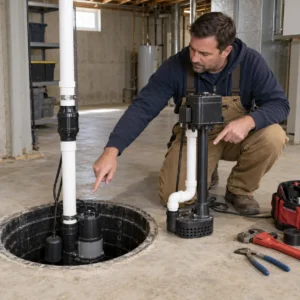
A sump pump airlock can stop your system from working properly, even when the motor is running. This issue can develop without warning and often leaves the pump operating without actually moving water. You may notice unusual sounds or find that the water level in the pit is not changing. Trapped air in the discharge line is a common cause. If airflow issues continue to affect performance, reviewing your setup through expert sump pump installation can help correct underlying configuration problems.
What Is a Sump Pump Airlock and Why Does It Happen
A sump pump airlock occurs when air becomes trapped inside the discharge pipe, preventing water from flowing out properly. Because the trapped air disrupts pressure buildup, the pump may run without actually moving water through the system.
This issue often develops when air enters the line after a backflow event or when the pipe is not fully primed with water. Installation factors can also contribute, such as poor pipe layout, lack of an air relief hole, or incorrect positioning of components. In colder conditions, frozen sections within the pipe or debris buildup can further increase the chances of an airlock forming, restricting normal water movement.
Signs of a Sump Pump Airlock
Spotting the issue early can help prevent more serious drainage problems.
Common indicators include:
- Gurgling or bubbling sounds
- Water level remains unchanged
- The outlet pipe runs dry during operation
- Slow drainage from the pit
- Frequent on and off cycling
You may also notice a musty or unpleasant odor coming from the sump pit during operation. This can occur when stagnant water or trapped debris is affected by restricted movement in the discharge line.
How to Fix a Sump Pump Airlock
Check the Discharge Line
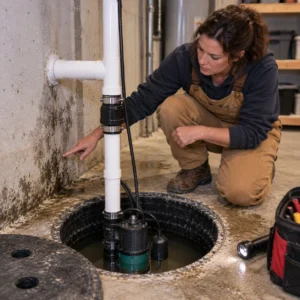
Start by inspecting the pipe for any restrictions or buildup. Even small debris can prevent water from passing through the line properly.
Clear any blockage you find and confirm that water can move through without resistance. Once done, run the system again to check if drainage improves.
Add an Air Relief Hole
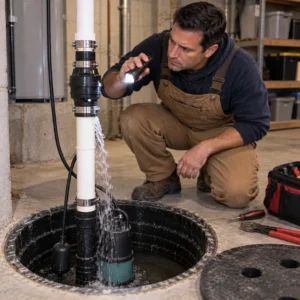
Creating a small opening in the discharge pipe allows trapped air to escape and stops the problem from recurring.
Position the opening just above the pump and before the check valve. This helps balance pressure within the discharge line without affecting system performance.
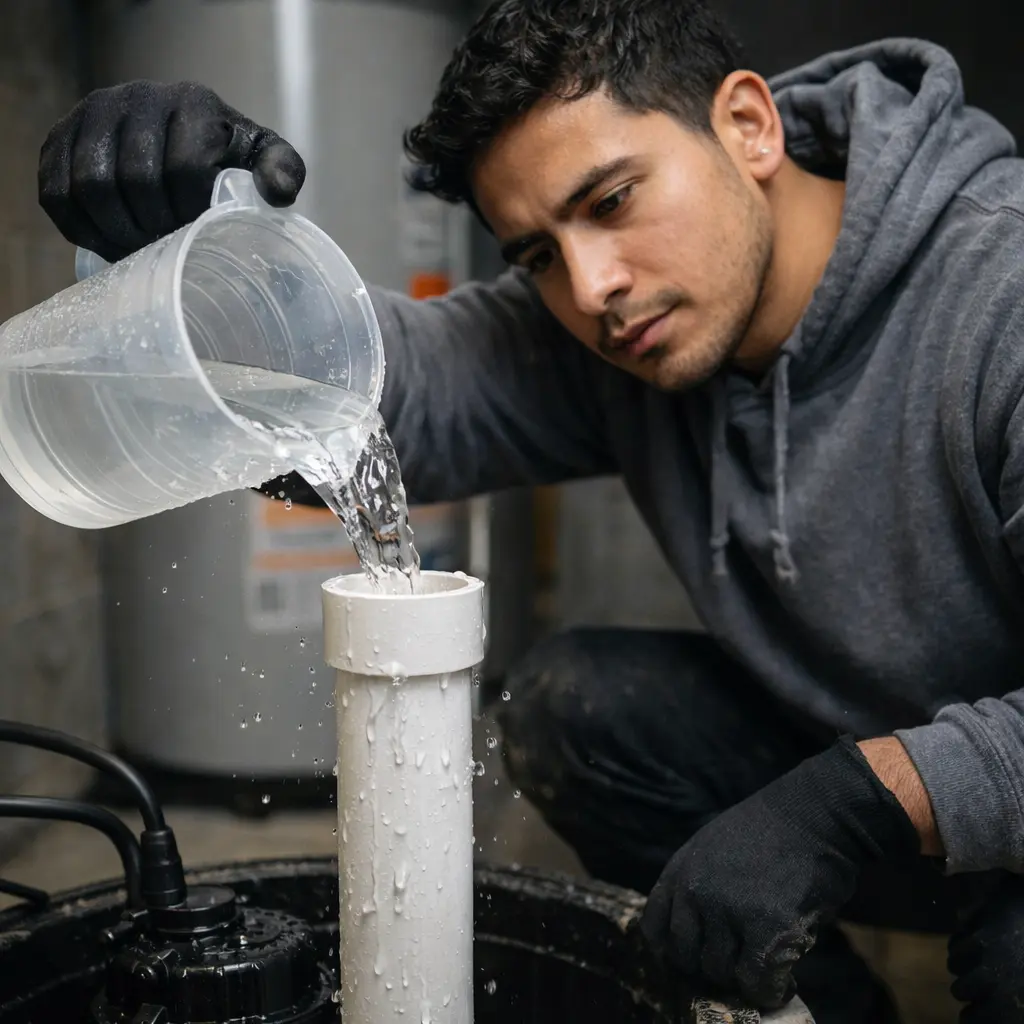
Prime the Discharge Pipe
If the line contains air, the pump may struggle to build enough pressure. Filling the pipe helps eliminate this condition.
Pour water into the discharge line until it is filled. You will usually notice improved drainage once the pipe is cleared of air pockets.
Inspect the Check Valve
The check valve plays a key role in maintaining proper sump pump operation. It is designed to hold water in the discharge pipe after each cycle, preventing it from flowing back into the pit. This allows the pump to maintain pressure and avoid having to reprime the system every time it starts.
If the valve fails or wears out, water can drain back into the pit after discharge. This backflow often pulls air into the line, which is a common cause of recurring airlocks.
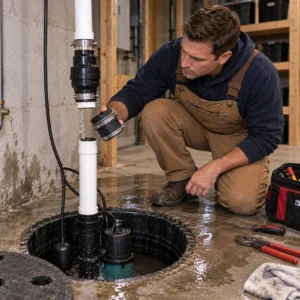
To test the valve, remove it and blow through it. Air should only pass in one direction. If air flows both ways, the valve is faulty and should be replaced. Ensuring correct installation and proper function helps maintain consistent water flow and reduces air buildup.
Why Does the Airlock Keep Coming Back?
Recurring airlocks usually point to an underlying issue that hasn’t been fully resolved. The most common cause is a failed check valve. When it allows water to drain back after each cycle, it pulls air into the discharge line, creating repeated airlocks.
Another factor is the pipe layout. Long horizontal or poorly sloped sections can trap air at bends, preventing smooth water flow. A properly angled, downward pitch helps eliminate these pockets.
A missing air relief hole can also contribute, as there is no outlet for trapped air to escape during operation. In colder conditions, seasonal freezing at the discharge outlet can block flow, leading to repeated airlock formation.
If airlocks continue even after repairs, the issue is often related to pipe design rather than the pump itself.
How to Prevent Airlock Issues Long-Term
Preventing airlocks starts with proper system setup and regular checks. Installing a check valve with a built-in air bleed helps stop vacuum formation and allows trapped air to escape. Ensure the discharge pipe has a consistent downward slope of at least 1/4 inch per foot, which prevents air pockets from forming along the line.
In colder months, keep the discharge outlet slightly elevated above the ground to avoid blockage from ice buildup. After winter, inspect the outlet during spring to ensure it is clear and functioning properly. Regular monitoring and correct installation reduce the chances of recurring airlock problems.
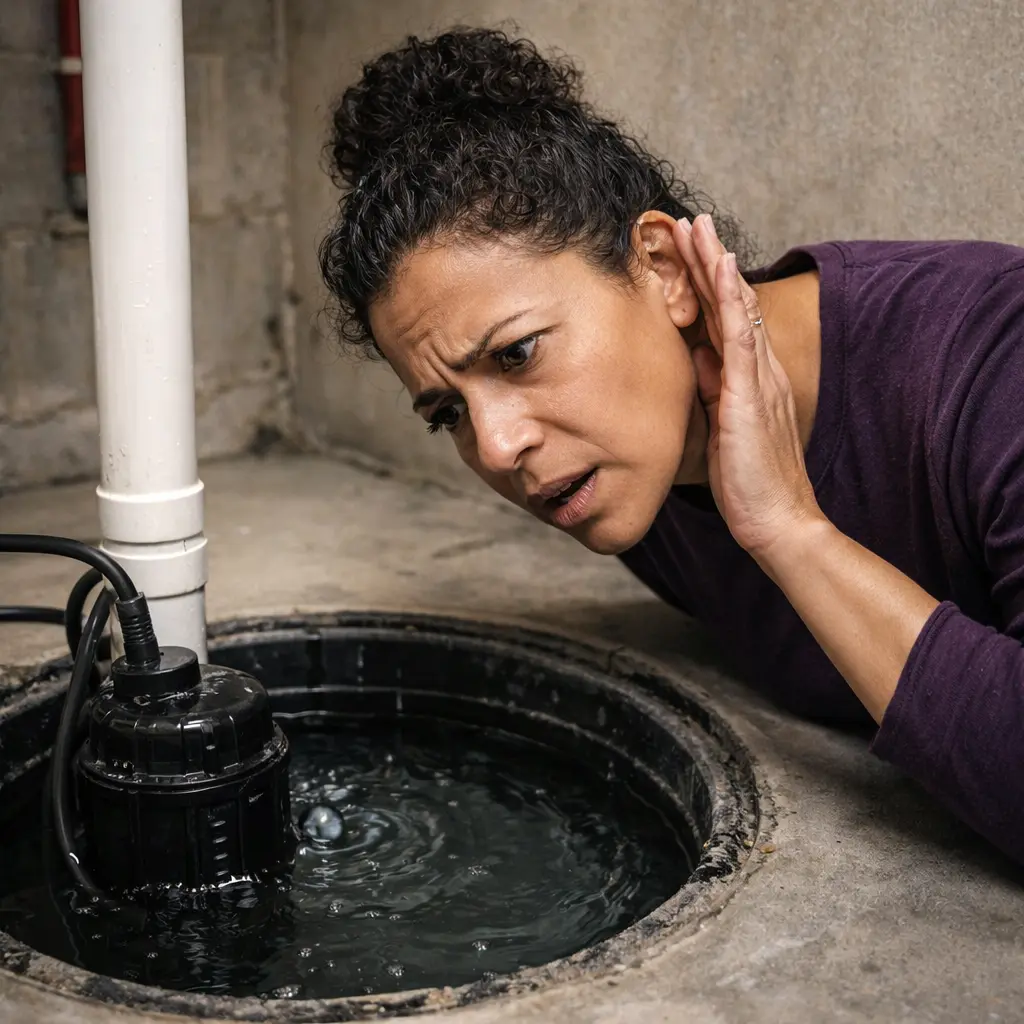
Fixing Recurring Airlock Issues
Some systems are more prone to recurring problems due to their layout. Long horizontal pipe runs can hold air, while a steeper downward angle helps carry it through.
If your setup includes extended flat sections, adjusting the pipe alignment can improve drainage. Repeated issues often point to design limitations rather than a single fault. If adjustments do not resolve the problem, a more detailed inspection may be required to identify the underlying cause.
When to Call a Professional
If airlock issues keep returning after basic fixes, it’s time to involve a professional. You should seek expert help if the airlock reappears within 2–3 pump cycles after resolving it, as this indicates a deeper system issue.
Call a professional if you’ve already replaced the check valve and the problem persists, since the discharge pipe layout may need proper assessment. Visible damage such as cracked or ice-affected pipes also requires expert repair.
If you’re not comfortable drilling into the discharge line or disconnecting pipework, avoid DIY attempts. A professional can also evaluate whether pipe length or design is contributing to the issue.
Conclusion
Airlock issues often indicate that the system is not maintaining consistent pressure or flow. While basic fixes may resolve the immediate problem, recurring issues usually point to underlying setup limitations. Monitoring system performance after each adjustment helps confirm whether the issue has been properly addressed. If problems continue, DNA Plumbing and Heating can assess the setup, identify the root cause, and recommend the most effective solution to ensure your sump pump operates reliably when it’s needed most.